This website uses cookies
This website uses cookies to enable it to function properly and to analyse how the website is used. Please click 'Close' to accept and continue using the website.


Image credit: C20 Society
C20 Society is backing efforts to save a pioneering Black community centre in London from redevelopment, supporting an application for the building to be nationally listed. Bridge Park in Brent closes for the last time today (31 July 2025) and is facing demolition to make way for a controversial £600 million housing scheme.
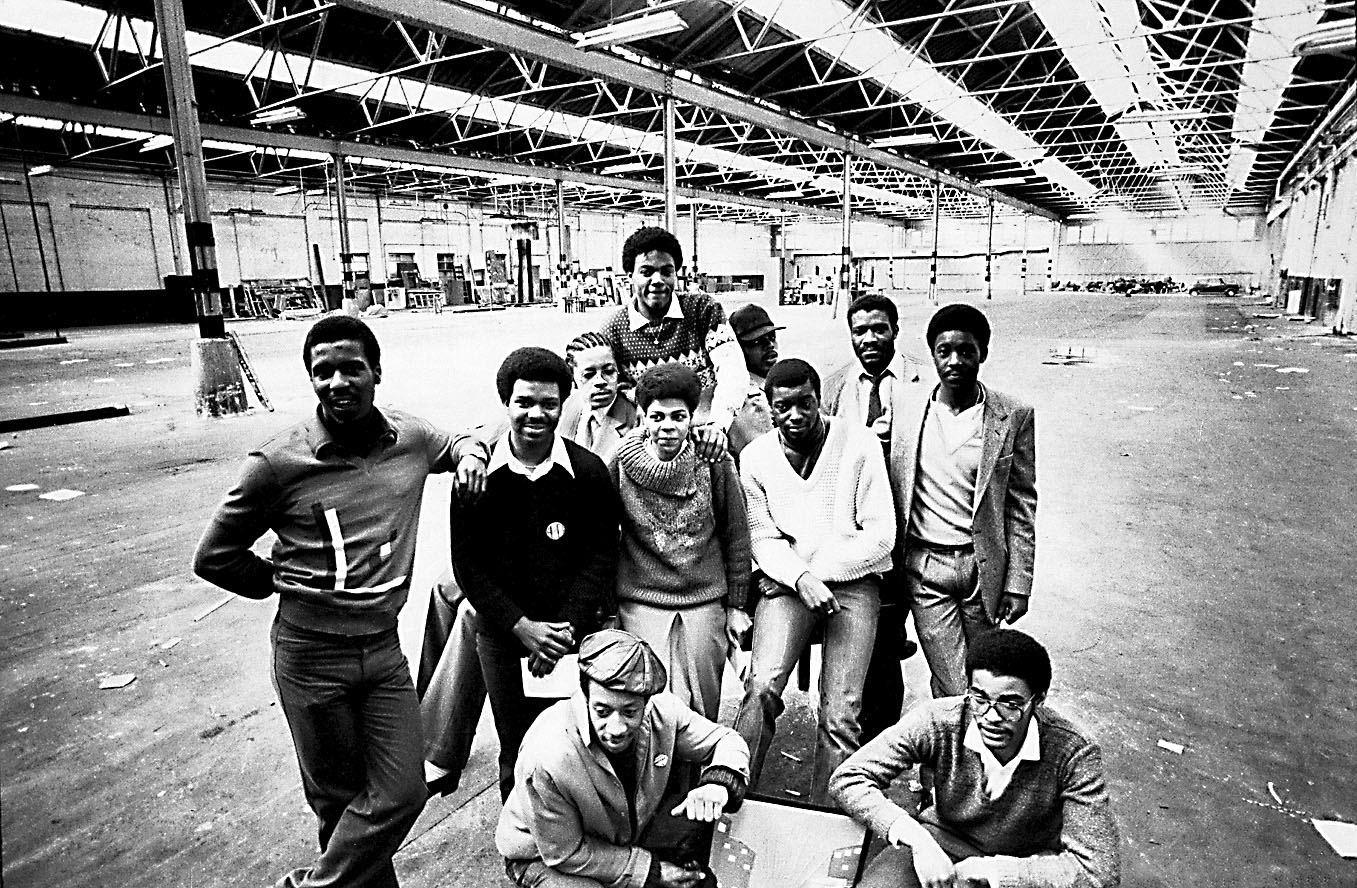
The vision for Bridge Park in Stonebridge came from the Harlesden People’s Community Council (HPCC), founded by Leonard Johnson (1956-2023) against the backdrop of the 1981 Brixton riots, and led by his message of ‘Build don’t Destroy’. Despite its utilitarian appearance, the centre has several claims to architectural merit and cultural heritage of national interest. A key example of the Community Architecture movement, the brief for the project was shaped by HPCC to reflect their needs, values, and aspirations, with a design developed collaboratively with the project architect Robert Sprunt from the London Borough of Brent Department of Development. The building is also an intriguing example of adaptive reuse of industrial heritage, being converted from a redundant Edwardian bus depot.
Opened in 1988 by the then Prince Charles, who proclaimed it “one of the most important important developments I have seen in this country for a long time”, Bridge Park was widely recognised in contemporary coverage as Europe’s largest Black-led community enterprise.
The Save Bridge Park Campaign has so far been backed by the likes of Raheem Sterling, Chelsea and England footballer; Lord Boateng, Britain’s first Black cabinet minister; Sir Trevor Phillips, former Head of the Commission for Racial Equality; and Dawn Butler, Labour MP for Brent East

Image credit: C20 Society
Community enterprise flagship
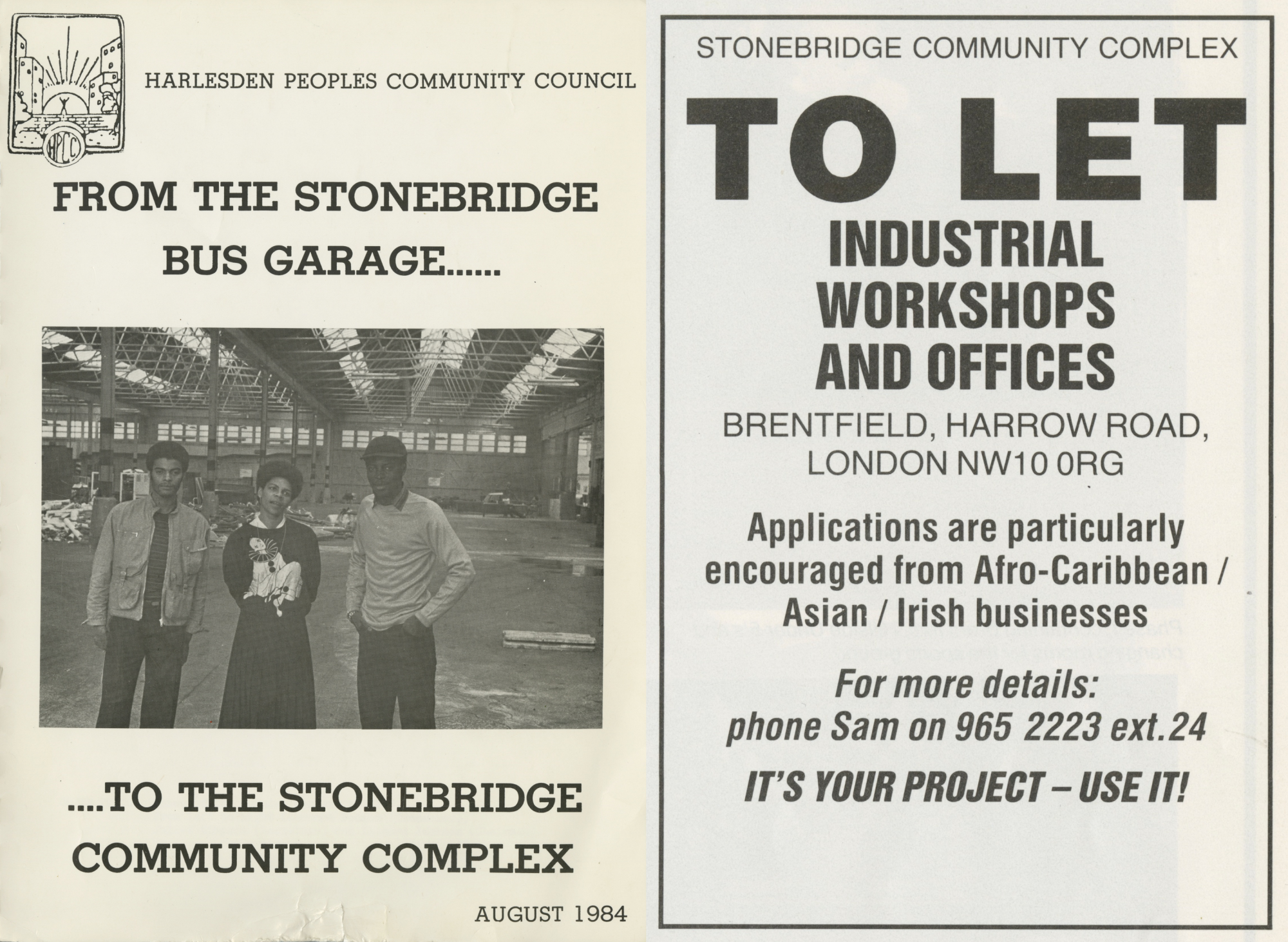
Bridge Park began life as Stonebridge Park tram depot. Constructed in 1905 for the Metropolitan Electric Tramway company, it was later converted to house trolleybuses and diesel buses for London Transport. The depot closed in 1981 and was advertised for sale, attracting the interest of the Harlesden People’s Community Council, who approached the London Borough of Brent about purchasing the site.
They produced a ‘Stonebridge Bus Depot Project’ report, setting out a bold vision to transform the space into a multi-purpose centre for business enterprise, leisure and social activities, skills training and youth employment. One shaped and controlled by the local community rather than being led by the council, to eventually become self-financing and managed by the community. In 1982 the depot was bought by Brent on behalf of the community for £1.8 million, with the young community leaders attracting further funding toward the £3 million project from the European Social Fund, Greater London Council, and Department for Environment.
After initial plans were rejected by the community for falling short of their needs, a new scheme was developed in collaboration with the local authority architect Robert Sprunt. Construction began in 1985 and in the years leading up to the centre’s completion in 1987, over 400 local people were trained through the Manpower Services Commission and other schemes while working on the site, with local firms created by the HPCC among the appointed subcontractors.
Facilities included 32 business units, conference and seminar rooms, a multi-purpose sports hall, IT centre, music recording studio, squash courts, a disco / arts hall, gym, restaurant and bar. At its peak the centre served 3,000 people weekly, created 300 jobs, and provided 150 youth training placements annually. A 1989 report by Deloitte into a business strategy for Bridge Park, credited the centre as ‘a flagship for Back community enterprise across the UK.’


Legal challenges and ownership dispute
In June 2017, the land owners Brent Council entered into a conditional land sale agreement with an offshore company, General Mediterranean Holdings (GMH), to redevelop the site for luxury housing and a new leisure centre in a £600 million scheme. GMH also own the adjacent ex-Unisys site, occupied by two Richard Seifert designed office blocks that have sat empty for 15+ years.
The Bridge Park site was originally protected by covenant for community use, but the council released the covenant in 2012, claiming it was no longer enforceable. Those opposing the council’s move formed the Stonebridge Community Trust and launched a legal challenge in 2019 to halt the multimillion pound land sale. A High Court judge initially ruled against the council and said the issue must go to a full trial, but in 2020 Brent Council won the dispute and secured an injunction preventing the defendants from making any applications to register a restriction against the property.
In June 2025 Brent Council’s Cabinet announced ‘with regret’ their decision to permanently close the centre on 31 July. The council claims that the current Bridge Park building has ‘reached the end of its lifespan and no longer meets modern accessibility, safety, and efficiency standards’, while a statement on their website says: ‘The [new] proposals aim to create a vibrant, inclusive, and sustainable neighbourhood that honours the history of Stonebridge while meeting the needs of future generations. Bridge Park will be a great place to live, work and play. With new parks, homes and places for communities to come together, it will be a place everyone can feel proud to call home.’

Image credit: C20 Society
Utilitarian Postmodern?
Despite a mostly utilitarian design language throughout the building, the influence of HPCC is evident in the incorporation of several playful post modern motifs. The approach to the centre from Harrow Road is underneath a red-painted metal archway with a geometric-spiral decoration, taken from the original Bridge Park logo. The centre is set within the footprint of the former bus depot, still covered by the original triple gable roof structure; a new space frame was added to western end of the depot to accommodate the sports hall. The front elevation is composed of rendered brickwork clad in corrugated blue metal sheeting, with stepped patterns and oriel windows with red metal framed frames. The main entrance is via an angular double-height glazed entrance with a projecting triangular canopy. A heritage blue plaque to co-founder Leonard Johnson was unveiled to the left of the entrance in 2024 by the Nubian Jak Community Trust.
Internally, the spaces are subdivided with simple concrete blockwork. Original roof trusses were left exposed and are prominent in the double height entrance area, with a first floor balcony supported by cylindrical cast concrete columns and featuring distinctive geometric-patterned balustrades. A brass plaque in the reception commemorates the opening of centre by the then Prince Charles in 1988.


Become a C20 member today and help save our modern design heritage.