This website uses cookies
This website uses cookies to enable it to function properly and to analyse how the website is used. Please click 'Close' to accept and continue using the website.


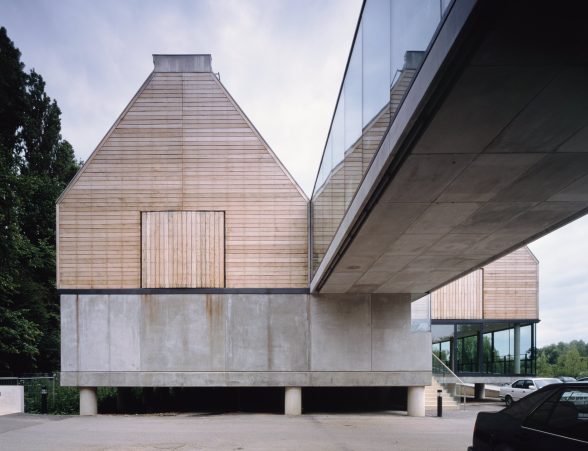
Image © Richard Bryant
C20 Society has submitted a listing application for the former River and Rowing Museum in Henley, Oxfordshire (1989-97), as the future of the pioneering David Chipperfield designed building is currently being decided by Trustees of the Museum.
Opened by Queen Elizabeth II in November 1998, the project was in development for nearly a decade and represents a significant point in the history of David Chipperfield Architects. It was their first major UK commission and first significant cultural building – a sector in which they have since developed an international reputation. In his letter of support for the application [read below], Sir David has credited the project with developing themes that became central to their work, such as the exploration of natural light and sensitivity to context, while shaping the practice’s approach to dialogue and advocacy, lessons that directly informed later projects such as their signature Neues Museum in Berlin.
It comes shortly after C20 Society’s listing application for Cobham Mews in Camden, Chipperfield’s first UK building and former studio, resulted in a Grade II designation in August 2025.
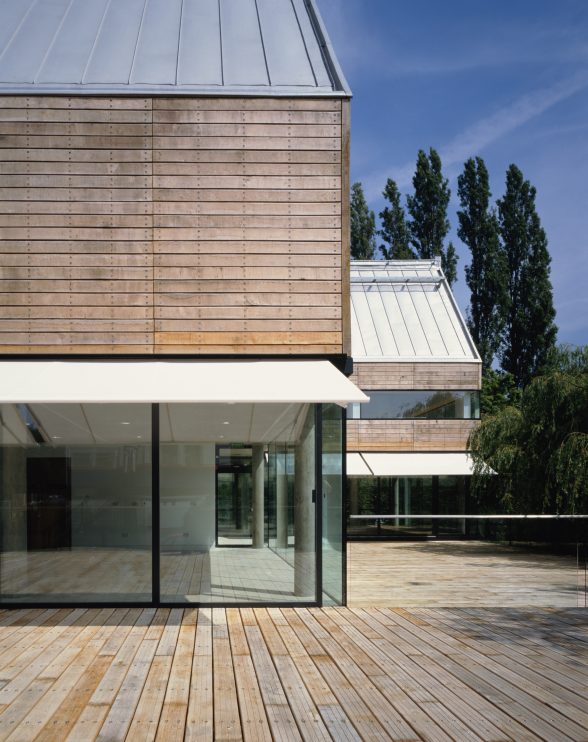
Image © Richard Bryant
Contextual Modernism
The town of Henley-on-Thames is known globally as a centre for the sport of rowing. Inspired by local river boathouses and the traditional wooden barns of Oxfordshire, the River and Rowing Museum is an exceptional example of late-twentieth-century contextual Modernist architecture. The design, massing, and orientation of the museum building was influenced by the conditions of the site, located on the south bank of the River Thames and built to contend with periodic flooding. The building is set back from the river and raised on piloti, providing protection from floodwaters for the collections housed within.
Two long volumes, referred to as ‘boat halls’, are oriented east-west and run parallel to one another, forming the majority of the collection space, while a glazed bridge at the upper-floor gallery level connects to a smaller education centre to the west of the site. A traditional pitched-roof form was deliberately chosen to fit into the planning constraints of a ‘sensitive, conservative and historic town’ [AR]. Although contemporary interpretations of vernacular architectural forms have become ubiquitous in the early 21st century, this approach was still unusual at the time of its design.
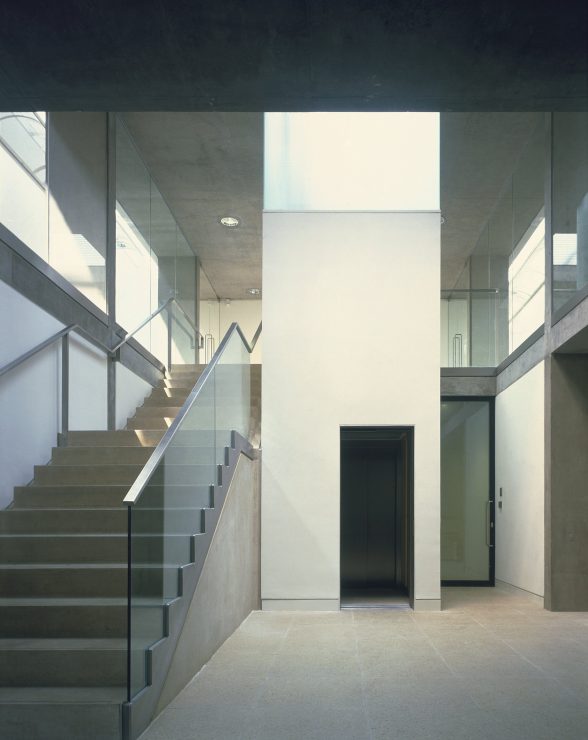
Image © Richard Bryant
I am writing to express my strong support for the Twentieth Century Society’s bid to list the River & Rowing Museum in Henley-on-Thames.
Completed in 1997, this project was my practice’s first major UK commission and our first significant cultural building—a sector in which we have since developed an international reputation. Many principles explored here, such as the use of natural light and sensitivity to context, remain central to our work.
The design was shaped by the ideas of critical regionalism, which sought to resist global homogenisation and avoid the stylistic excesses of postmodernism. Instead, it promoted architecture grounded in local context, climate, and culture. This is evident in the museum’s formal references to traditional boathouses, notably its pitched roofs, combined with modern construction techniques and material honesty. We were inspired by architects such as Glenn Murcutt, Rafael Moneo, and Álvaro Siza, who demonstrated how contemporary architecture could reconcile modernist ideals with regional identity.
For me personally, the project offered an opportunity to draw on lessons from Japan – structural clarity, material simplicity, and the elevation of the ordinary – applied to a new setting. Public scepticism at the time challenged us to articulate our intentions and shaped our approach to dialogue and advocacy, lessons that informed later projects such as the Neues Museum in Berlin.
We were saddened to hear of the museum’s closure but we are convinced that the flexibility of the original design will allow the building to serve a new purpose in a way that respects and preserves its architectural character.
Yours faithfully,
Sir David Chipperfield CH CBE
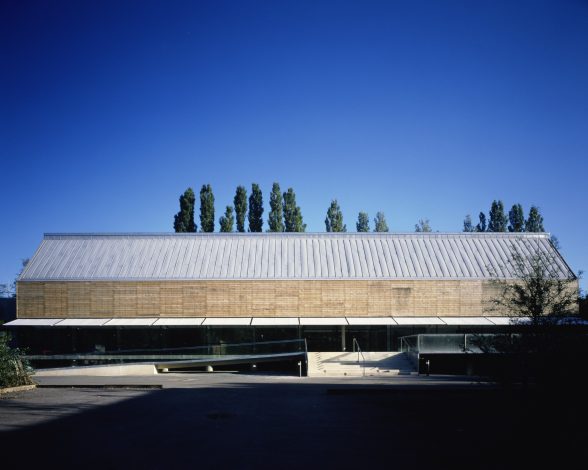
Image © Dennis Gilbert
Closure of the museum
In June 2025, after 27 years of operation, the Museum’s Foundation Trust announced it would be permanently closing in September 2025 due to unsustainable financial pressures. The museum made losses of £1 million in the last financial year and despite reducing its long-running deficit, concluded that their operational model was no longer viable.
Chair of the Trustees, David Worthington, commented: “The quality of the original concept cannot be underestimated. However, ultimately, the venture was just too ambitious – six galleries, multiple public spaces, two classrooms, a 5,000sqft storage facility, and a 35,000-plus object collection, It was just too much. Everyone has tried to make it work and on one level we have – it has been a great museum, lauded when opened, enjoyed by well over two million people, remembered by second and third generations and more than 100,000 schoolchildren. But in the end, however exciting it may have been, whatever changes might have been made, the financial challenge was simply too great”
Henley Town Council owns the land and the museum Foundation Trust had a 99 year leasehold, with nearly 70 years still remaining. The 35,688 sq ft museum building was listed by commercial real estate services company CBRE in November 2025, with a price tag of £3 million; several credible bids are thought have been received before the January 2026 deadline. C20 Society has been in close dialogue with the Museum Trust and several bidders over the past 12 months.

Image © Dennis Gilbert
Catherine Croft, C20 Director, commented:
Before the Neues Museum and the Hepworth Wakefield, before the Pritzker Prize, there was the River and Rowing Museum in Henley. David Chipperfield’s pioneering and influential museum building is a calm, elegant and sophisticated project; fusing a Japanese-esque design language with traditional English rural forms, it is perfectly at home in its beautiful setting on the banks of the Thames.
The practice’s first significant UK and cultural project, it remains totally intact and eminently reusable. The recent closure of the museum will inevitably lead to some changes, so this is the ideal time for it to be assessed for national listing to ensure that these are sympathetic and carefully managed. Chipperfield’s first studio at 1 Cobham Mews in Camden was recently designated Grade II thanks to an application by C20 Society, we hope to see the River and Rowing Museum join it on the National Register shortly.
Become a C20 member today and help save our modern design heritage.