This website uses cookies
This website uses cookies to enable it to function properly and to analyse how the website is used. Please click 'Close' to accept and continue using the website.


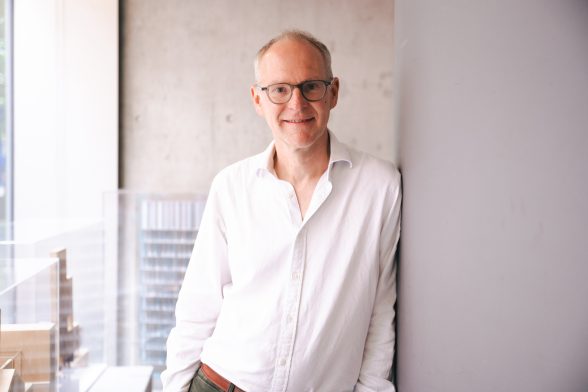
When were you first conscious of your interest in architecture?
As a teenager I was interested in the visual arts – I co-ran the art history society at university despite being a scientist. I really discovered my interest in architecture in my mid-20s and found an evening course in architectural history at City University, taught by Tim Bruce-Dick which I loved. I thought at that point of re-training to be an architect but concluded (probably rightly!) that it was too late to embark on a seven-year programme.
What sort of buildings excite you? Do you have a favourite C20 building?
I have a very broad interest in buildings, although twentieth century architecture, but the buildings that have most influenced me include Ronchamp, Fallingwater, the Yale Center for British Art and the National Theatre. I have an ongoing interest in ‘Swedish Grace’, or early 20th century Swedish architecture and love wandering through Östermalm and Norrmalm in Stockholm.
When did you first join C20 and how have you been involved to date?
I joined in the mid 1990s after Tim Bruce-Dick mentioned it on his course. I started to come to evening lectures and especially enjoyed the magazine and publications. I organised a tour in 1999 of the Daily Express Building – I remember the property team asking ‘what are you going to call yourselves in the twenty first century?’ – a question still alive today! More recently I have led a tour of the Royal Festival Hall with Ellie Jolliffe.
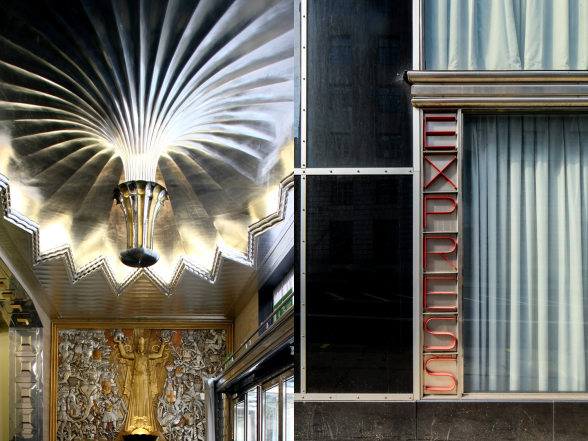
Image credit: John East
You come from a very different background to previous C20 Chairs. What skills and experience would you bring to the role, and why are these especially relevant now?
My working life has been in mathematical approaches to investing in financial markets – clearly very different to previous chairs. I managed large teams of people, and very large amounts of money. After I left that world, I went to the Bartlett School of Architecture to gain an MA in architectural history and then worked for architects Allies and Morrision for 2½ years. Beyond that I have quite a lot of board experience, both public companies as well as charities. I am a governor of the Southbank Centre and chair of the King’s Maths School in Lambeth. All of that has given me pretty good experience of helping organisations be successful, and of dealing with challenges as they come our way. I would like to help C20 attract a larger and more diverse audience, to help with finances and potentially to embrace the short film as a form of publication, especially since architecture has largely fallen off television.
You have lived and worked in many countries in the course of your career, are there any places that stand out for the quality of individual buildings or cityscapes? Anywhere you’ve not been yet, but would love to get to?
Stockholm has always stood out for me with its graceful fusion of Nordic Classicism and Modernism. It helps to be surrounded by water (Stockholm is made up of 14 islands) and with wonderful parks scattered around the city. Against that, for architectural innovation then New York and Shanghai stand out today – both have the most extraordinary skylines. The buildings I would most like to see and have not include Le Corbusier’s Sainte-Marie-de-la-Tourette and Louis Kahn’s Salk Institute. I shall get to them in the end! And a particular highlight was being allowed to play the original Poul Henningsen piano in Alvar Aalto’s Villa Mairea – the other one is at MOMA and they don’t let you play that one!
In 2021 you enrolled on the MA architectural history course at the Bartlett (the University of London’s Architecture Faculty), what brought that about and how did you choose that particular course? Did you envisage a big career change?
After thirty years in finance I felt I wasn’t learning any more. So I wanted a change and I had always wanted to study architectural history in more detail than self-study or evening courses allow for. So I looked around and found the Bartlett MA which was wonderful. Prof Murray Fraser strongly encouraged my interest in British architecture, and especially the links between Britain and Sweden which were very strong from the 1930s to the 1950s. The course was excellent, and it definitely helped that the Bartlett was a walk from home! I wanted a career change, although I had no idea what it would be. And it was certainly the case that the Bartlett created a route to change for me – I met many new people with different interests which I found wonderful.
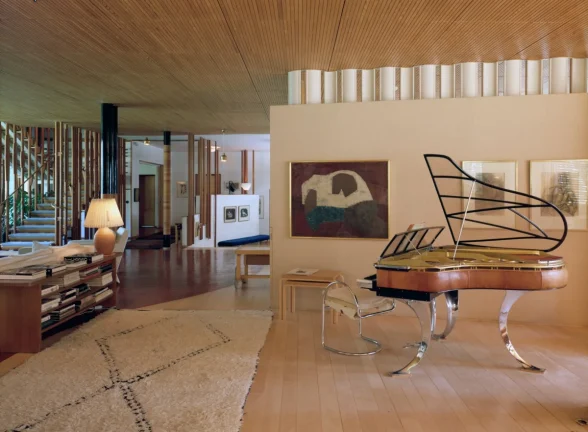
Image credit: Artek
As part of the MA course, you wrote a dissertation on the links between Britain and Sweden in architecture, what drew you to pick that as your subject and what surprised you about the outcomes of your research?
My mother is Swedish, and so the links between the two countries was an obvious topic. The connections were very strong for a short but well-defined period from the early 1930s to the mid 1950s. Two bookmarks for that are Philip Morton Shand’s articles on the 1923 Stockholm Town Hall and the 1930 Stockholm Exhibition at the start. And at the other end, the advent of the ‘New Brutalism’ most illustrated by the earlier Roehampton East (Swedish, soft modernism) and later Roehampton West (tougher, more Corbusian). Roehampton East seems to me much the more successful of the two, as measured by quality of life for the people that live there. And the surprise was both how strong the relationship was, and the vigour of the rupture as British architects set off in a new direction of a more robust modernism.
After your MA you worked at Allies and Morrison as a Director. What was your role and what insights has this given you about current practice?
I helped Allies and Morrison shape their strategy for the future, with a particular focus on international work. The practice expanded its footprint significantly in my time there, with new studios in Jeddah and Toronto and a high focus on winning work internationally as work in the UK went through slow period. I learned that architecture is a tough business! Fees have been falling for many years and the competition for work is intense. You need to have a very clear vision to be successful. Against that, British architects are very much respected across the world and so there are opportunities, as well as many risks from operating internationally. Finally, the reputation of the profession with the general public in the UK needs work – the Grenfell disaster and appalling loss of life there severely impacted the profession and I think there’s a sense across the general public that architects are not sufficiently connected to the problems that the public want to solve, and are responsible for some buildings that are not loved at all.
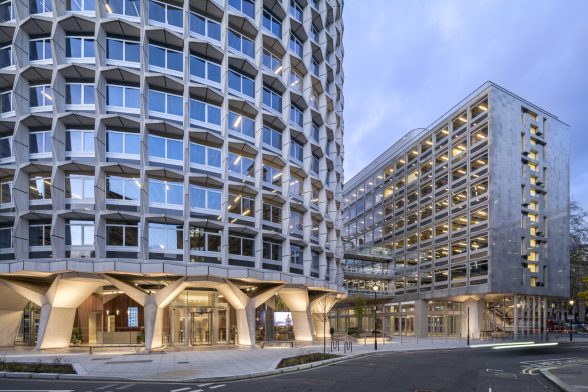
Image: Gareth Gardner
How do you think building conservation is regarded by the government and the public at the moment? Is conservation of C20 buildings compatible with the government’s growth agenda?
It seems to me that public appreciation of 20th century buildings, especially post war, is the most positive that it’s been for at least the last 40 years. As an example, when the Hayward Gallery and Queen Elizabeth Hall were listed this year there was an outpouring of enthusiasm and love for these buildings which would have been unimaginable just a few years ago. And there have been some exemplary renovations of 1960s buildings recently – Space House for example. So public appreciation is in a much better place than it was. Government is behind on this for the most part. For example, in other countries historic cooling towers and heavy industry have been repurposed into extraordinary parks and other facilities (the Shougang steelworks to the west of Beijing are a great example), while here there has been an ongoing programme of demolition. Countries that did not preserve their heritage but demolished it for the new end up largely regretting it, and that applies to twentieth century heritage too! It is absolutely possible to have growth with conservation, and the environmental cost of destruction is often far too high. Many developers recognise this today.
What will your priorities be as chairman?
First, I would like to widen the audience and to make the C20Soc as welcoming a place as can be for as many people as possible. When I went to C20Soc lectures in the 1990s I used to find them a bit intimidating – I didn’t know anyone and felt left out. So I would like to change that. Second, if I can help improve the financial situation of C20Soc then I will feel that I have made a difference. The team is very small and would benefit from growing a little. I have been able to improve the finances of other organisations that I have been involved with and so will try very hard here too! Finally, I love our publications, and I love architecture books in general (I have a house full of them). But times change and I would like to explore where we can go with publications in the future. I also consider video to be a form of publication, and with the decline of architecture on television but the rise of social media, then I would like to see how we can replace what television used to give us.

Become a C20 member today and help save our modern design heritage.
Comments