
This website uses cookies
This website uses cookies to enable it to function properly and to analyse how the website is used. Please click 'Close' to accept and continue using the website.


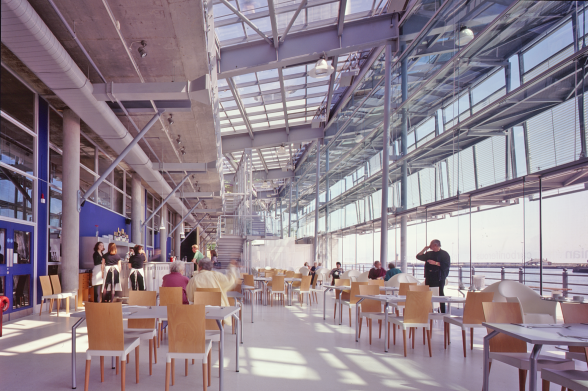
Image: Tim Soar
Twentieth Century Society and campaign group Save the National Glass Centre have submitted a joint listing application to Historic England for the threatened Sunderland venue, ahead of its scheduled closure at the end of this month, on July 31st. Our application prompted the owners of the site, the University of Sunderland, to submit their own Certificate of Immunity from Listing (COI) request, ensuring the building will be fully assessed in the next few weeks.
The listing bid for the Millennium-era project comes amid heightened public and political pressure on the University of Sunderland to pause their plans to demolish the building. A petition to save the centre has now passed 40k signatures, with local campaigners this week lodging an Assset of Community Value (ACV) application with the local authority. Last week SAVE Britain’s Heritage also included the site in their annual Buildings At Risk Register.
Meanwhile, reports emerged over the weekend that Sunderland City Council, under the control of Reform UK after the local elections in May 2026, has ordered officers to commence work on an Article 4 Direction. An Article 4 Direction is an order made by a local planning authority to remove certain permitted development rights in all, or part of, its area. When adopted, the effect of an Article 4 Direction is that formal planning permission is required for certain types of development that would not otherwise require an application for planning permission.
A post on Reform UK Sunderland’s social media stated:
“We have made clear that every necessary step must be progressed at pace, ensuring the Council secures the quickest lawful route available to protect the building from demolition. The National Glass Centre is far too important to Sunderland’s identity, heritage and future to be allowed to disappear without a fight.”
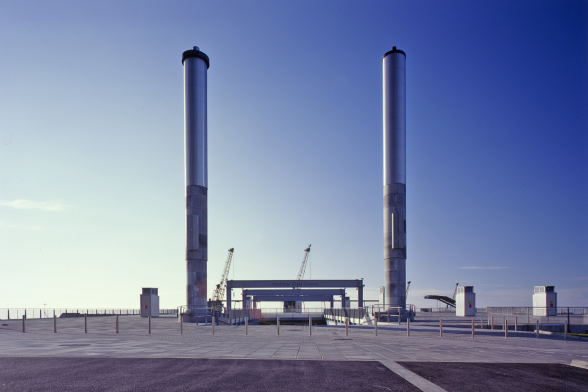
Image: Tim Soar
Designed by Gollifer Langston Architects, the marine-industrial style building combines a glass making workshops and a visitor and educaction centre, with galleries and cafe – the only such facility of its type in the country. It is sited on the north bank of the River Wear close to the birthplace of glass making in the UK, dating back to the seventh century when Benedict Biscop hired French glaziers to make the windows for the Monkwearmouth-Jarrow Priory in 674. Opened in 1998, the National Glass Centre was one of the first cultural projects in the country funded by the National Lottery, contributing £6.9 million of the £17 million build costs.
A listing application was first submitted two years ago but was not progressed because at that point, the building was under 30 years old and the demolition threat was unconfirmed. With the help of the architect Andy Gollifer and project director Roger Clubley, the Society recently located documentary evidence that, although the building was not opened until 1998, it broke ground in February 1996 and so the 30 year threshold has already been passed.
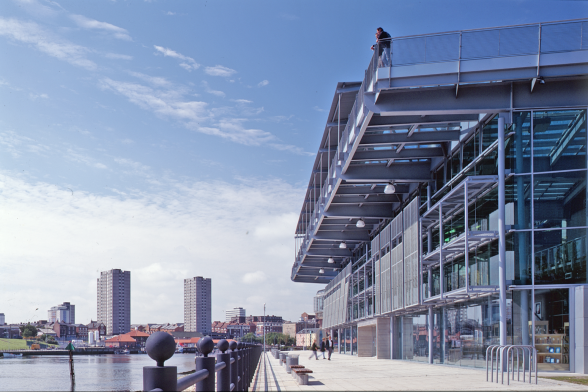
Image: Tim Soar
‘Promenading’
The design brief for the new Centre called for an exhibition area, visitor facilities, workshops, studios and factory space. The Europe-wide competition was entered by some 87 practices and was won by the young Gollifer Associates studio (now Gollifer Langston Architects), with the building ultimately becoming a hybrid design-and-build project. Founder Andy Gollifer recalls their creative interpretation of the brief: “Reading between the lines…there was probably an assumption that the factory and public space would be separate…but the jury immediately responded to the fact we put them under one roof”.
Set into the river bank, the gently sloping glazed roof flows seamlessly from the main carpark and becomes a 3,250sqm public square, affording elevated views the river mouth. With canopies set at the edge of the roof and funnel-like chimneys from the factory space below, early reviewers favourably compared the experience to promenading on a seaside pier or the deck of a cruise ship. The 6cm thick toughened glass panels provided a birds-eye view of the activities below, or for those within the building, a unique worms-eye view of people walking on the roof above.
A sloped entrance ramp takes visitors down from the rooftop into to the full-height glazed riverside hall, housing the restaurant and shop, and overlooked by two self-contained private pods held aloft on slits. The working factory space is located at the rear of the building, with a public viewing gallery for demonstrations and a heat recovery system from the glassblowing furnaces used to heat the rest of the building. The Centre was was awarded Millennium Product status by the Design Council, in recognition of its creativity and innovative environmental approach, and was exhibited at the Millennium Exhibition at the Dome.
In a press statement in March 2024, the University of Sunderland announced that the center will close, and its glass and ceramics degree courses will cease in summer 2026. The University has claimed that the building needs repairs which will cost up to £45 million and therefore its only option is to demolish the centre. The cost of these repairs has been widely disputed, and it is also claimed that the university has deliberately run the building down intentionally in order to justify its demolition.
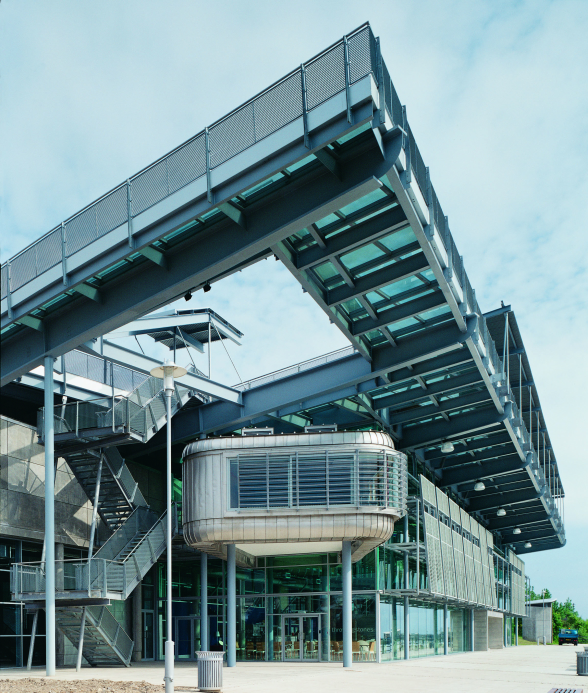
Image: Tim Soar
Wednesday 29 July, 18.00–19.30
The Farrell Centre, Newcastle-upon-Tyne
Click here to book your free place.
Scheduled for the week the National Glass Centre is due to close its its doors, this event discusses the issues raised by its proposed demolition and the question of how we deal with our recent architectural heritage.
Speakers include:
Andy Gollifer is the architect of the National Glass Centre building. He studied architecture at Bristol University and the Royal College of Art before establishing his practice Gollifer Associates (now Gollifer Langston Architects) in 1994. In the same year, it won the Europe-wide competition to design the new glass centre held by the RIBA and the Tyne and Wear Development Corporation.
Laura Mark is the Head of Casework at the Twentieth Century Society. Earlier this year, she submitted the application for the National Glass Centre to be listed to Historic England.
Carolyn Basing is a contemporary glass artist who has rented a studio at the National Glass Centre since she graduated from her MA in 2016. She is the chair of the campaign to save the National Glass Centre.
We are approaching contributors from University of Sunderland and Sunderland City Council.
Chaired by Owen Hopkins, Director of the Farrell Centre.
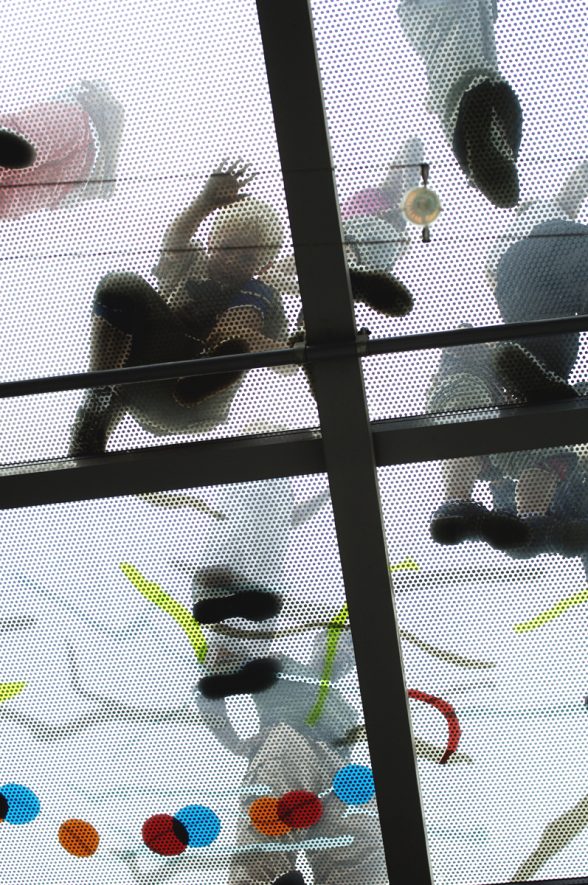
Image: Simon Letouze, Wiki Commons
Laura Mark, C20 Society’s Head of Casework, commented:
‘Sunderland’s National Glass Centre is a landmark millennium-era project that led the regeneration along the banks of the River Wear. The building emerged at a time of real change. When the competition for the centre launched in 1994, the UK was celebrating the opening of the Channel Tunnel, the National Lottery had just been launched, and Tony Blair had just become the Leader of the Labour Party. It was a time of excitement and this is captured in the design of the National Glass Centre.
‘The case for listing the National Glass Centre lies upon highlighting Sunderland’s significance as the historic glass manufacturing capital of the UK. The National Glass Centre is one of the last physical links to both shipbuilding and to glass production in Sunderland. Sadly, the fortunes and scale of Sunderland’s glass industry have steadily declined since the Pyrex glass factory closed its doors in 2007, but the area remains a thriving centre for studio glassmaking, and the National Glass Centre sits at the heart of this. The National Glass Centre has been an incubator for the career of many of the UK’s best artists working in glass, and it is the UK’s only facility that combines glass making and production aside visitor experience and education. The building showcases glass not only through its exhibition spaces and production facilities, but it is also embedded in its architecture. Its loss will have a huge impact.
‘Condemning a landmark building that’s just 30 years old, and losing one of the few purpose-built glassblowing facilities in the country, is unconscionable. We urge the university to reconsider its decision to demolish the glass centre and hope that Historic England will award this gem its deserved place on the National Heritage List.’

Become a C20 member today and help save our modern design heritage.