This website uses cookies
This website uses cookies to enable it to function properly and to analyse how the website is used. Please click 'Close' to accept and continue using the website.


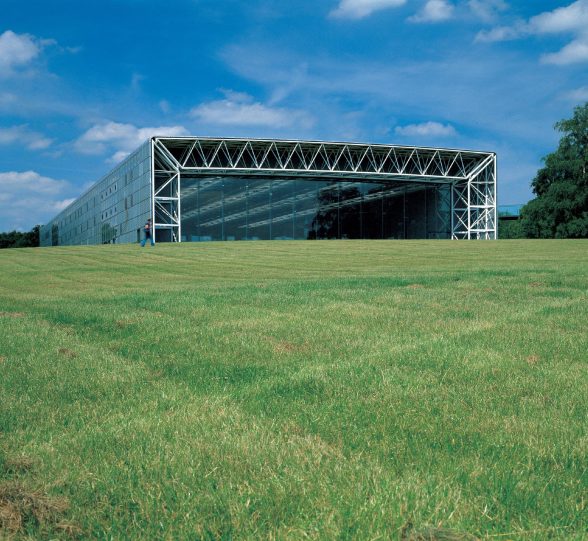
Image credit: Foster + Partners
The Grade II* listed Sainsbury Centre at the University of East Anglia (UEA) campus in Norwich has secured a £91.2m donation, one of the largest ever made to a UK museum, that will be used to comprehensively refurbish the building.
Designed by Sir Norman Foster and constructed in 1977, the Sainsbury Centre is recognised one of the of the landmark achievements of British High-Tech movement and was listed in 2012, following an application to English Heritage by C20 Society.
As it approaches its 50th birthday, the renovation project – led by Foster + Partners – will renew the building envelope and enhance its environmental systems, with the addition of photovoltaic panels to the roof. Key visitor amenities will also be upgraded, with new entrances, lifts, signage and flooring, while solar controlled blinds will bring more natural light into the gallery spaces.
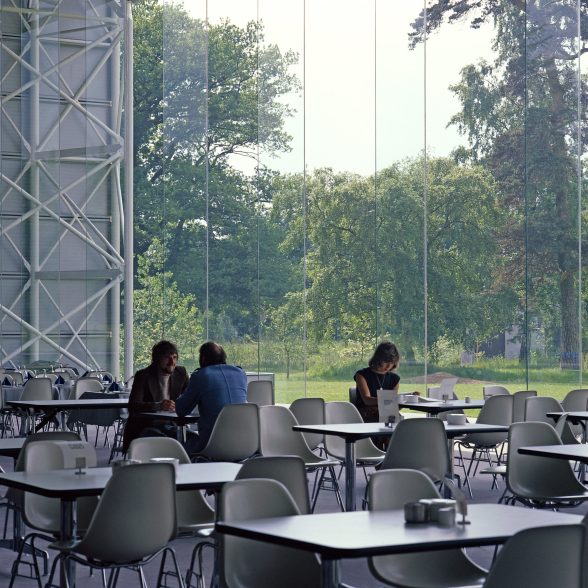
Image credit: Foster + Partners
The funding has come from Gatsby, a charitable foundation created by Lord David Sainsbury, the son of Robert Sainsbury. The art museum was opened in 1978 after Robert Sainsbury and his wife Lisa Sainsbury donated their collection of art and material culture to UEA in 1973.
Lord Sainsbury said: “My father always regarded his commissioning of Norman Foster to produce the Sainsbury Centre as one of the best things he ever did, and it gives me great pleasure to provide the funding to enhance its future.”
In 2024, Foster + Partners was appointed to undertake a feasibility study to determine which parts of the Centre should be upgraded or replaced to improve energy efficiency, enhance the visitor experience, and ensure easy maintenance. The project team identified three key areas of the building for renovation: the envelope, its environmental systems, and some of the key visitor amenities. These alterations to the building’s envelope are expected to halve the amount of energy required to operate the building, significantly reducing carbon emissions. Photovoltaic panels will be incorporated into the new roof system to allow renewable energy to be generated on site. Aging environmental systems will also be replaced, and the building will be connected to the university’s district heating and cooling systems to allow improved control over the building’s internal environment.
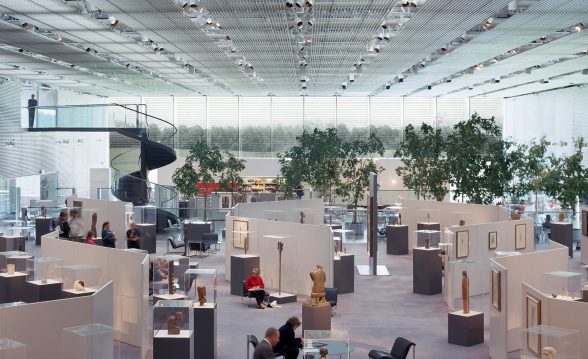
Image credit: Foster + Partners
The Historic England list entry for the Sainsbury Centre highlights the following principal reasons for it;s designation:
* Architectural innovation: a late-C20 building by one of Britain’s most significant modern architects. It exemplifies the architect’s signature use of technological and engineering innovation and the industrialized, prefabricated, style.
* Celebrated design: one of the best known and admired modern exhibition and education buildings nationally, and internationally.
* Historic Association: a purpose-built museum gallery and education centre for the internationally renowned Sainsbury Collection
* Flexibility of design: the in-built flexibility of its open spaces responds to the changing needs of its use as a museum gallery and education centre. The design has allowed regular, sympathetic changes to work satisfactorily, and the essential elements of the building survive intact. New additions and alterations, while too new to be of special interest, have been thoughtfully incorporated.
* Group Value: the Sainsbury Centre forms part of a group of listed university buildings, including Norfolk and Suffolk Terrace (Denys Lasdun 1964-8, listed Grade ll*), and continues the concepts of site expansion and integrated use, along the zig zag spine of the campus, in a natural landscape, established by the original masterplan. The Sainsbury Centre is connected to the Teaching Wall (Denys Lasdun 1964-8, listed Grade ll) by an overhead walkway.
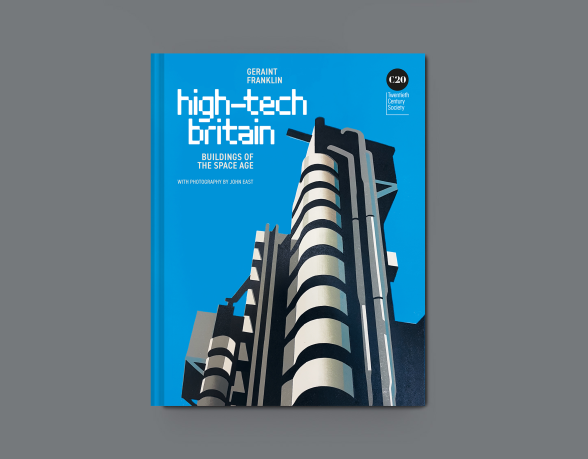
Written by Geraint Franklin of Historic England and published by Batsford, High-Tech Britain is an
authoritative survey of the most groundbreaking examples from an extraordinary moment in British architecture, taking in gleaming global icons, exquisite homes and forgotten industrial sheds. Geraint Franklin traces its trajectory from 1960s radicalism to the global mainstream, taking in such late 20th-century landmarks as the Lloyds building, the Sainsbury Centre, the Schlumberger Cambridge Research Centre and the Eden Project in Cornwall.
It revisits the work of the ‘big four’ practices of Norman Foster, Richard Rogers, Michael and Patty Hopkins and Nicolas Grimshaw; from their teams emerged a younger generation of designers including Eva Jiřičná, Ian Ritchie, Richard Horden and Jan Kaplický who took the language in new directions. Alongside are profiled lesser-known stories such as the Patera kit building quietly rusting in London’s Docklands and the workshop at Hooke Park, Dorset, engineered from waste wood.
Order here

Become a C20 member today and help save our modern design heritage.