This website uses cookies
This website uses cookies to enable it to function properly and to analyse how the website is used. Please click 'Close' to accept and continue using the website.


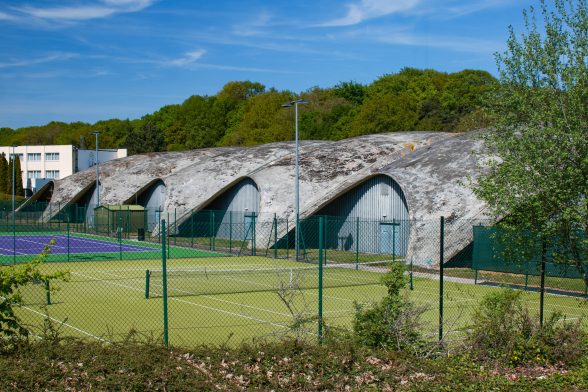
Image credit: John East
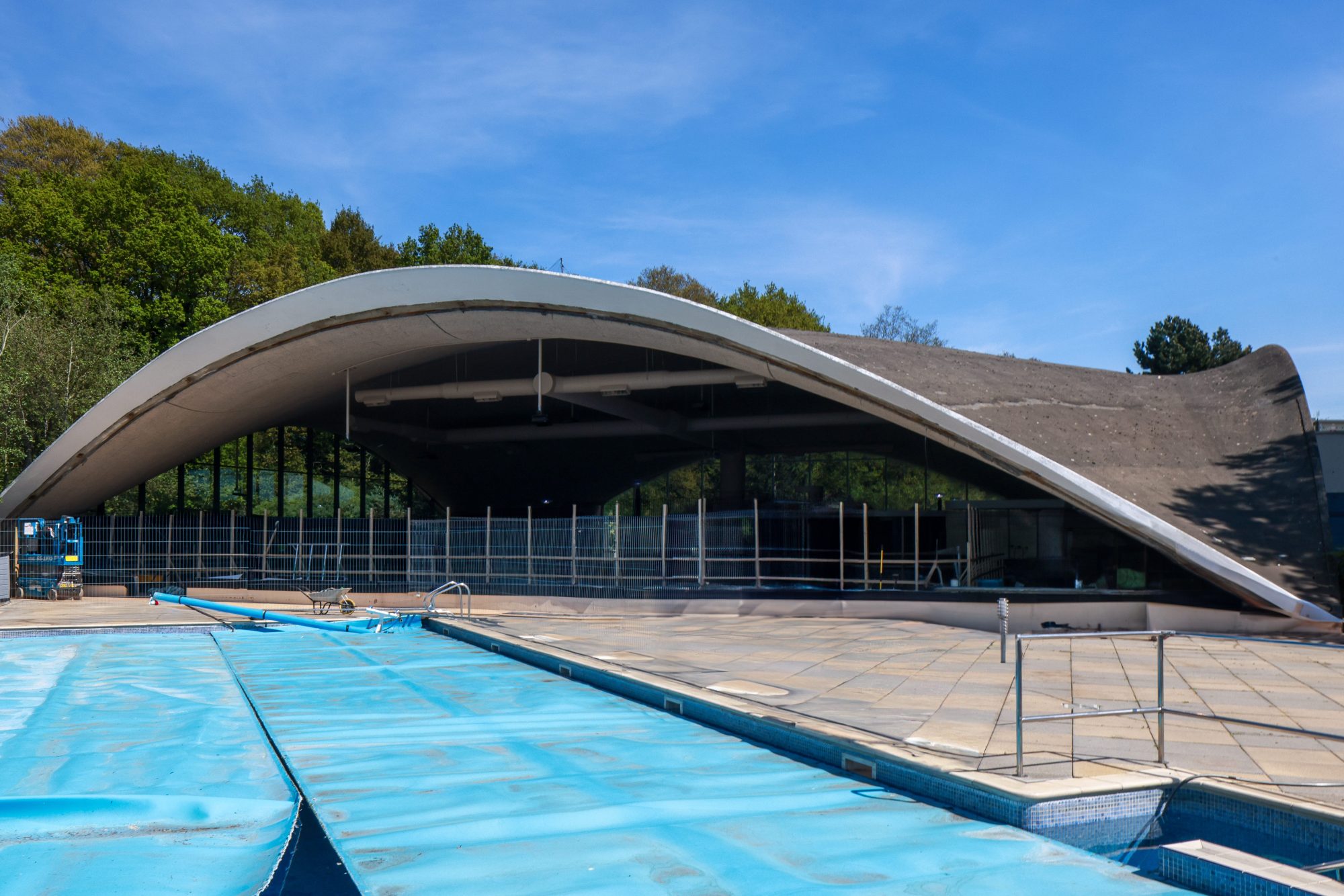
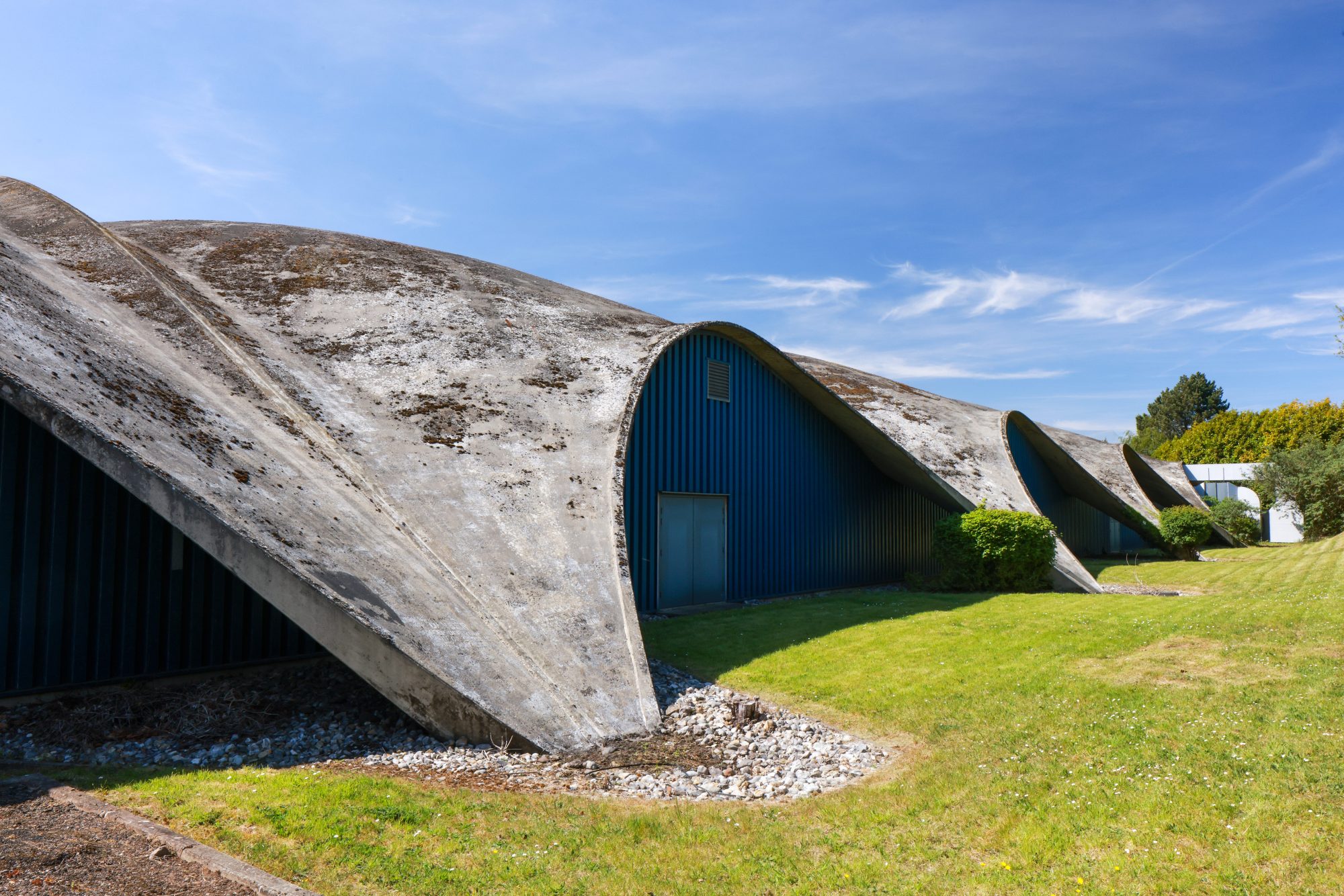
C20 has supported an application to list the majestic Norwich Sports Village, the only concrete shell structures in the UK to be designed by pioneering Swiss engineer Heinz Isler. Constructed 1987-88 in the Broadlands area of Norwich, the project was led by Copeland Associates, in collaboration with the Swiss architects Haus and Herd. The elegant concrete forms utilise Isler’s innovative ‘inverted membrane’ and ‘plumped pillow’ method, creating a shell that is on average only 100mm thick.
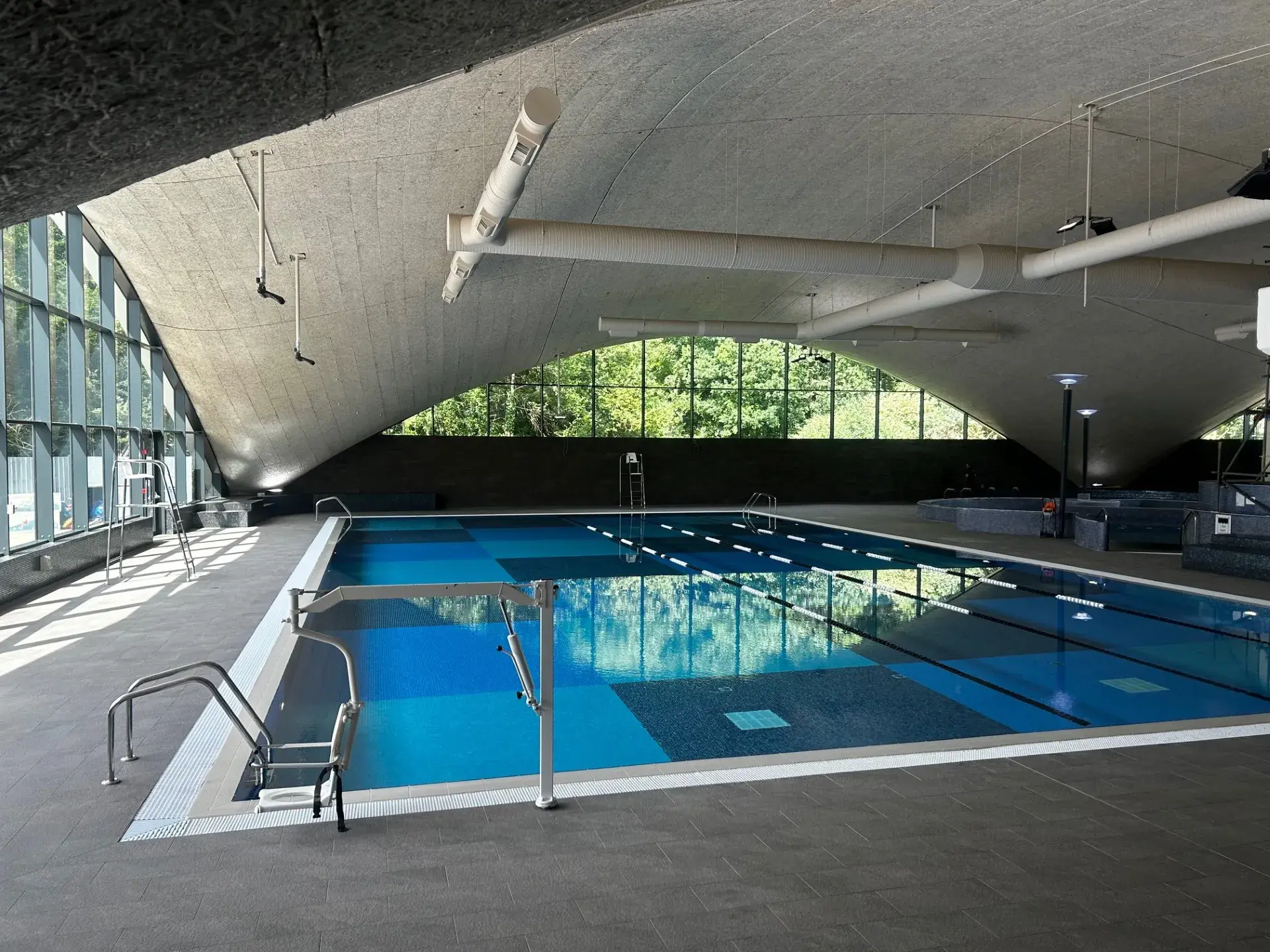
The sports village consists of three angled ranges of concrete shells: a three-bay range containing a former ice skating rink, a six-bay range housing tennis courts and the main sports hall, with a square-plan concrete shell containing a swimming pool at the apex. A hotel block of no architectural interest is centrally positioned between the three shell structures. The site is currently operated by the David Lloyd Sports club group.
Norwich is the latest case in C20’s ongoing Leisure Centres Campaign, which has so far seen five pioneering examples designated across the country: Wrexham Waterworld (F. D. Williamson, 1967-70), Doncaster Dome (Faulkner-Brown Hendy Watkinson Stonor, 1986-89), Bradford’s Richard Dunn Sport Centre (Trevor Skempton, 1974-78) Swindon’s Oasis Leisure Centre (Gillinson Barnett & Partners, 1974-75), and Bell’s Perth (John B. Davidson, 1968) in Scotland.
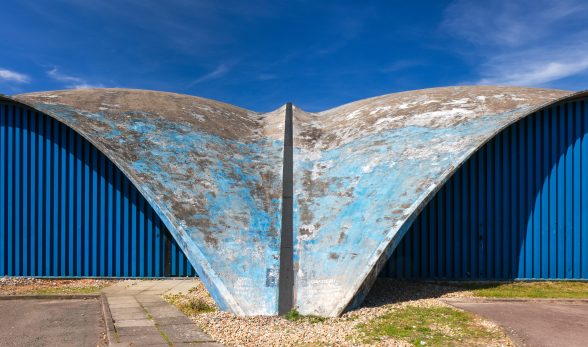
Image credit: John East
Concrete shell construction
For around 2000 years single and double-curved shell structures, like barrel vaults and domes, have been used to cover large spans in buildings. Generally, these were constructed from masonry or unreinforced concrete, materials strong in compression but relatively weak in tension. However, with the advent of reinforced concrete which is a mouldable material strong in both compression and tension, it became possible to construct thin shells with span-to-thickness ratios commonly in the region of 500:1. Thin shells are economical in the consumption of materials, and particularly steel which is used only for reinforcement and usually at quite a low density, so they were used widely for medium- and longspan roof structures from the 1920s until the 1970s.
Shell construction was first introduced to England in the late 1930s, with the building of Doncaster Municipal Airport (now demolished) and the Wythenshawe Bus Depot in Manchester in 1942 (Grade II*). Other notable buildings using shell construction were the main exhibition building at the Commonwealth Institute, now the Design Museum (Grade II*), built in 1960-62 by Robert Matthew, Johnson Marshall and Partners with engineer James Sutherland, and Smithfield Poultry Market, (NHLE 1381209, listed at Grade II) built 1961-3 by T P Bennett and Son with structural engineers Ove Arup and Partners. However the technique had never been common in the UK and was employed only a handful of times since the early 1970s. The labour intensive construction makes it particularly expensive compared to other building methods, while the advent tensile membranes have enabled architects and engineers to cover large areas with lightweight translucent structures, taking much of the potential market for shells.
In 1977, two separate “parashell” concrete domes were erected using the system developed by the Italian designer Dante Bini: the Edinburgh Dome sports hall at Malvern Girls College, Worcestershire (Grade II) and the Dome Sports Centre at Mildenhall, Suffolk (Grade II). These are thought to be the last examples of shell construction nationally until the Norwich Sports Village.
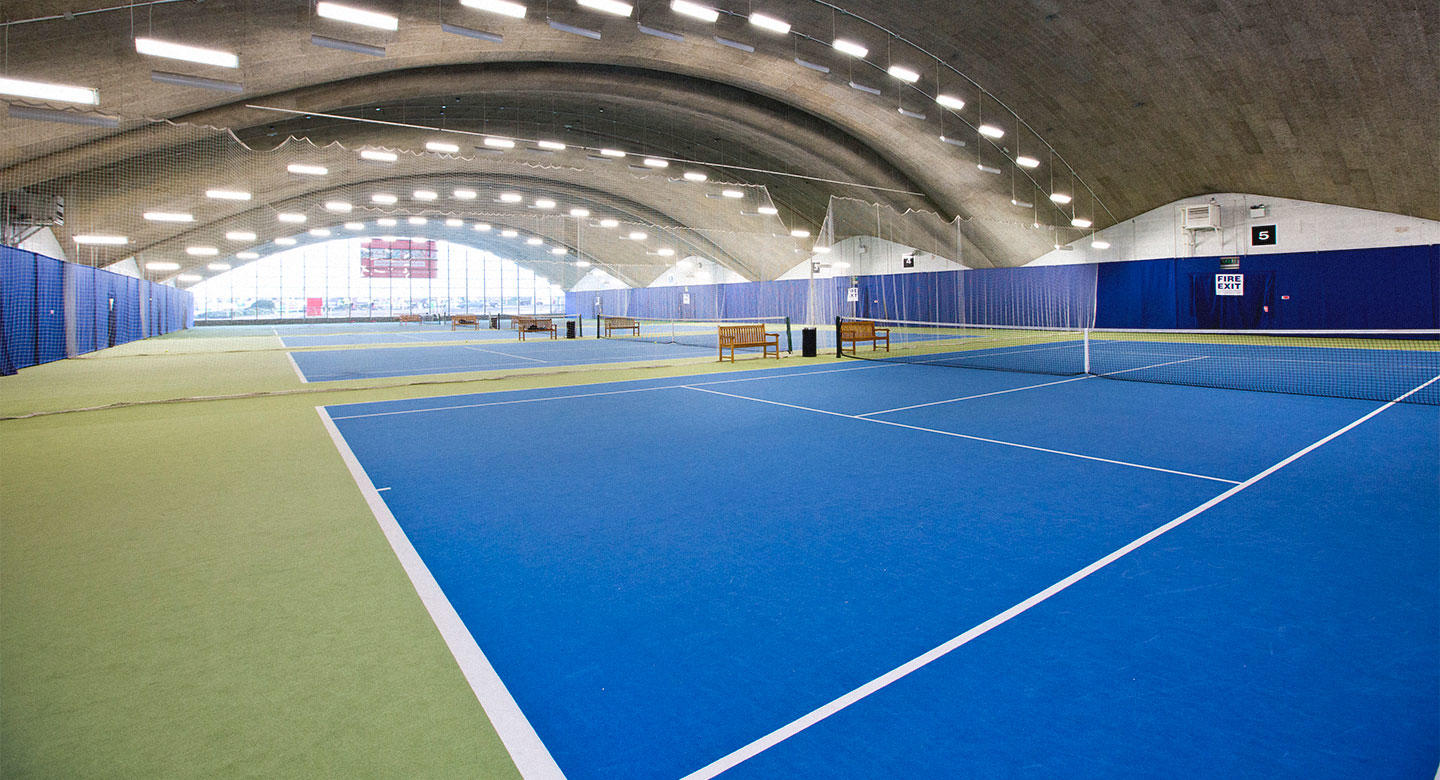
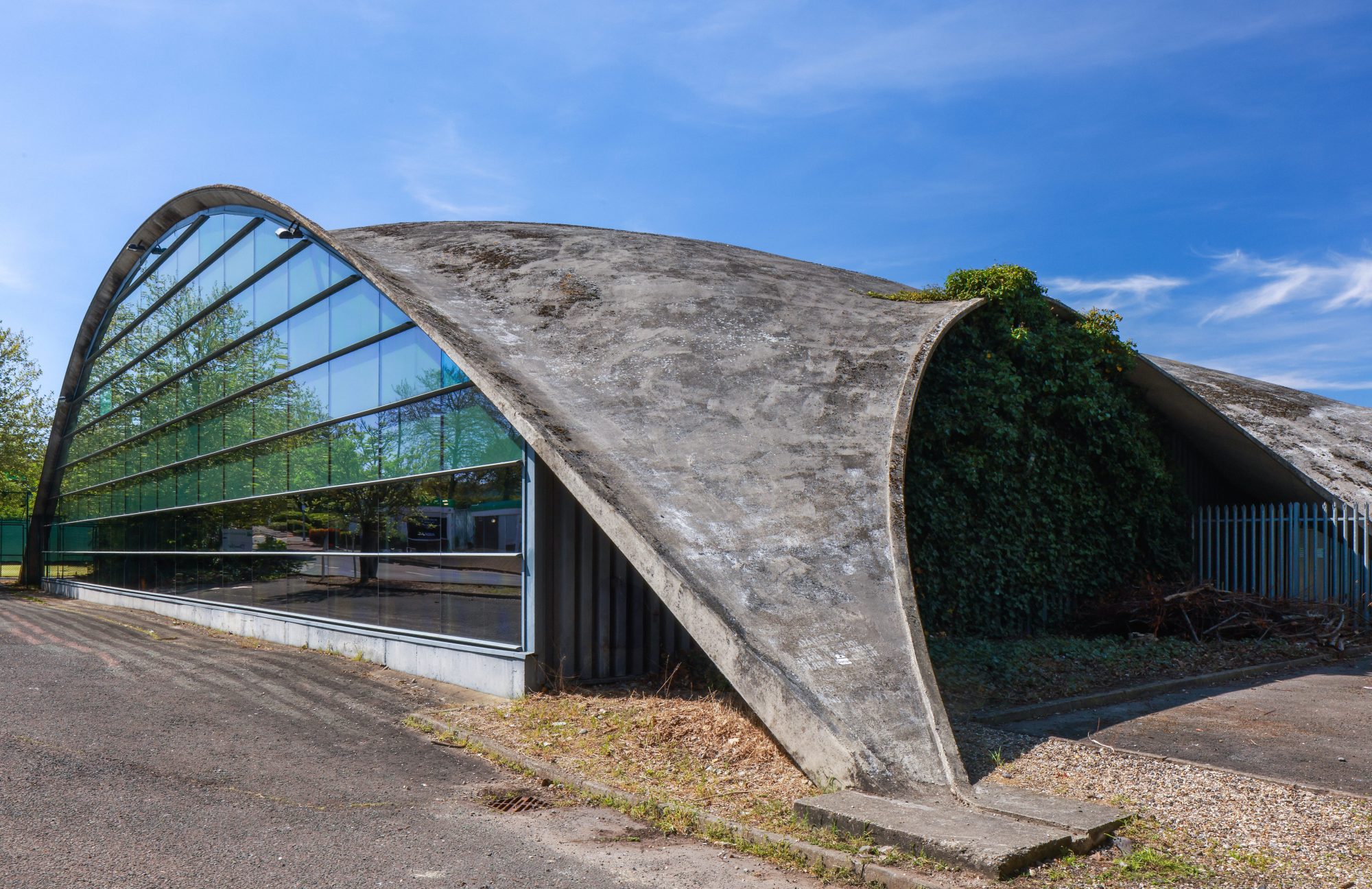
Heinz Isler (1926-2009)
Heinz Isler was born in Zollikon near Zurich, Switzerland. As an engineering student he made a special study of reinforced concrete shells and this was to become his life’s work. His first project was in 1954-55, a concrete shell roof for the Hotel Kreuz at Langenthal, which was inspired by the form of his plumped-up pillow.
Isler’s innovative approach was to shape his forms by one of his three methods: using earth mounds; using inflated rubber membranes, and his inverted membranes or “hanging cloth” designs. This meant that a much greater range of shapes could be achieved. Many of Isler’s most celebrated designs have been examples of the inverted membrane. Isler suspended a cloth of square, rectangular, or triangular shape by its corners, stiffened it, and then inverted it, to provide the form of his shell. To build his structures at full size in concrete, Isler used curved, re-usable formwork of glued laminated timber beams. Thin layers of concrete were poured over the formwork, reinforced only by a light steel mesh. The formwork could then be used for the next shell.
Isler was a prolific designer, with around 1,000 of his buildings constructed in Europe, but the Norwich Sports Village is the only building to his designs in the UK.
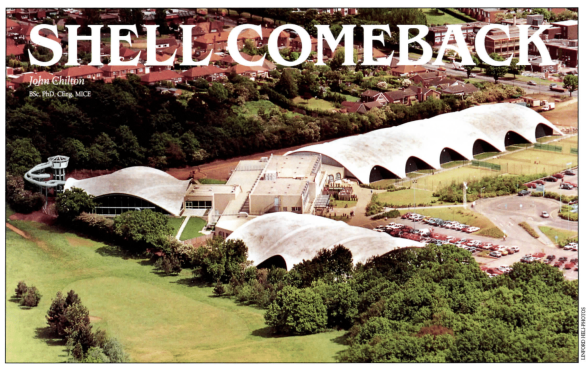
Image credit: Linford Heli-Photos

Become a C20 member today and help save our modern design heritage.