This website uses cookies
This website uses cookies to enable it to function properly and to analyse how the website is used. Please click 'Close' to accept and continue using the website.


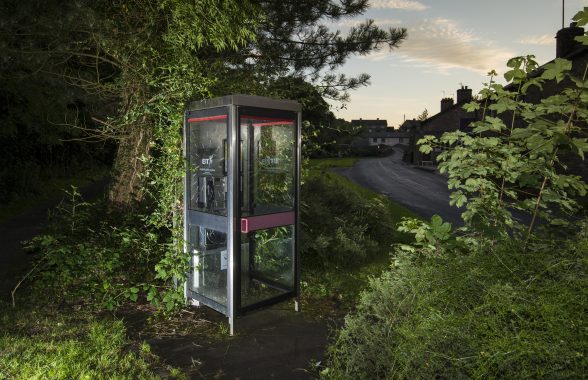
Image (c) FLPA
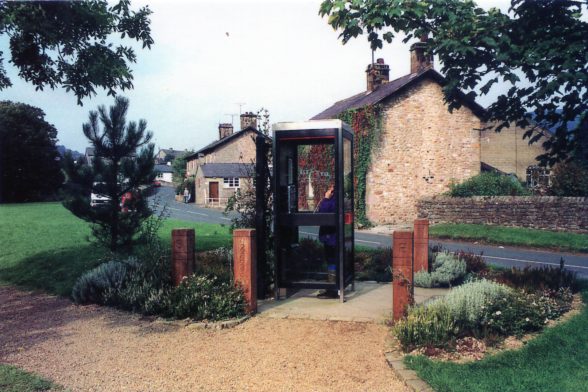
The Society is delighted that our listing application for the famous KX100 telephone box at Dunsop Bridge, Lancashire, has been successful, with DCMS designating the kiosk Grade II.
The kiosk was the 100,000th telephone box to be installed in the country, with it’s location chosen by British Telecom as the geographical centre of Great Britain and its 401 outlying islands. To reflect its landmark status a bespoke site-specific design was commissioned from designers Wolff Olins, the glass panels etched with key places in Britain radiating from the BT ‘Piper’ marque and Dunsop Bridge.
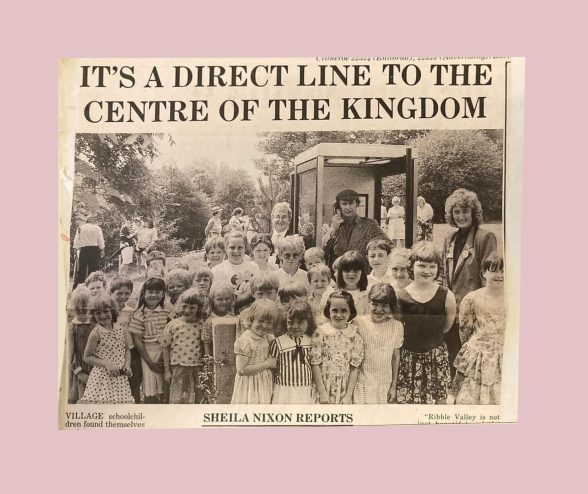
It was officially opened in June 1992 by explorer Sir Ranulph Fiennes, who made the first call from the box to the Ordnance Survey, and by children from nearby Thornleyholm RC Primary School.
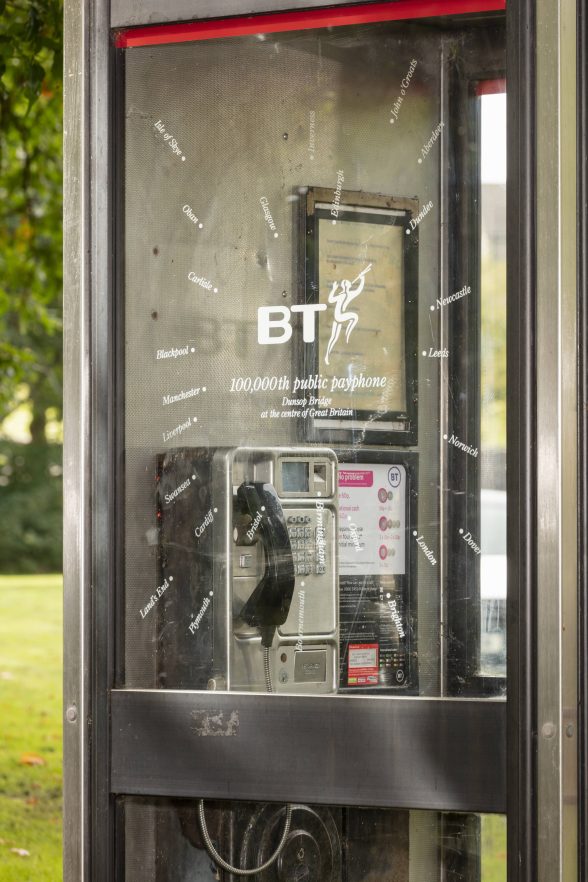
Image (c) Historic England Archive, Alun Bull
Exemplars only
The KX100 listing news brings C20 Society’s 40+ year old phonebox campaign full circle, achieving heritage status for the very model that first spurred the Society into action in 1985, following BT’s privatisation and the widespread removal of the beloved Sir Giles Gilbert Scott-designed red kiosks.
The campaign was revived in July 2024, as the end of the public payphone neared after more than 140 years of service, and with the abundant KX models now also being removed at a rapid rate.
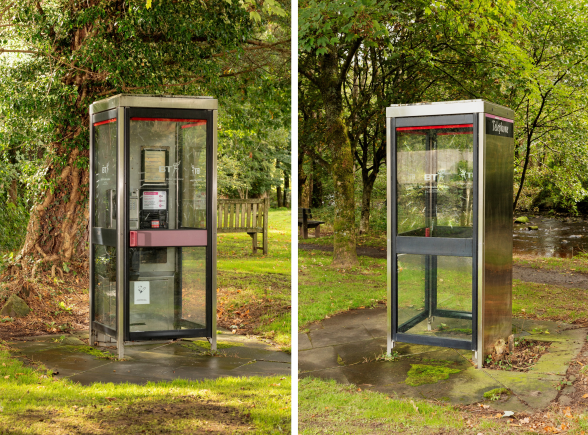
Rather than attempt a mass listing campaign for KX – neither a credible or a desirable prospect – the Society instead identified three exemplars worthy of preservation; one kiosk in England, Scotland and Wales. Each one has either a unique design that sets it apart from regular production kiosks, or survives in exceptional original condition. We believe these to be the most historically significant examples of the KX100 and KX300 in the United Kingdom, and listing applications were submitted in unison to all the relevant national heritage bodies: Historic England, Historic Environment Scotland, and Cadw (in Wales).
The example at Dunsop Bridge is the first to have resulted in a listing designation, with assessments ongoing for those in Scotland and Wales.
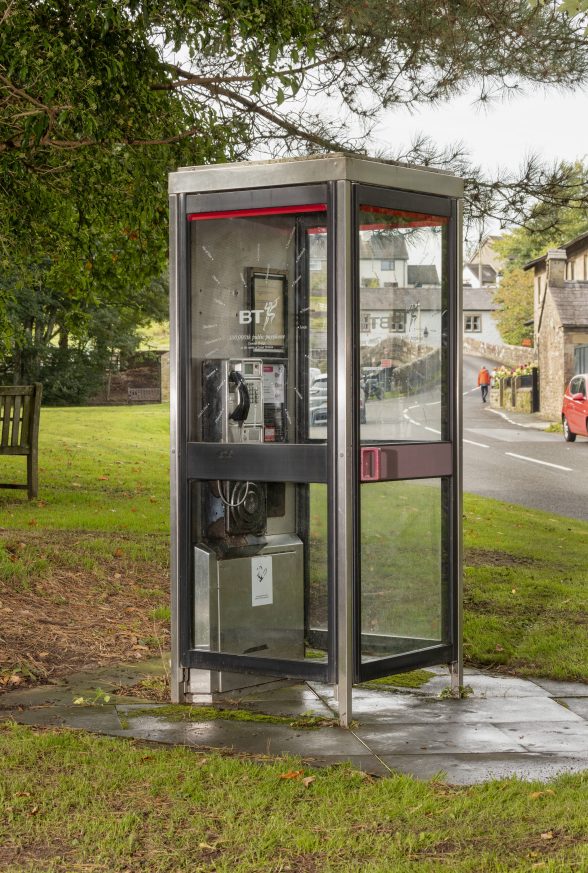
Image (c) Historic England Archive, Alun Bull
KX Kiosk history
In 1979 British Telecom (BT) identified the need for a new telephone kiosk which was wheelchair friendly, vandal proof, robust and easy to clean and maintain to meet modern needs.
Between 1979 and 1980 the leading Industrial designer David Carter Associates (DCA) of Warwick designed a range of six payphone kiosks and booths, which after a pause were abandoned in 1982. The project was revived in May 1983 with DCA’s ‘Warwick’ prototype range. From these designs the core KX range was developed by DCA’s designer Digby Redshaw and Engineer Tony Hume under Carter’s direction.
David Carter (1927-2020) was a skilled industrial designer and, having designed the Stanley knife in 1960, set up his own company in 1963 and went on to produce products such as telephones, tube trains, and the stainless steel Le Shuttle train.
BT was privatised in 1984 and the KX range of kiosks was officially launched on 20th June 1985 in London. The range was manufactured by GKN Sankey in Telford, who produced and partially assembled components like the K8 modular build method, meaning it could be built in different arrangements depending on the specific requirements of the site and its users. The KX kiosk had a frame of steel and aluminium and toughened glass panels, with corporate branding that changed over time.
New branding was introduced in 1991 which included the new ‘BT’ wordmark and the ‘Piper’ logo (in blue and burgundy and/or frosted glass), and a burgundy red door handle and modesty panel.
GKN manufactured at least 80,000 outdoor KX housings between 1985 and 1995 (comprising the KX100, KX200, KX300). The KX100 was the most installed of the wider KX range.
‘Corporate profit not common good’
Unfortunately, the utilitarian appearance and lightweight construction of the KX met with opposition from the outset, while the slab-sided glazing have latterly made it an attractive spot for fly-postering and unsightly wrap-around vinyl advertising. It has been ungenerously described as ‘ugly’ and ‘infrastructure for corporate profit not common good’ [John Jervis, Icon Magazine 2017), inspiring little of the nostalgia that Sir Giles Gilbert Scott’s classic red K2 and K6 models command, with their far more substantial cast iron construction, and neo-Georgian and Art Deco design cues.
Yet this is the ‘silence cabinet’ – as phone boxes were originally known – reduced to perhaps its purest form, bringing commercial modernism to nearly every high street and village green in Britain. Its place as the last generation of public telephone box, a uniquely twentieth century archetype, makes an important contribution to our understanding of the historic development of the telecommunications industry before the introduction, and subsequent widespread use, of mobile phones.
(c) British Telecom
Comment
Oli Marshall, Campaigns Director at Twentieth Century Society, commented:
“We’re absolutely delighted that the KX100 kiosk at Dunsop Bridge has been designated Grade II, as Twentieth Century Society’s famous telephone boxes campaign comes full circle.
There’s no small irony that it was the arrival of the KX100 that first spurred the Society into action back in 1985: once the slayer of traditional red telephone boxes that we fought vigorously to repel, now itself being given heritage protection. What goes around comes around!
While widely unloved and underappreciated in comparison to the classic red telephone boxes, the ‘ugly duckling’ KX100 model has developed a cult following in recent years. The unique example at Dunsop Bridge is not only pub quiz trivia as the dead centre of Great Britain, it’s the final-flourish of telecoms design in the public realm and a small part of our national story.”
On 6 August 1986, a K3 concrete telephone kiosk (designed in 1929), located outside the Parrott House at London Zoo, became the first listed telephone box in Britain. The then Environment Minister, Lord Elton, signed legislation that allowed telephone kiosks to become listed buildings, making a ‘trunk’ call at a press event in the zoo with Azizah the elephant.
It followed the enormously successful ‘Take It As Red’ campaign by the Thirties Society (forerunner to the Twentieth Century Society), launched the previous year in response to BT’s modernisation programme. This scheme saw thousands of the classic red K2 and K6 kiosks, designed by Sir Giles Gilbert Scott, unceremoniously removed and scrapped, leading to a public outcry.
The campaign has resulted in more than 3,000 kiosks across the country being added to the National Register since 1986, with hundreds more adopted by local communities and saved from destruction, making it arguably the most successful public heritage campaign in history.
It was first revived in 2007 to fight for the even rarer 1960s K8 kiosk, designed by Bruce Martin, with 32 of these now nationally listed, before being resurrected again in 2024 with listing applications for a trio of KX kiosk exemplars. In August 2026, to mark the 40th anniversary of the first telephone box to be listed, four further quirky kiosk designs were put forward for listing.
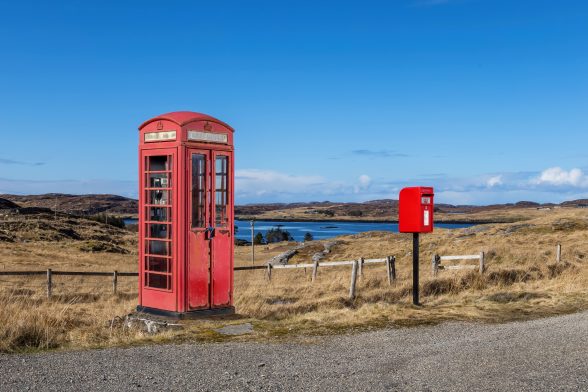
Image credit: John Maher
Become a C20 member today and help save our modern design heritage.