This website uses cookies
This website uses cookies to enable it to function properly and to analyse how the website is used. Please click 'Close' to accept and continue using the website.


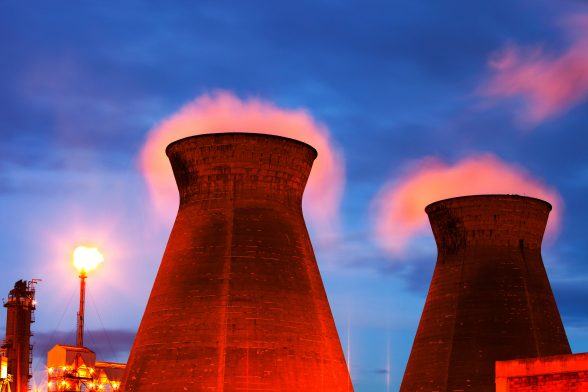
Image credit: Ashley Cooper pics
From the Finnieston Crane on the Clyde to the winding gear at Mary Colliery in Fife; the Forth Rail Bridge to the Pitlochry Power Station & Dam, Scotland’s industrial and engineering landmarks are a powerful presence in the landscape. Now, another familiar structure may be joining them as a nationally designated heritage site.
Twentieth Century Society has submitted a listing application to Historic Environment Scotland for two cooling towers at the Grangemouth industrial complex in Falkirk.
The nine, 200ft+ high hyperboloid natural draft cooling towers give the sprawling industrial site its distinctive skyline, and were mostly constructed between the 1950s and 1970s. The Society’s application focusses on the earliest pair, built in 1949-50 off Bo’ness Road, which are believed to be among the oldest towers still standing anywhere in the country.
Following the demolition of Ravenscraig Steelworks in 1996 and the towers at Chapelcross Nuclear Power Station in 2007, the examples at Grangemouth are the last remaining cooling towers in Scotland. Their distinctive shape with a pronounced ‘pinch’ at the neck is unlike most other examples of hyperboloid cooling towers, which typically exhibit a gentler, shallower taper.
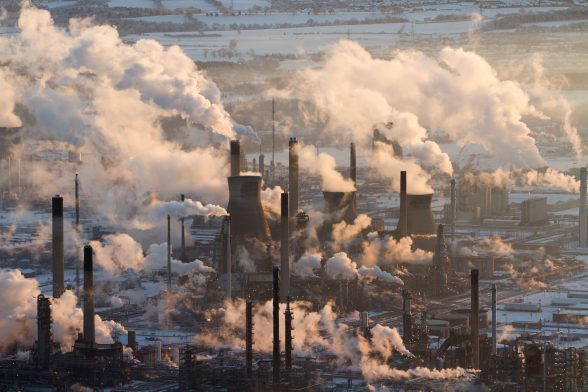
Image credit: Chris James
Grangemouth industrial complex
Opened in 1924 by Scottish Oils (a subsidiary of the Anglo-Persian Oil Company), Grangemouth was one of the first crude oil refineries in the UK. At its peak it processed upwards of 140,000 barrels of crude oil a day, supplied 65% of Scotland’s oil products and was in operation for more than a century until a controversial closure in April 2025, with the loss of more than 400 jobs. Currently operated by Petroineos, the site has transitioned to a fuel import and distribution terminal.
Comprising the former refinery, fuels terminal and petrochemical plant, the 1,700-acre Grangemouth complex is Scotland’s largest brownfield industrial site. The UK Government pledged £200m of investment from the National Wealth Fund last year to secure jobs, help attract private investment, and to ensure a long-term future for Grangemouth. Work is currently underway to decommission the refinery site and remediate contaminated land, with an independent report recently outlining nine potential low carbon and renewable options for its future reuse. These include plastics recycling, hydrogen production, bio-feedstock processing, and an offshore wind conduit.
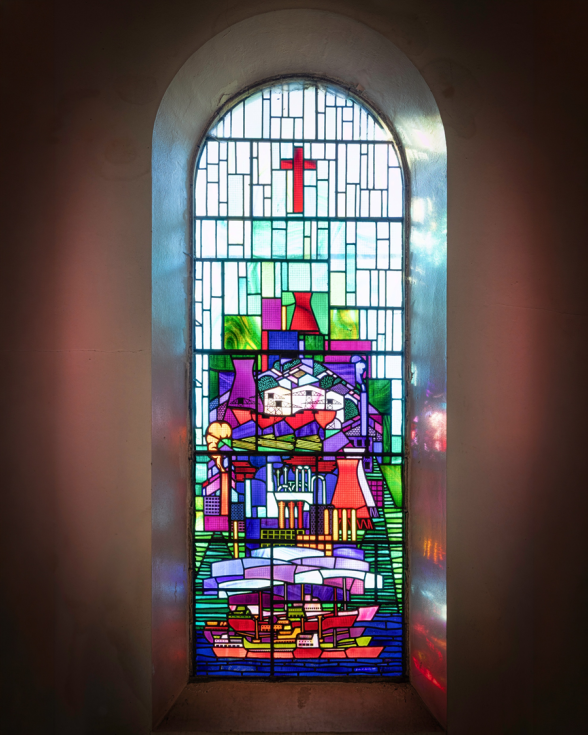
Image © Alan John Ainsworth Photography [09/11/26]
Cooling towers campaign
The same height as the Scott Monument in Edinburgh, yet with concrete walls only seven inches thick, cooling towers are a tour-de-force of engineering, described by artist Sir Antony Gormley as ‘the Stonehenge of the carbon age’. They are cathedrals of 20th century industrial heritage and an irreplaceable part of our national story, yet cooling towers now exist on borrowed time.
From a peak of 240 individual towers in the 1960s, today only 9 remain in Scotland and 34 in England, with almost all due to be demolished within the next decade. Twentieth Century Society has been campaigning since 2023 to preserve a handful of historic cooling towers across the country.
Whether they are reused for new industries, imaginatively repurposed for art, culture, science and education (as has happened with several international examples), or simply left as enigmatic markers in the landscape, we must act now to ensure this awe-inspiring legacy of a vanishing age is not lost forever.
Get involved, join the campaign!
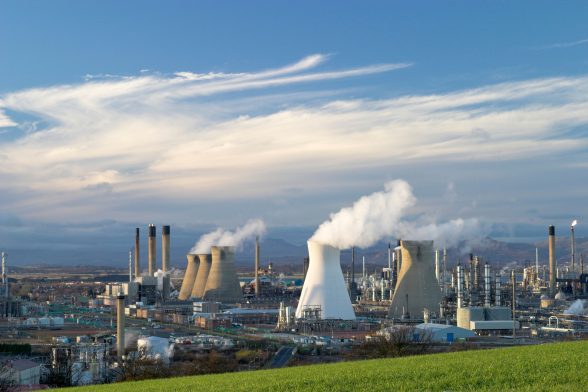
Image credit: Alistair Dick
Comments
• Oli Marshall, Campaigns Director, Twentieth Century Society:
Cooling towers were always rare in Scotland, but the historic examples at Grangemouth now represent the very last of their kind. These icons of industry give Grangemouth its distinctive skyline and are even immortalised in a stained-glass window at the nearby St Mary’s Church. We believe they deserve their place alongside Scotland’s other great listed landmarks.
Whatever the future may hold for the Grangemouth site, at least a couple of historic cooling towers should remain as monuments of the 20th century, and as beacons for the industries of the 21st century.
• Paul Sweeney MSP, Member of the Scottish Parliament for Glasgow:
“Grangemouth’s cooling towers are monumental feats of post-war civil and industrial engineering, standing as an unmistakable testament to the generations of skilled workers who powered modern Scotland’s oil refining and petrochemicals industry.
Whilst the 1949-50 Bo’ness Road towers are the last of their kind in Scotland, preserving them need not conflict with Grangemouth’s industrial renewal, just as the Category A-listed original Fairfield engine works still stands at the heart of Govan shipyard in Glasgow, landmark industrial structures can be successfully retained to anchor proud, productive modern industries.
As the Grangemouth industrial cluster enters a period of profound transition, we should not erase the monumental physical record of Scotland’s industrial engineering heritage by default, and I urge Historic Environment Scotland to give the Twentieth Century Society’s listing application serious and positive consideration. They have my full support and encouragement.”
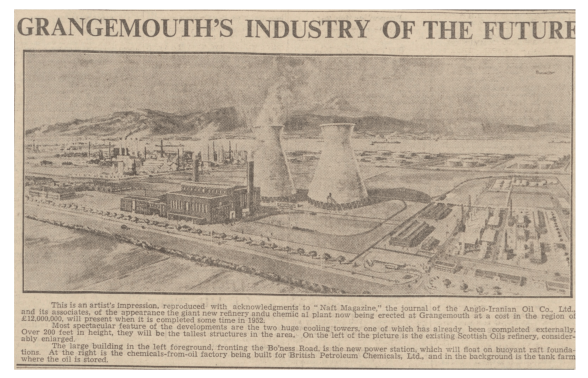
Image © National World Publishing Ltd, courtesy of The British Library Board.
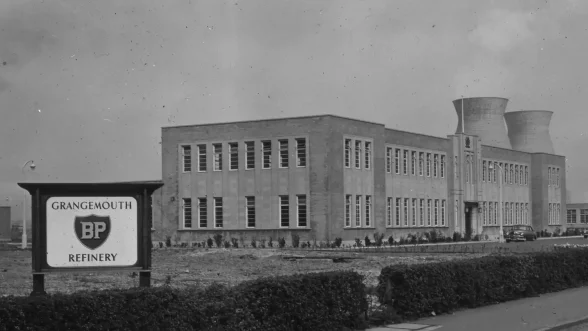
Image credit: BP Archives
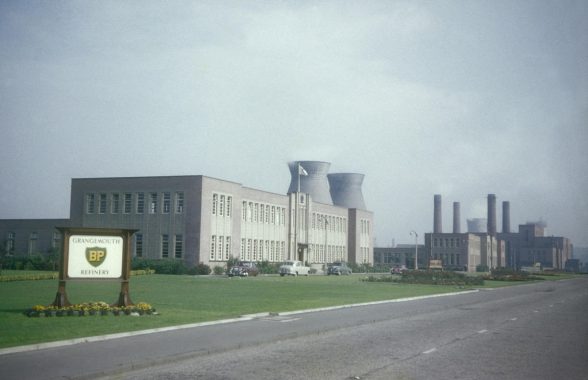
Image credit: Falkirk Archives
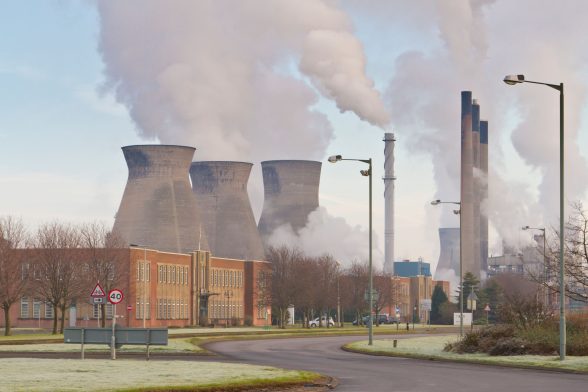
Image credit: Duncan Astbury

Become a C20 member today and help save our modern design heritage.