This website uses cookies
This website uses cookies to enable it to function properly and to analyse how the website is used. Please click 'Close' to accept and continue using the website.


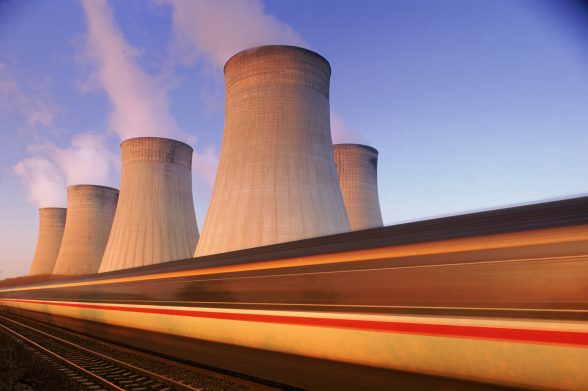
Image credit: David Noton
12 months ago [30 Sept 2024] Britain’s last coal-fired power station in Britain, Ratcliffe-on-Soar in Nottinghamshire, shut down after 50 years of powering the national grid. We can now confirm that C20 Society’s listing application for the 8 cooling towers at Ratcliffe has been rejected by Historic England and DCMS. Last week Rushcliffe Borough Council also approved plans for the demolition of the towers and all other buildings on the 273-acre site, which has been earmarked for a new zero-carbon manufacturing and technology location, as part of the East Midlands Freeport strategic hub.
Designed by BDP (led by Godfrey Rossant and J.W Gebarowicz) and constructed 1963-67, the cooling towers at Ratcliffe are an unmissable marker in the landscape at the centre of country, positioned near the meeting point of the M1 motorway, Midland mainline and the River Soar. From a peak of 240 individual cooling towers in the 1960s today just 37 remain across Britain, with almost all scheduled to be demolished before the end of the decade. The eight towers at the former Cottam Power Station in Retford were most recently demolished in June 2024, with the four remaining towers at Fiddlers Ferry due to follow in 2026 and those at Ratcliffe which expected to be brought down sometime in 2029-30.
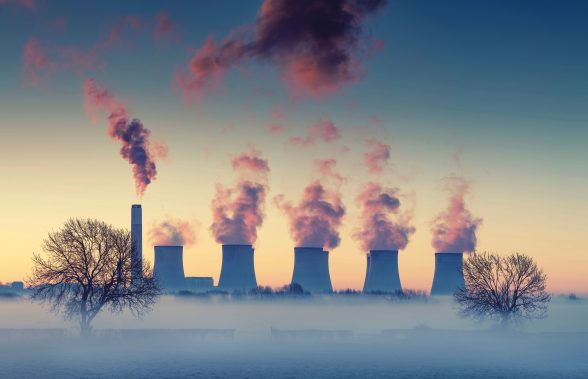
Image credit: Steve Cole (Flickr @KingNik)
‘Stonehenge of the carbon age’
Historic England’s long standing advice to the government (DCMS) is that cooling towers ‘do not have the architectural interest requisite for listing’, and stating that ‘at the moment there are no plans to preserve a cooling tower’, only to ‘work closely with power companies to ensure a photographic record is secured before loss’.
C20 Society profoundly disagrees with this short-sighted approach and is urging both Historic England and DCMS to reconsider, recommending that just one set of towers be preserved for future generations. The transition to a greener, cleaner energy network is a profoundly positive step for the UK and one that must be welcomed. However, by eradicating our post-war cooling towers we are in danger of obliterating the most awe-inspiring legacy of a vanishing era – ‘the Stonehenge of the carbon age’, as Sir Antony Gormley has described them.
Whether they are imaginatively repurposed – as has happened with many international examples – turned into giant art objects, educational science parks, or simply left as enigmatic markers in the landscape, time is running out to save these cathedrals of our industrial heritage.
Become a C20 member today and help save our modern design heritage.