This website uses cookies
This website uses cookies to enable it to function properly and to analyse how the website is used. Please click 'Close' to accept and continue using the website.


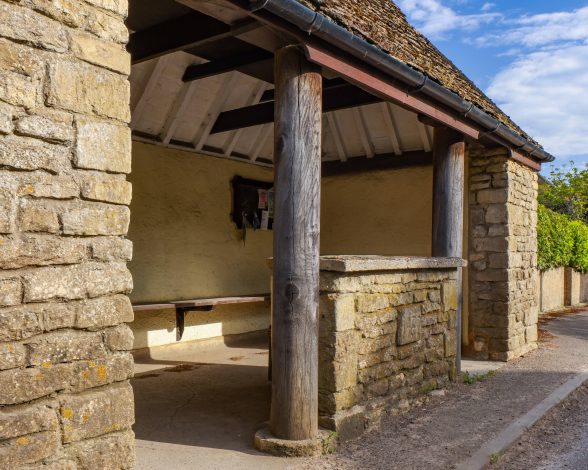
Image: John East
We’re pleased to announce that Berthold Lubetkin’s Festival of Britain bus shelter in Hillesley, Gloucestershire, has just been designated Grade II by DCMS, following a recent listing application by the Society.
Modest but definitely not Modernist, this Cotswold vernacular bus shelter demonstrates the remarkable versatility of its famous architect, and is believed to be a unique example of Lubetkin working in a traditional manner. From the pioneering Finsbury Health Centre to the sculptural Penguin Pool at London Zoo, the shelter becomes the 28th Lubetkin building on the national register of historic buildings.
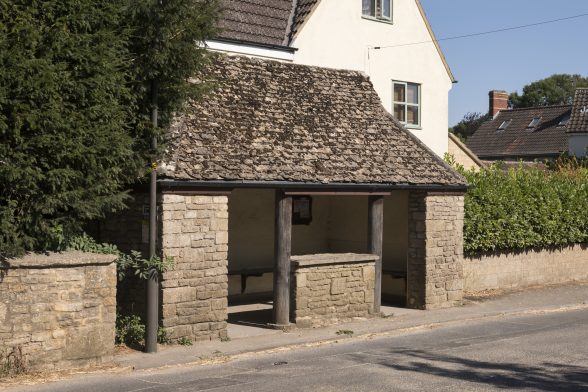
Image (c) Historic England
1951 and all that
The Council for the Preservation of Rural England (CPRE) and the National Association of Parish Councils suggested that the building of bus stops would be an appropriate way for small parish councils to celebrate the 1951 Festival of Britain. The National Association of Parish Council’s subsequent competition stipulated that the design of the bus shelters should be based ‘on the use of local materials, so that the structures will fit harmoniously into the surrounding landscape’.
The bus shelter in the village of Hillesley in Gloucestershire was designed in 1951-52 during the final phase of Lubetkin’s career; a period when he grew disillusioned with post-war politics and the architectural profession, and increasingly withdrew from active practice. He had relocated to the Gloucestershire countryside in 1939 and volunteered his services to the Parish Council for the small shelter project. The ‘little monument’ in traditional Cotswold materials and methods, but with ‘whimsicality cast to the wind’, represents an idiosyncratic but characteristically detailed departure for Lubetkin, the leading figure of the Modern Movement in England.
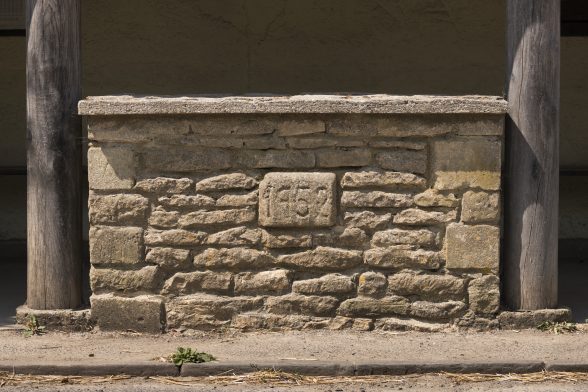
Image credit: Historic England
The shelter was apparently a collaborative effort with each step of the design closely argued between architect and parishioners. As the Architects Journal reported (10-09-1953):
‘Contention grew hottest (so it is reported), over rainwater disposal: the villagers wanting the usual half-round gutter to be festooned openly around the eaves, the architect demanding – and in the end making it a condition of his continued interest – that it be boxed in. It was.’
‘The reason for this showdown may not be instantly apparent in print, but it is apparent in the flesh, or to be exact, the wood and stone. For by this means, it was possible for the architect to carry the taut lines of machine aestheticism into the wide tolerances of Cotswold tradition.’
‘No floppy hat roof here, discharging with curved bellcast [eaves] into visible ironmongery in the manner Mr Edwin Gunn’s “Litttle Things That Matter” (1923), but with a sharp statement, one-roofline-one-plane, with little functional necessities supplied out of sight – at small added cost’
Only four Festival of Britain bus shelters are thought to exist in England – Hillesley; Stone Street, Kent; Bramfield, Suffolk; and Farmington, Gloucestershire, which was listed at Grade II in 2008.
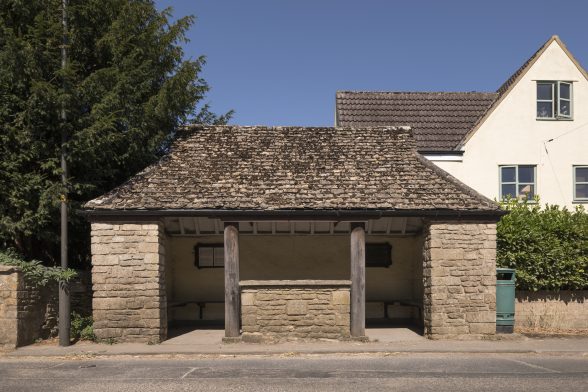
Image credit: Historic England
The Lubetkin legacy
Georgian emigre architect Berthold Lubetkin (1901-1990) was a pivotal figure who with his Tecton partnership dominated the development of modern architecture in Britain in the inter-war years, with the Penguin Pool at London Zoo, Highpoint flats, Finsbury Health Centre and many other outstanding designs across housing, public buildings, and zoological pavilions.
Up to the late 1960s, further exciting though lesser-known work was produced, including three major social housing projects in Islington and others at Bethnal Green, embodying highly distinctive urban design ideas carried forward from his thwarted plans for Peterlee New Town. His 27 projects on the National Register are thought to place him third behind only Sir Edwin Lutyens and Sir Giles Gilbert Scott, in terms of the 20th century architects with the most listed buildings.
Lubetkin was an architect with high social ideas whose idiosyncratic practice was underpinned by intensive theorising and fastidious working methods. Lubetkin’s considerable legacy is also visible in the work of his many younger collaborators such as Denys Lasdun, Peter Moro, Gordon Ryder and Peter Yates who developed significant careers in their own right.
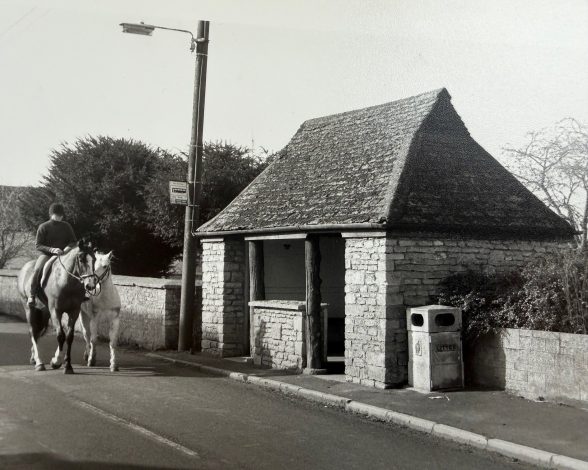
Image credit: John Allan
For more information, read John Allan’s monograph on Berthold Lubetkin, part of our Twentieth Century Architects’ Lives series. Click here to order.
Public and social buildings
Houses:
Zoological pavilions and sites
Public and private apartments
Become a C20 member today and help save our modern design heritage.