This website uses cookies
This website uses cookies to enable it to function properly and to analyse how the website is used. Please click 'Close' to accept and continue using the website.


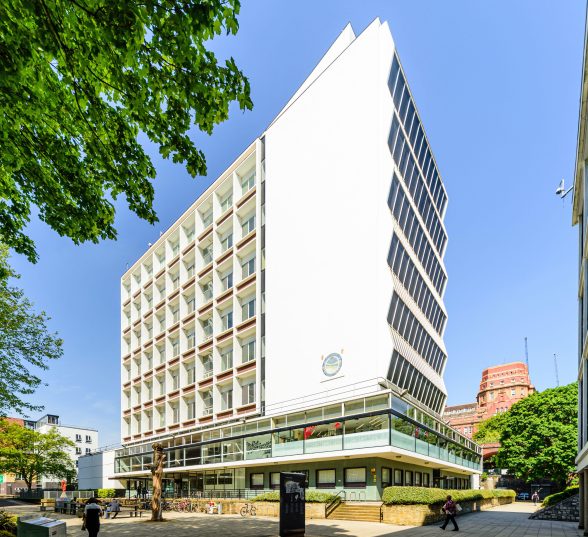
Image © Jon Sparks
The Renold Building at the former University of Manchester Institute of Science and Technology (UMIST) has just been designated at Grade II, 20 years after the first listing application by C20 Society in 2005. The news comes as the rest of the significant post-war campus is facing large-scale redevelopment.
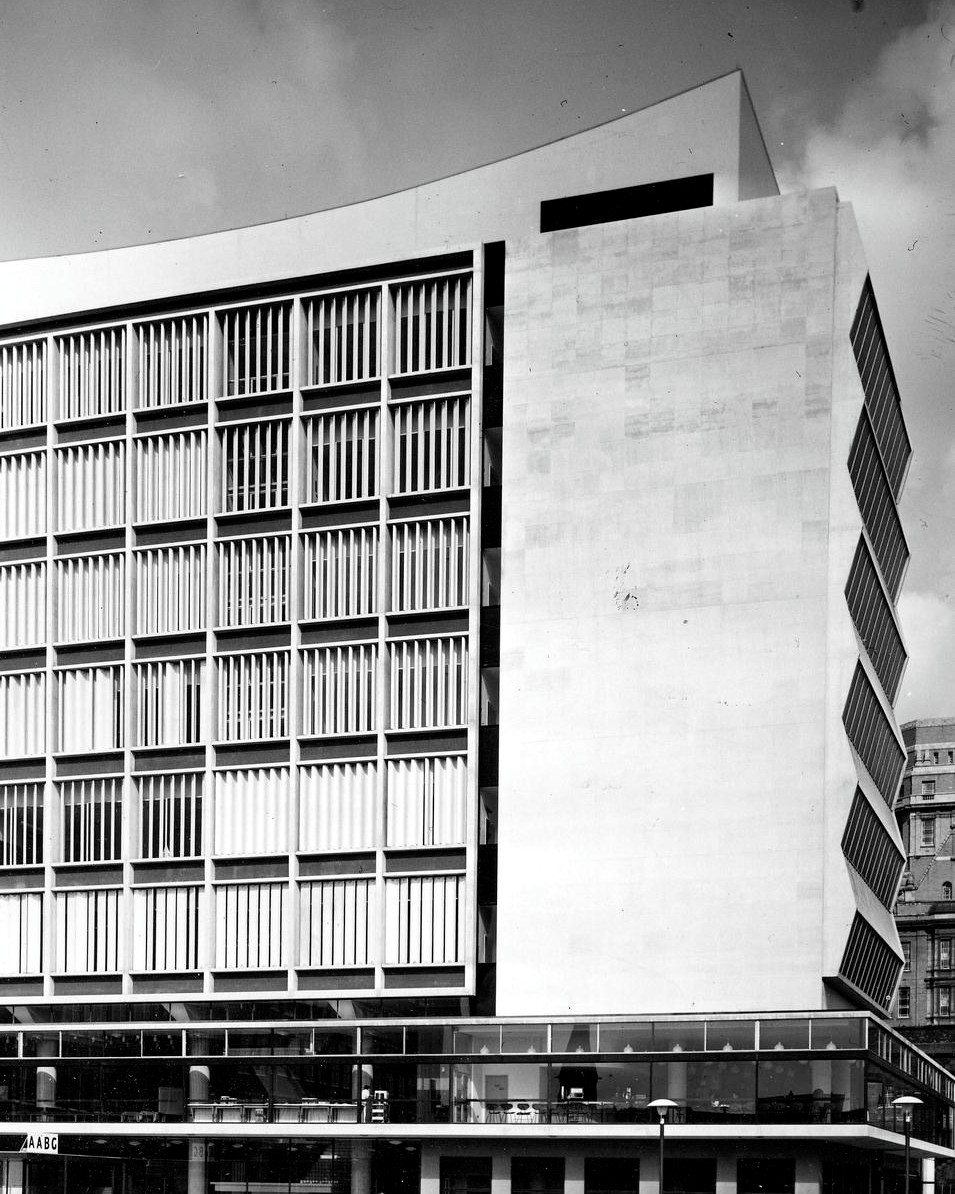
Designed by W.A. Gibbon with Gordon Hodkinson of Cruikshank & Seward and constructed 1960-62, the Renold Building is an innovative and influential example of British modernism, with its roots in the International Style and nods to both New York and Brasilia. The building also contains a largescale abstract interior mural; a rare and important work by leading post-war artist Victor Pasmore.
The Renold Building was initially turned down for listing in 2006, with Historic England’s assessment at the time referring to a ‘lack of high architectural quality’ and degree of alteration. The latest assessment accepts that verdict ‘now appears harsh’, and goes on to credit the extensive research of Professor Richard Brook, member of C20’s Casework Committee and Director of Research at Lancaster School of Architecture, and the late Elain Harwood, Senior Architectural Investigator at Historic England, in achieving a greater understanding of both the UMIST campus and the context of post-war higher education buildings.

Image © Mark Waugh
‘Canons of Good Design’
UMIST was one of the most prestigious technical colleges of the post-war era, accorded university status in recognition of its strategic importance in the national development especially of Cold War technology The development of the UMIST campus was guided by novel briefing document entitled ‘Some Canons of Good Design’, authored collectively by the architects H.T. Seward, H.S. Fairhurst, Sir Hubert Worthington, W.A. Gibbon and B.V. Bowden. It outlines how ‘buildings must be designed with their purposes in view’ and be of a ‘pleasing appearance’, including the use of modern materials and finishes that ‘must not lose their effect…with age and Manchester climate and atmospheric’. UMIST is also believed to be the first use of the term ‘campus’ in the British context of university planning. It was described as such as early as 1953, the word ‘campus’ not being printed again in this context until 1965.
The Renold Building was designed as the centrepiece of the campus in 1958 by W. Arthur Gibbon and Gordon Hodkinson of Cruikshank and Seward, with consultants Hope Bagenal (acoustics) and Ove Arup (engineering). The first building to be completed on campus and with a higher budget than subsequent buildings, it was a seen as a statement of intent and manifestation of the vision for the university as a place that would bring pride and pleasure to occupants and the general public beyond.
Its original use was as a lecture block, placing nine communal lecture theatres together in one building, designed to be economical of space and save time in moving between buildings, while allowing much larger numbers of students to be taught in larger and better-equipped theatres. Though the idea existed abroad in the Netherlands, Germany and the USA, this was the first specific lecture block in an English civic university.
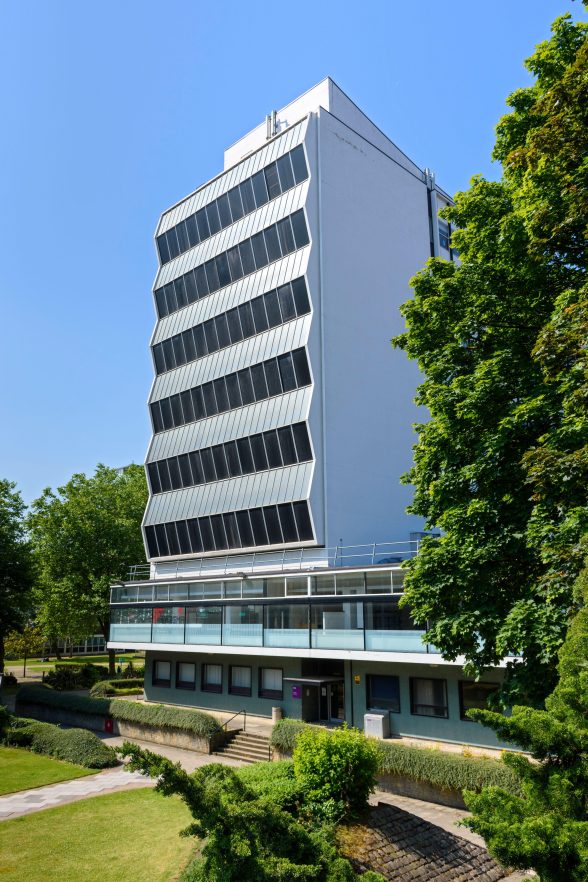
Image © lowefoto
New York, Brasilia, Manchester?
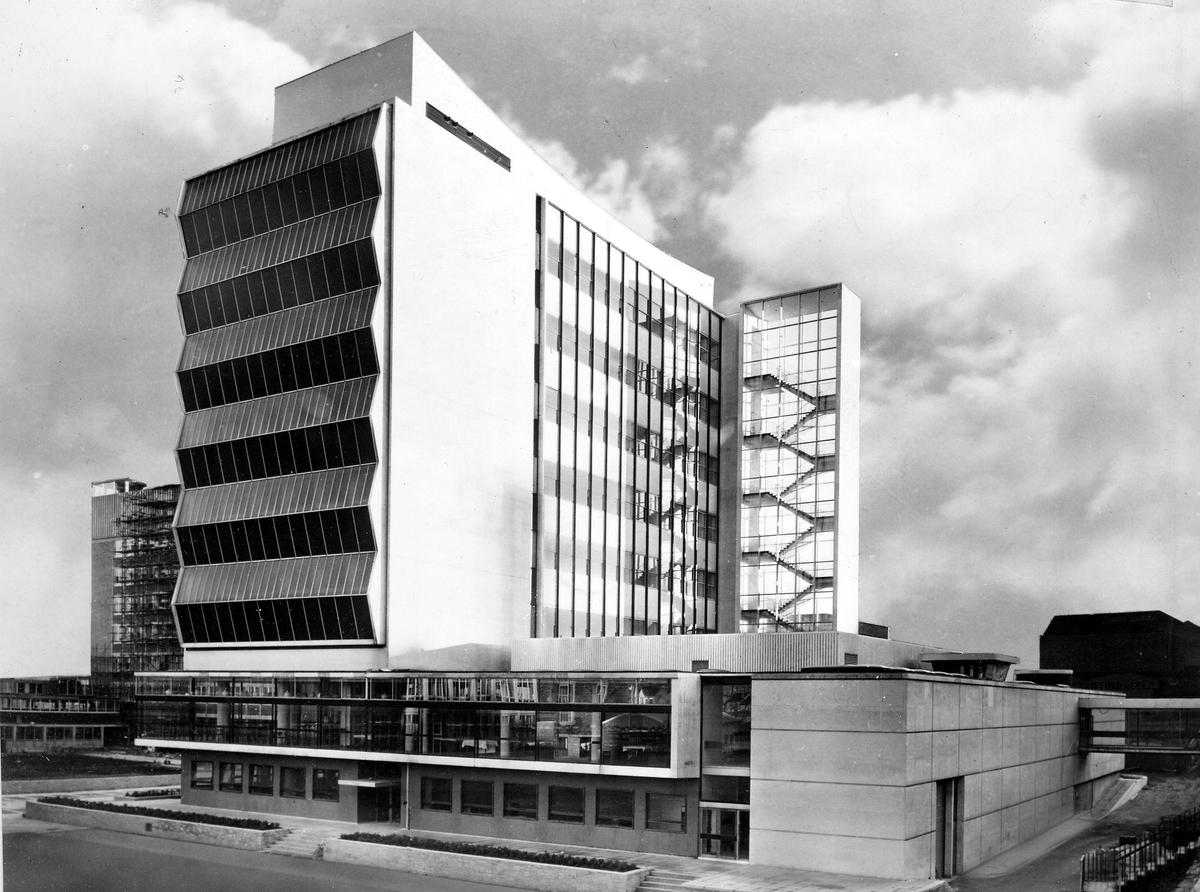
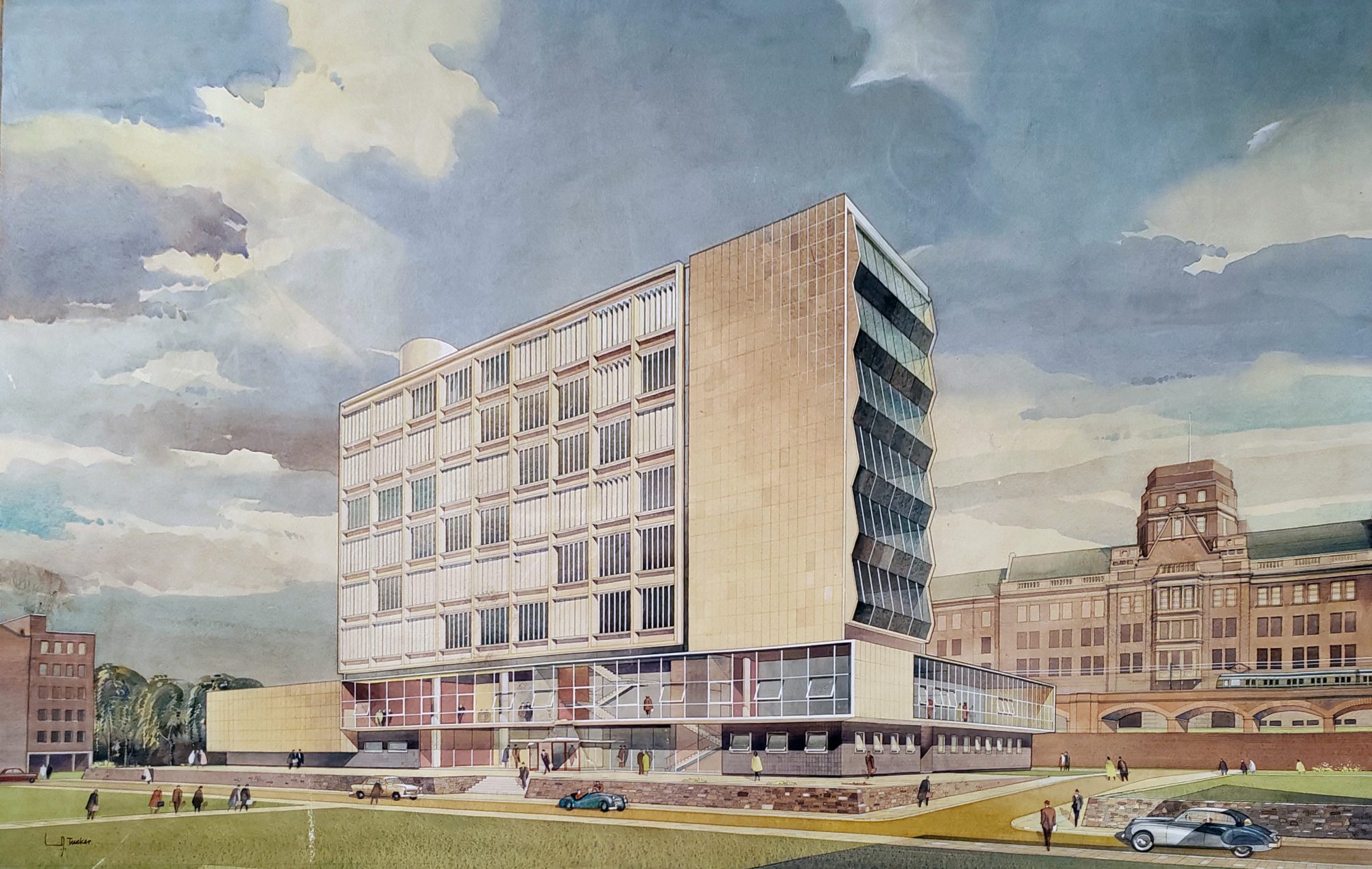
The Renold Building was one of a suite of white concrete and Portland stone structures on the campus; a deliberate contrast to the adjacent brick and terracotta ornateness of Victorian Manchester. This was also one of the earliest buildings in the UK to assume a tower and podium configuration after Skidmore, Owings and Merrill’s Lever House (1952) in New York. The visual separation of the tower was achieved by the use of elegant ‘birds-mouth’ beams that facilitated the continuous clerestory window at the junction of the two formal elements. Its most striking and sculptural features are the faceted zig-zag east facade, offering backlighting to the stacked lecture theatres, and transparent stair tower, a perpendicular projection of perilously thing glazing bars. In a nod to Oscar Niemeyer, architect of the modernist planned capital city Brasília, Gibbon also introduced a concave curved profile to the rooftop plant room.
The exterior of the building remains largely as built, the exception being the removal of asbestos cement
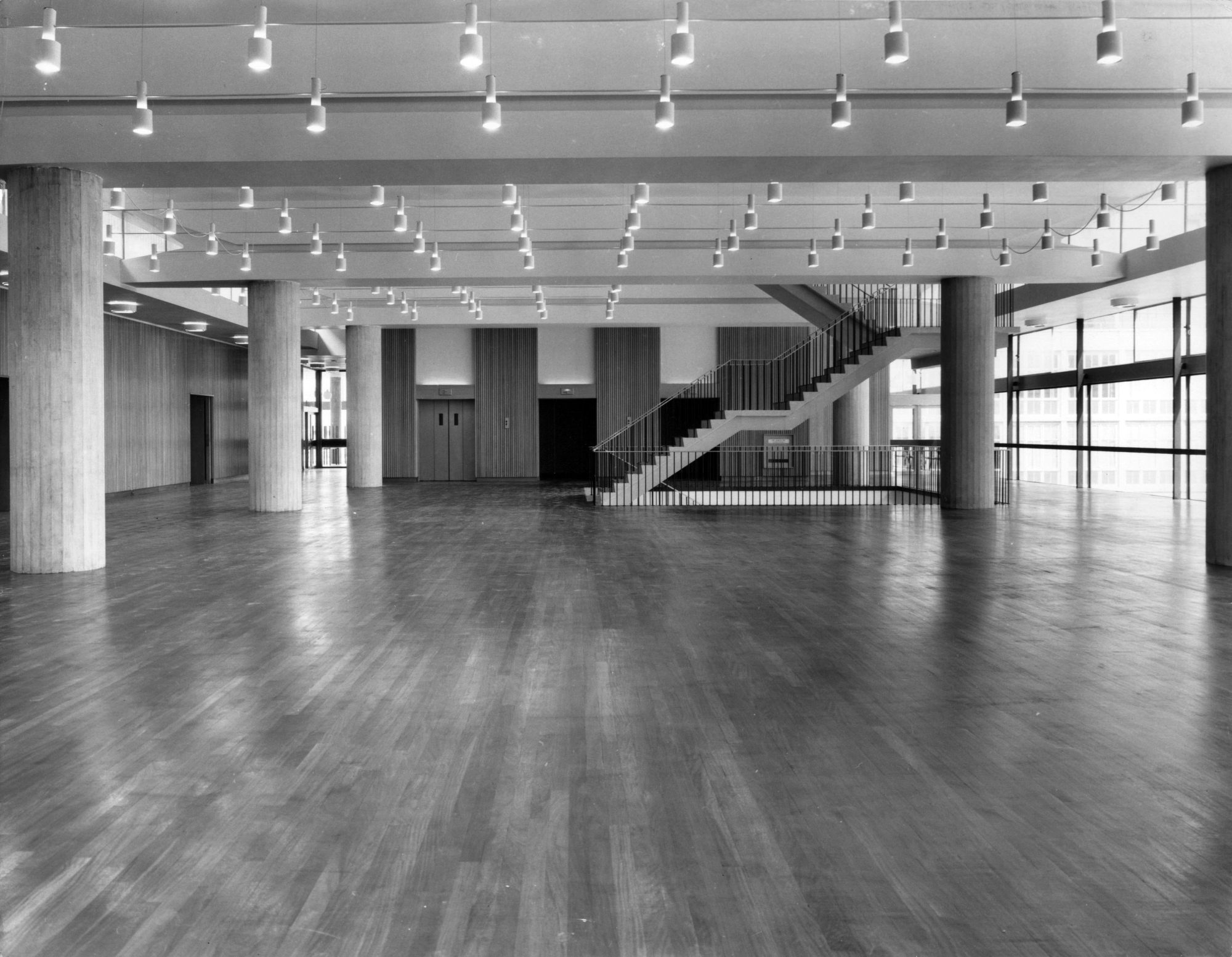
window louvres to the south elevation. Whilst the interior has undergone more alterations with the removal of lecture theatre furniture and teaching accessories, and also following recent conversion works, nevertheless the innovative character of the building remains, with all nine raked lecture theatres still present. It has recently been rebranded as the ‘Renold Innovation Hub’, offering coworking space, private workspace and event spaces for business start-ups as part of the wider Sister development.
Pasmore’s ‘Metamorphosis’ mural
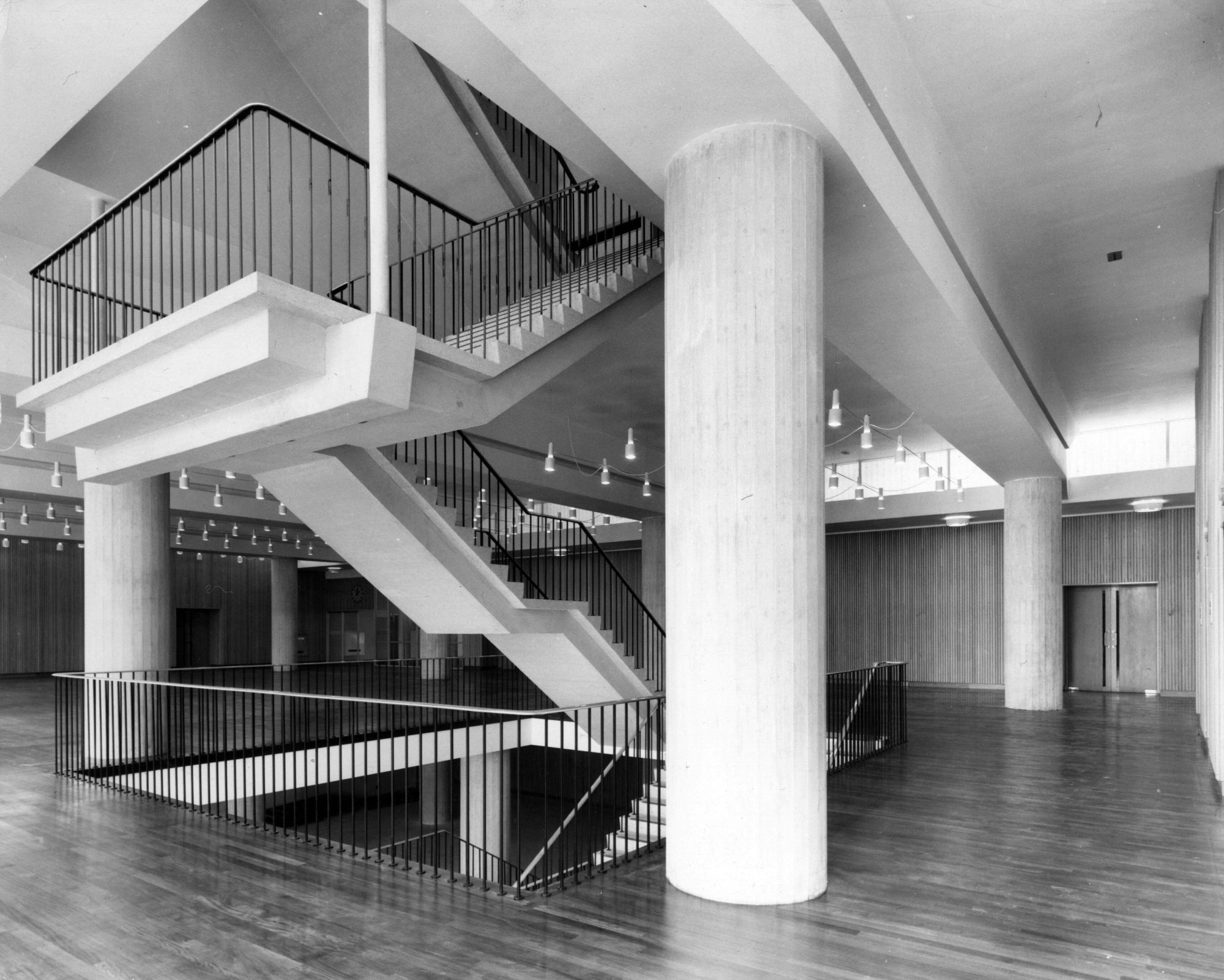
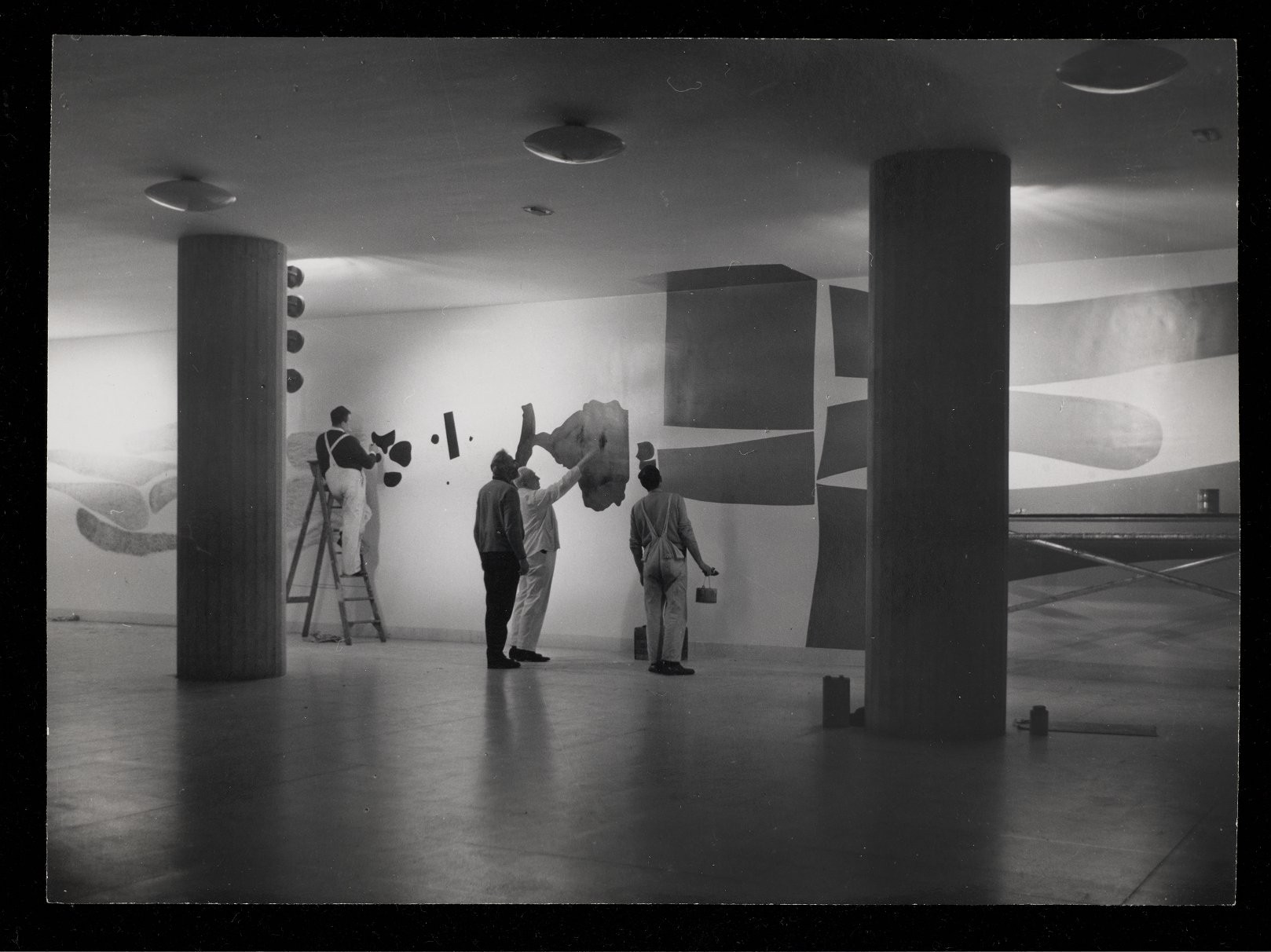
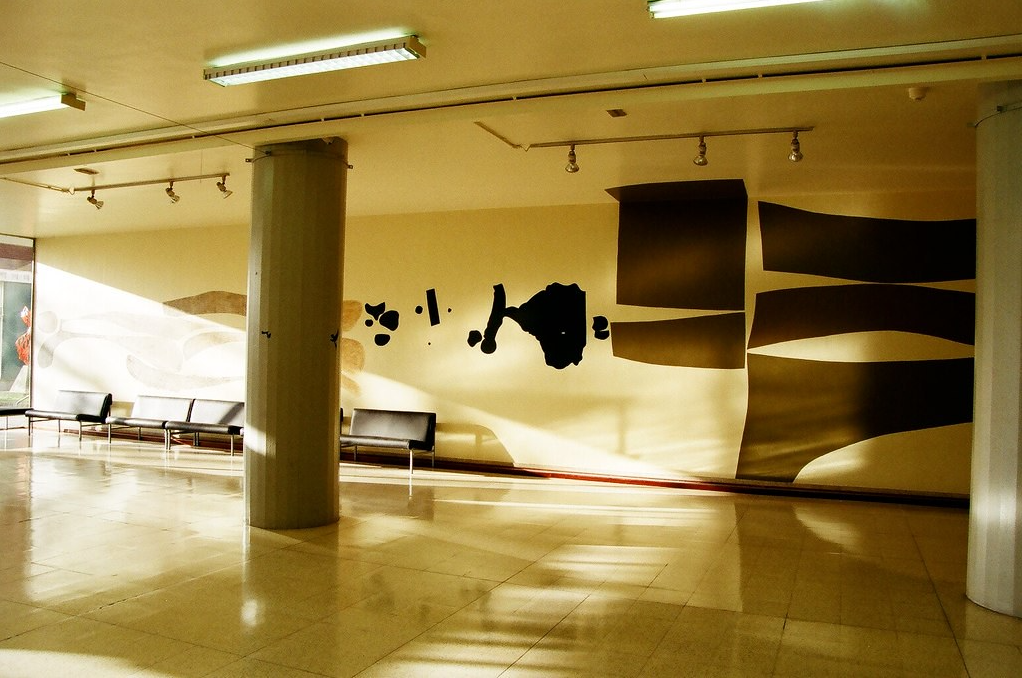
The entrance of the Renold Building contains an important abstract mural (Metamorphosis) by Victor Pasmore, stretching the length of the west side wall and painted directly onto the plaster. Pasmore was one of the leading artists of Britain’s abstract art movement. His work is found in collections around the world including: Tate, MoMA New York and the Art Gallery of South Australia.
His Apollo Pavilion of 1969 at Peterlee, County Durham, is listed at Grade II*, but the large mural at the Renold Building is a rare survival, as little else remains of the murals that formed an integral part of his oeuvre. The Rates Hall at Newcastle Civic Centre (Grade II*) has examples of his glazed murals, but the murals at Pilkington’s, St Helens have been largely removed, and that at Kingston Bus Station, London, has been demolished.
UMIST Campus and Holloway Wall
The University of Manchester Institute of Science and Technology merged with the Victoria University of Manchester in 2004, becoming the singular University of Manchester. The University’s 2010-2020 estates strategy laid out the disposal of the former UMIST campus, described as the “area north of the Mancunian Way”.
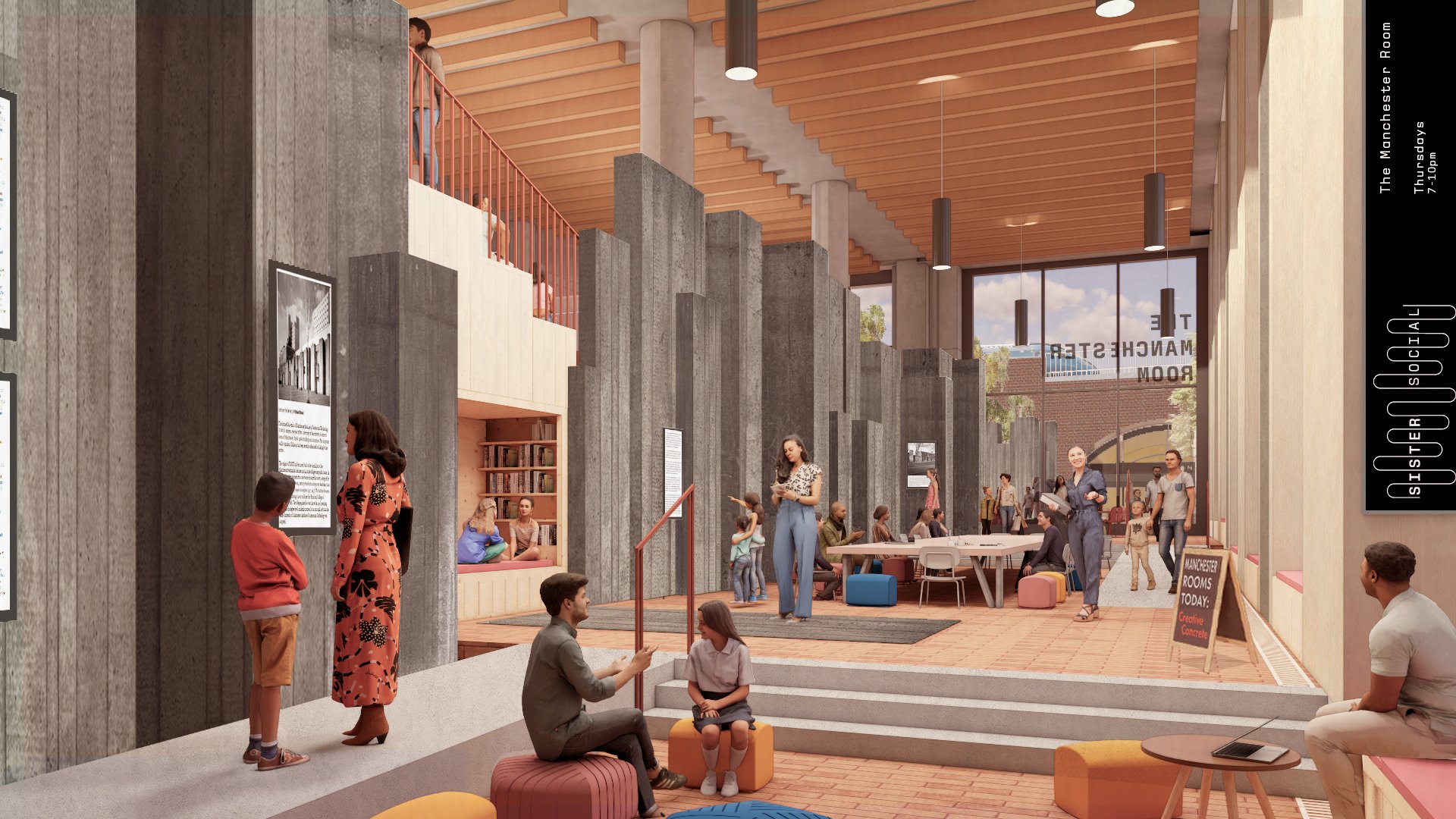
In 2024 five UMIST buildings were assessed for Certificates of Immunity from listing (COI), which have subsequently been granted: the Barnes Wallis and Wright Robinson Building; Staff House (Manchester Meeting Place); Morton Laboratory (Chemical Engineering Pilot Plant); Moffat Building; and Butterfly Stairs and Walkway Bridge (formerly known as The Sir Hubert Worthington Stair). In 2011, C20 had recommended to planners at Manchester City Council that the UMIST campus be designate a Conservation Area, being almost unique as a contained inner-city example of the post-war expansion of British Universities. However the granting of the COI’s paves the way for the destruction of almost all of UMIST’s physical legacy, to be replaced by a £1.7 billion innovation district, to be named ‘Sister’.
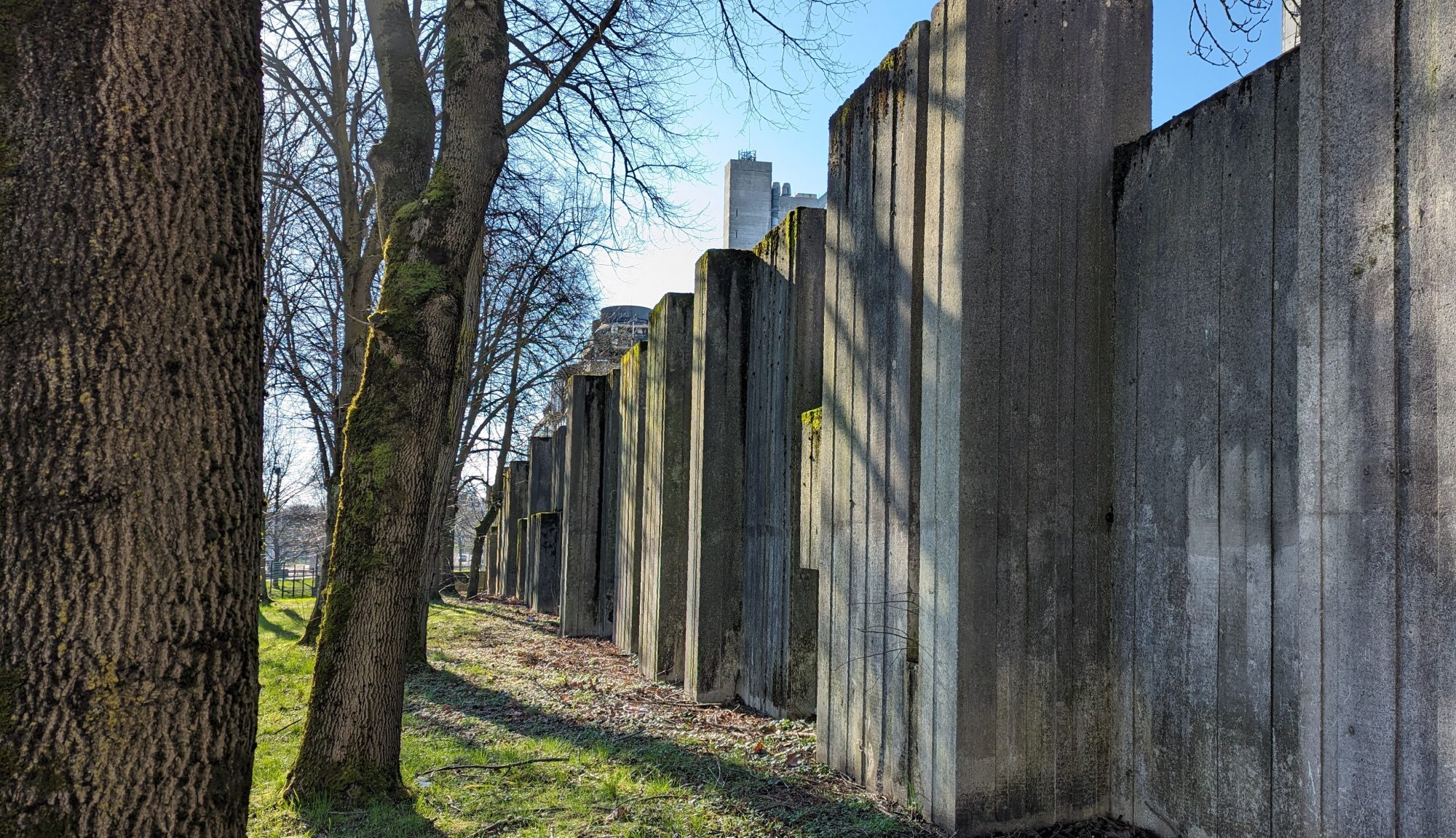
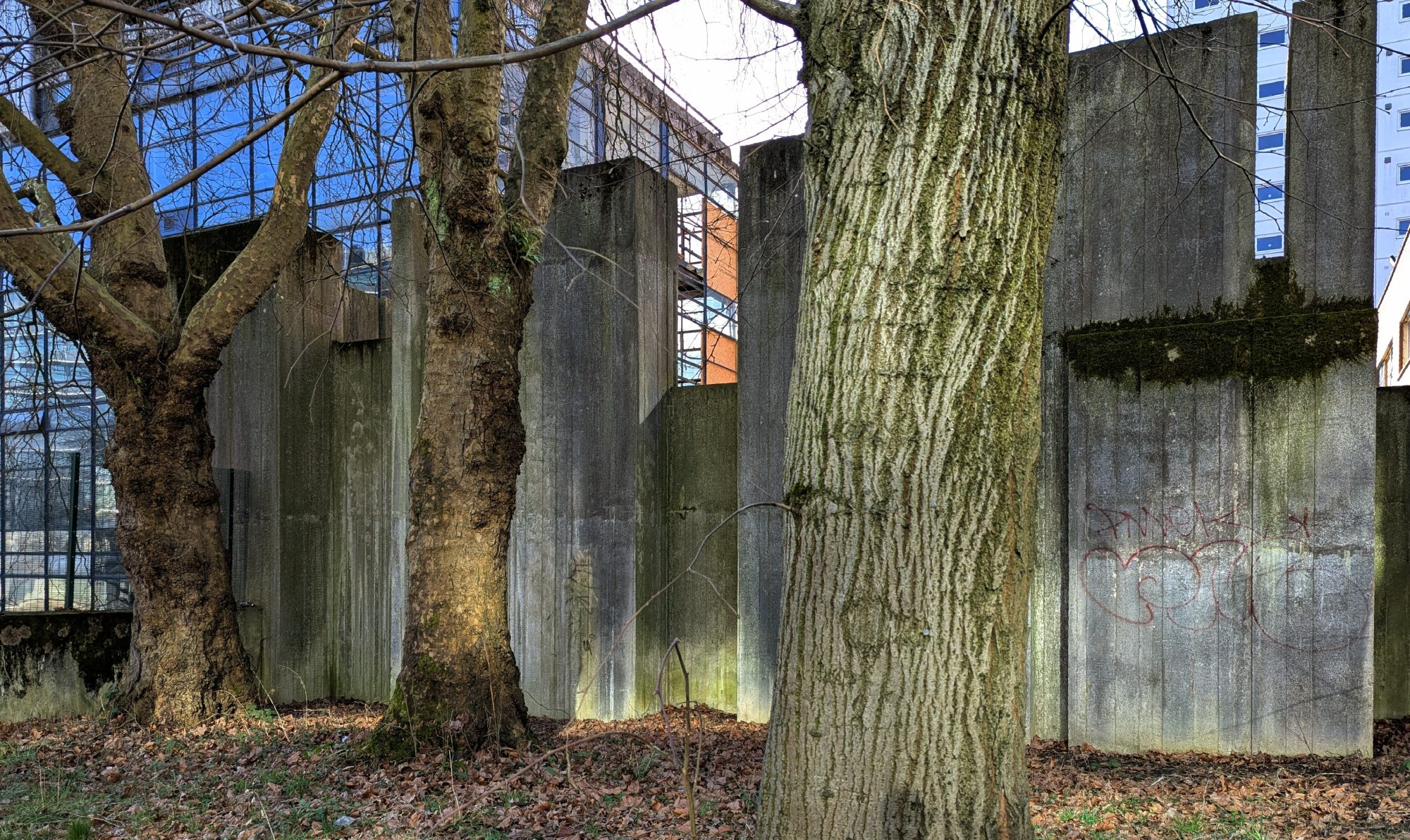
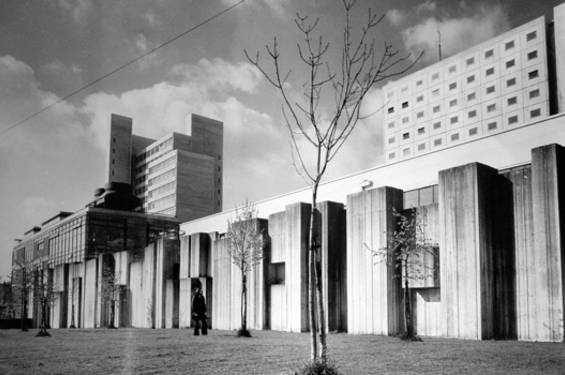
The newly listed Renold Building has a clear group value with the Grade II listed sculptural wall by artist Antony Hollaway (1968, designated 2011), which forms an aesthetically striking concrete sound buffer to the eastern boundary of the campus. As part of the Sister development, the wall has recently been subject to controversial plans that would see large sections of the wall enclosed within a building and laid flat to the ground affecting around 30% of the overall structure.
Comments
Richard Brook, C20 Casework Committee member and Director of Research Lancaster School of Architecture:
“This listing is wonderful news for Manchester and for twentieth century architecture. Every metropolitan capital had its preeminent modern architectural practice – Cruickshank & Seward were Manchester’s. The recognition of Arthur Gibbon and Gordon Hodkinson’s work is long overdue. This announcement cements their legacy and that of the practice. Together with the Ashby Institute at Queens University Belfast, this fine pair of buildings, by the same design team, stand as white sentinels that promised bright futures through the teaching of technology. I am thrilled that my research, driven by a deep love for the city’s mid-century heritage, has contributed to its protection. I am especially pleased for Arthur and Gordon’s families.”
Kate Langford, daughter of the architect William Arthur Gibbon:
“This is a triumph. I recently visited the Renold Building with my brother and was given a very interesting tour of this building by Professor Richard Brook. I feel sure that it is due to his constant determination with the support of the 20th Century Society that has ensured its preservation. Many of these buildings from a very interesting and remarkable period of architecture would have gone had it not been for the love and interest shown by your society and the dedication of Prof. Brook. I wish my father was alive to say thank you to all of you who are involved.”
The family of the architect Gordon Hodkinson:
“We are delighted that the Renold Building has been recognised with this prestigious listing after all these years. We are so proud that our much loved father/grandfather was so influential in the design and delivery of such an iconic building in Manchester. Thanks to the hard work of the individuals and groups referenced within the report for supporting in the achievement of the listing.”

Become a C20 member today and help save our modern design heritage.