This website uses cookies
This website uses cookies to enable it to function properly and to analyse how the website is used. Please click 'Close' to accept and continue using the website.


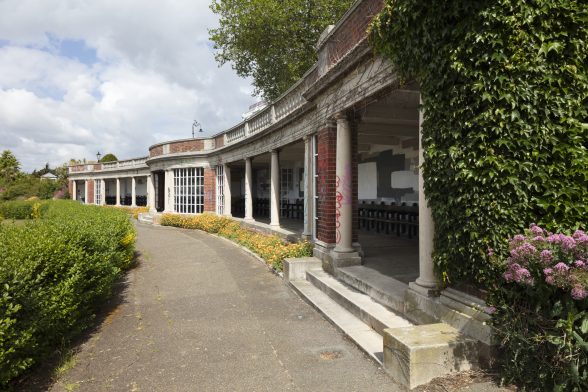
Image credit: Historic England
Two of the most recognised seaside landmarks in Southend-on-Sea have been Grade II listed following support from C20 Society. The distinctive moderne-style Sun Shelter and the historic Shrubbery Garden at the Cliff Gardens have been recognised for their cultural and architectural significance in the development of Southend as a popular seaside resort.
Built 1928, the Sun Shelter at the Cliff Gardens is the largest curving seaside shelter in the East of England. Its elegant design blends classical architectural elements with the emerging moderne style of the 1920s and 1930s. The shelter has a bowed central section of three bays, symmetrical wings of three bays, and terminates in projecting square pavilions of a single bay. The bays are formed by Doric columns of Portland stone, round where they are in an open colonnade and square where they are joined to an unglazed grid of astragals.
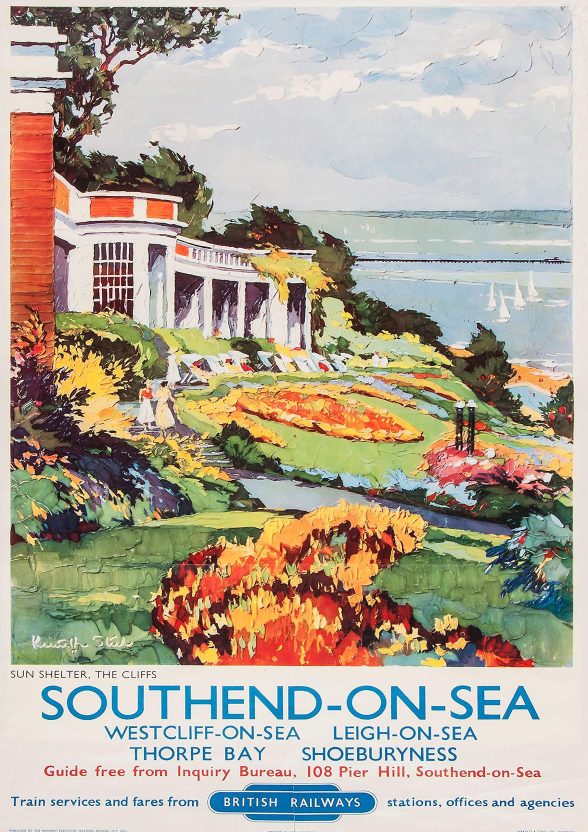
Between 1945 and 1957 a series of railway posters advertising Southend as a resort were produced with the Sun Shelter as a prominent feature at the top of the cliffs.
‘Never-Never Land’
Dating back to 1794, the Shrubbery Garden was created when the town was establishing itself as a fashionable destination. The garden retains its original layout of paths where late 18th century guests of the nearby Royal Hotel would socialise, along with a grove of trees planted in 1809, by arrangement of local property owner Lady Langham, to mark the Golden Jubilee of George III. Surviving elements of the fantasy ‘Never-Never Land’ attraction, created in 1935, can also be seen. Coinciding with Southend’s first ‘Festival of Light’, the themed area referenced JM Barrie’s ‘Peter Pan’ and featured cartoon characters, goblins, smoke-breathing dragons, fairies with magical castles, thousands of multicoloured lights and a model railway running through the park. Today a small remainder of the fairy castles and landscaping around them remain.
C20 Society Director, Catherine Croft, commented:
Southend-on-Sea’s 1930s moderne-style Sun Shelter is redolent of the glamour of the ‘Essex Riviera’ during the Interwar period; an atmosphere vividly captured in the vintage postcards that fill C20’s new 20th Century Seaside Architecture book.
The Peter Pan-inspired fantasy fairy castles in Shrubbery Gardens speak to the enduring eccentricity of the English seaside, as J.M. Barrie wrote, “Just think of happy things, and your heart will fly on wings, forever, in Never Never Land”
We’re delighted to see both of them added to the national register, and are now itching to board a day-tripper service to the coast!
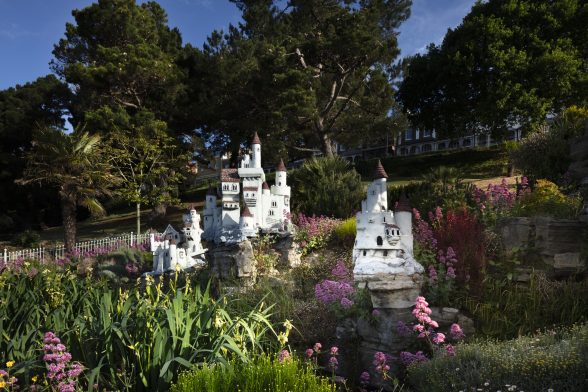
Image credit: Historic England
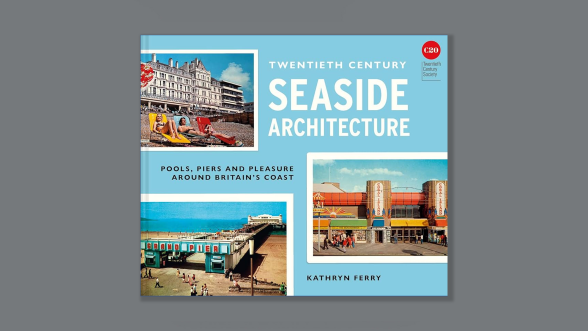
Ahoy there! Twentieth Century Seaside Architecture, by Kathryn Ferry and C20 Society with Batsford Books, is a nostalgic exploration of pools, piers, and pleasure around Britain’s coast. Using vintage postcard images, it tells the story of our playful, distinctive, and architecturally significant seafront buildings spanning the 1920s to the new millennium.
From the De La Warr Pavilion to Blackpool Coral Island, Boscombe’s concrete Pier to Douglas’s UFO Sea Port, via Chamberlin, Powell and Bon’s ‘Barbican-on-Sea’ in Folkestone, and Ilfracombe’s ‘sandcastle’ Landmark Theatre. You want saturated seaside glamour? You got it, in spades.
Click here to order your copy now!
Become a C20 member today and help save our modern design heritage.