This website uses cookies
This website uses cookies to enable it to function properly and to analyse how the website is used. Please click 'Close' to accept and continue using the website.


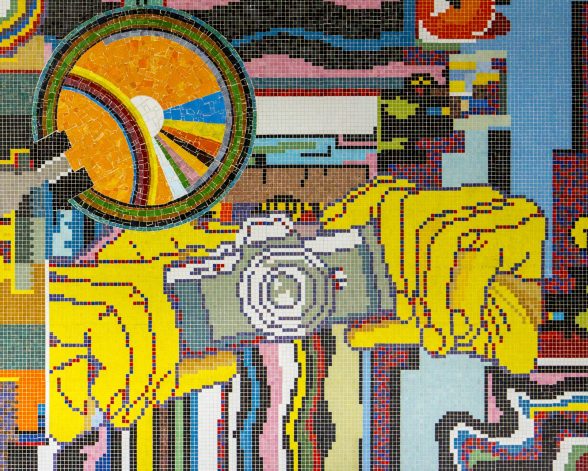
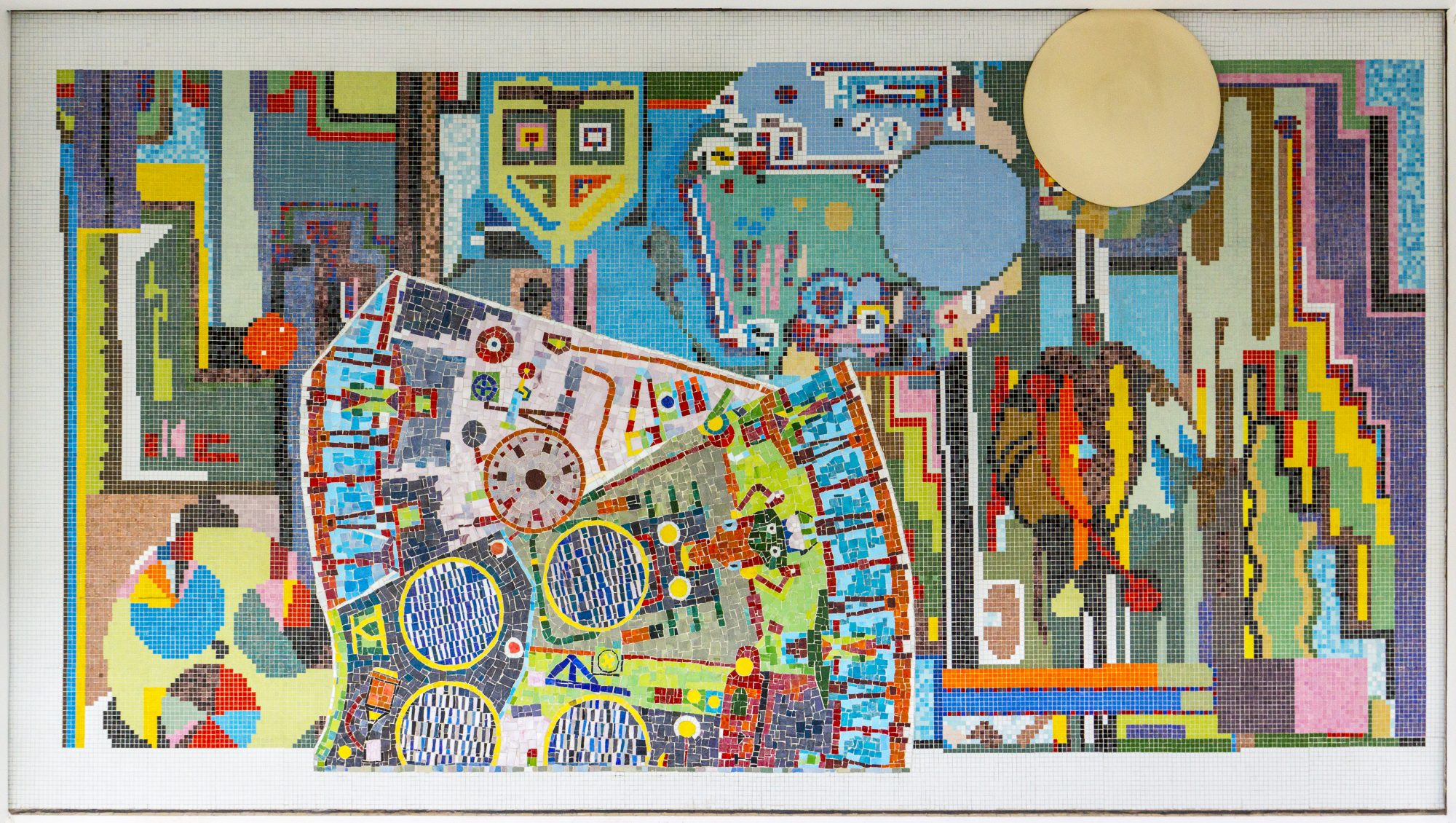
Image © Stuart Lamb / Arts in Redditch
** UPDATE 04/03/26 **: We’re delighted that the Paolozzi mosaics and Milward Square atrium at the Kingfisher Shopping Centre in Redditch (1981-83) have now been Grade II listed by DCMS, after support from C20 Society.
The designation makes them the first murals by the Scottish artist Sir Eduardo Paolozzi to be nationally listed, and only the second post-war shopping centre to be completely or partially listed, after Milton Keynes Shopping Building (1975-79).
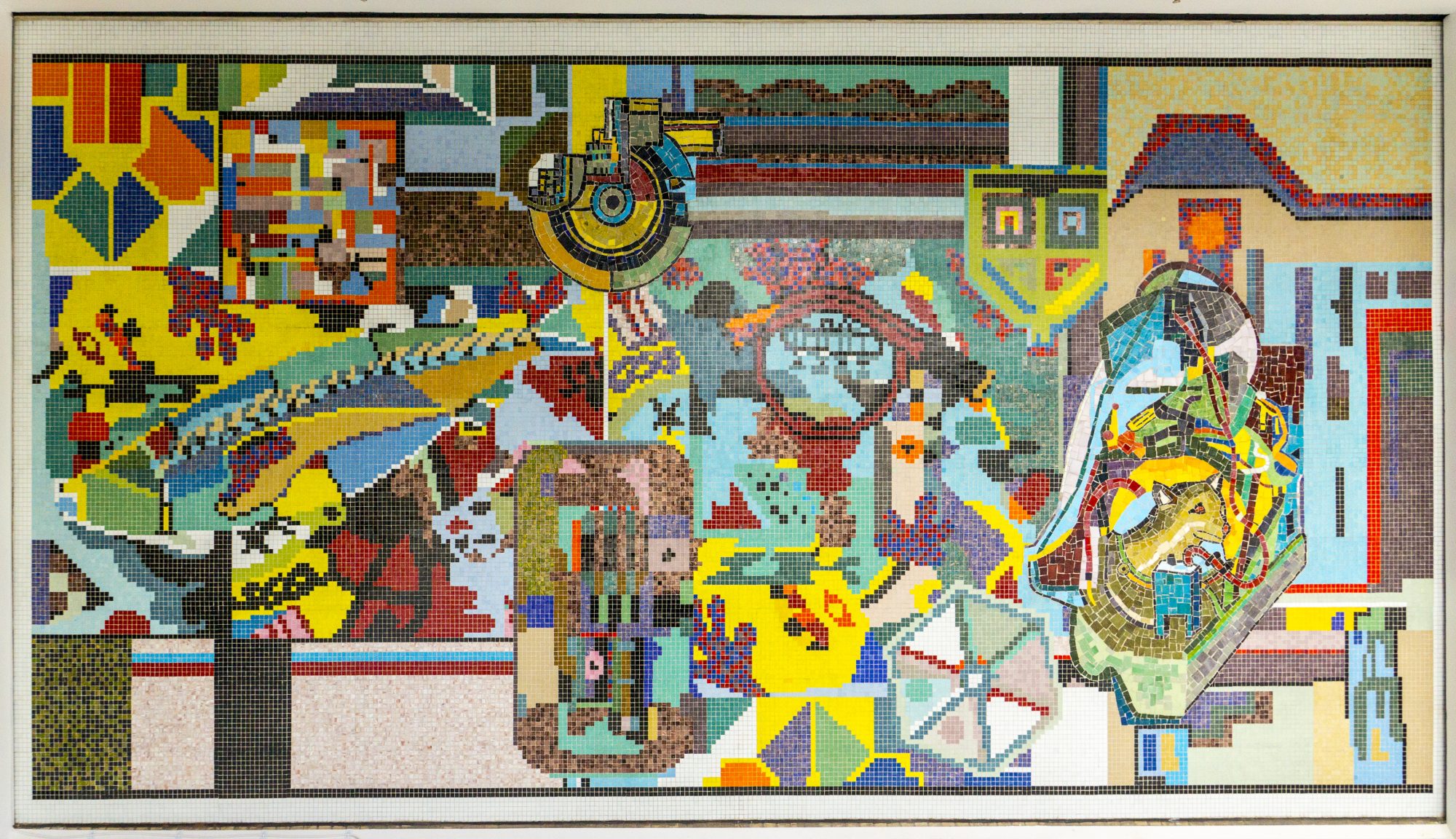
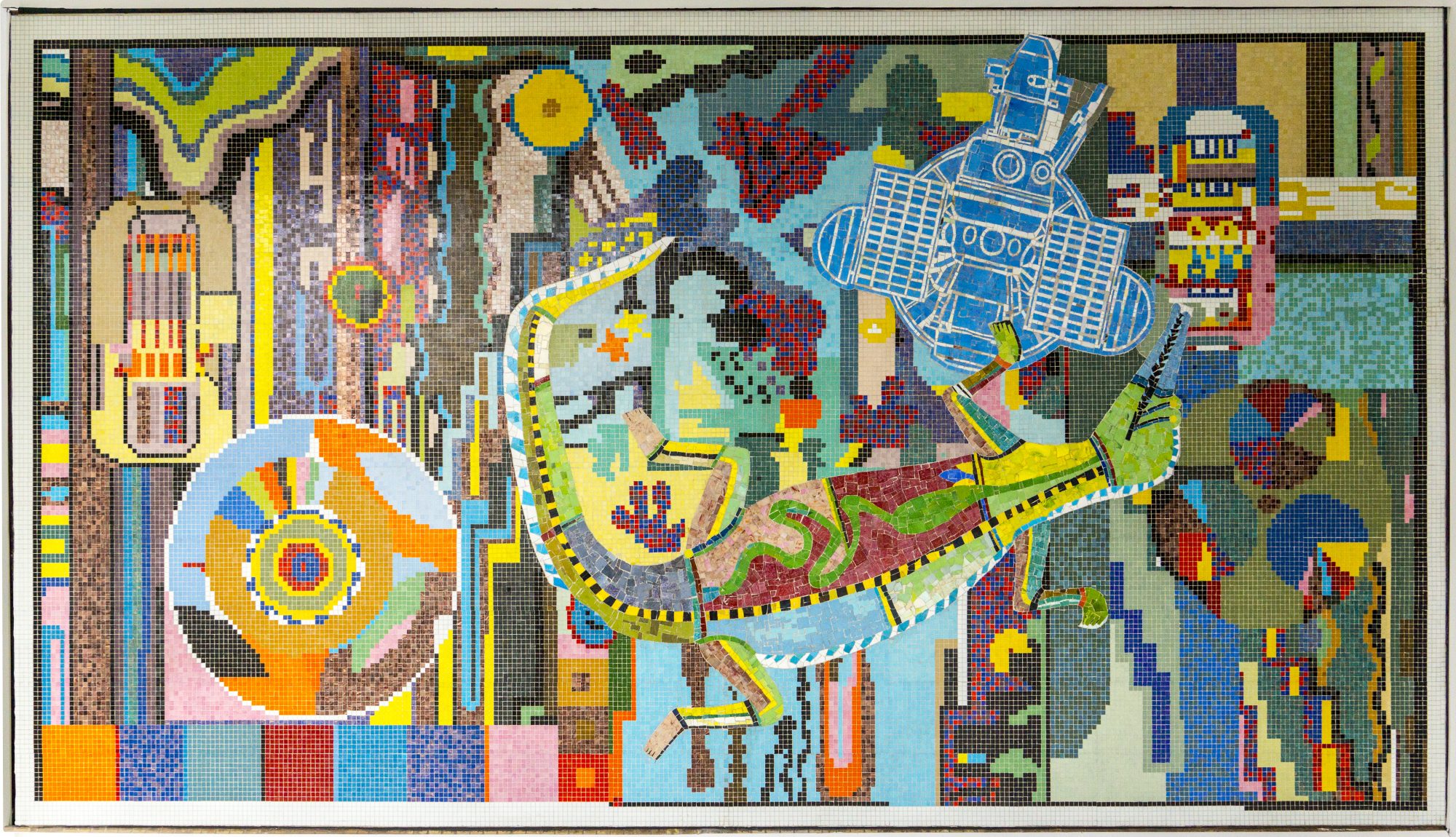
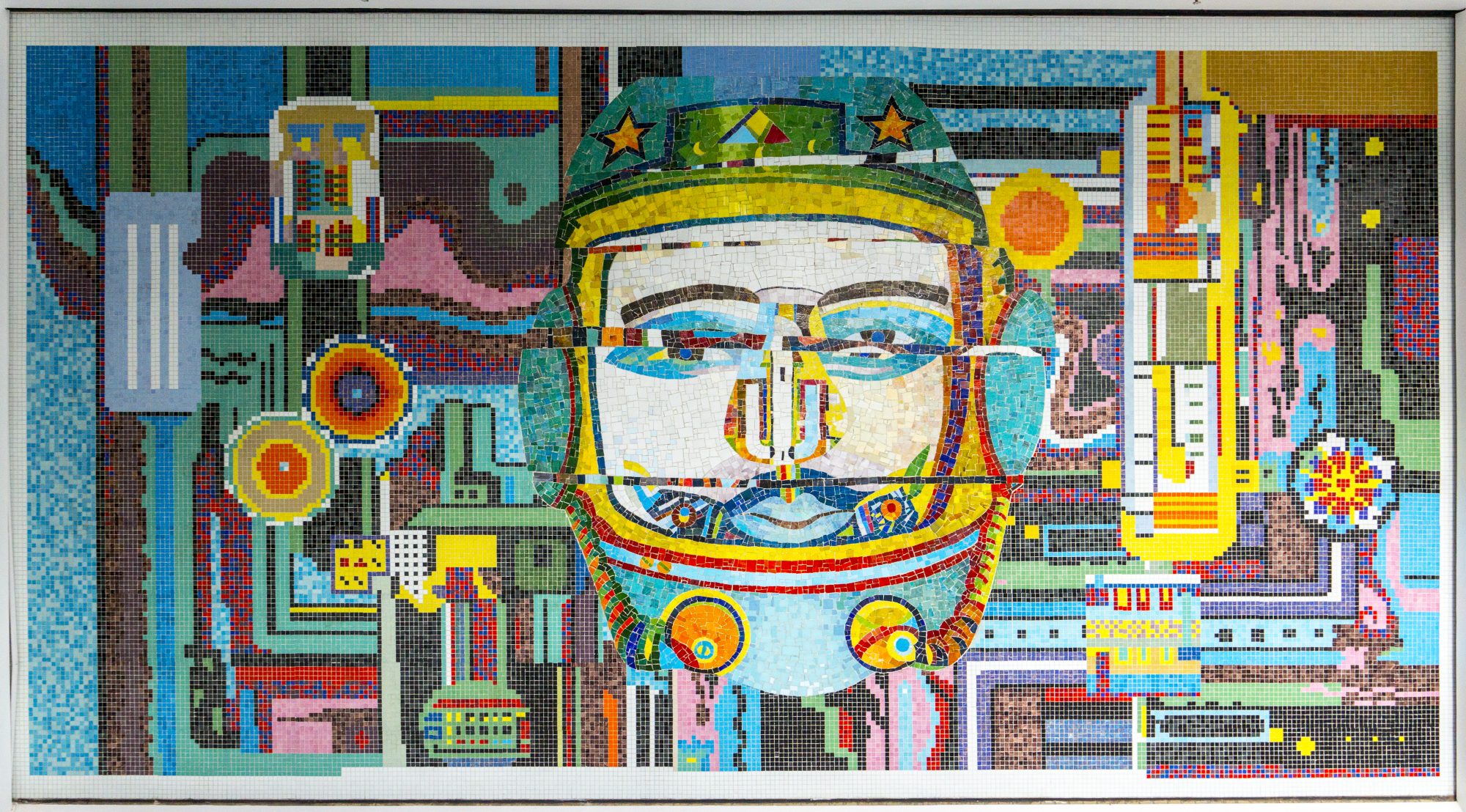
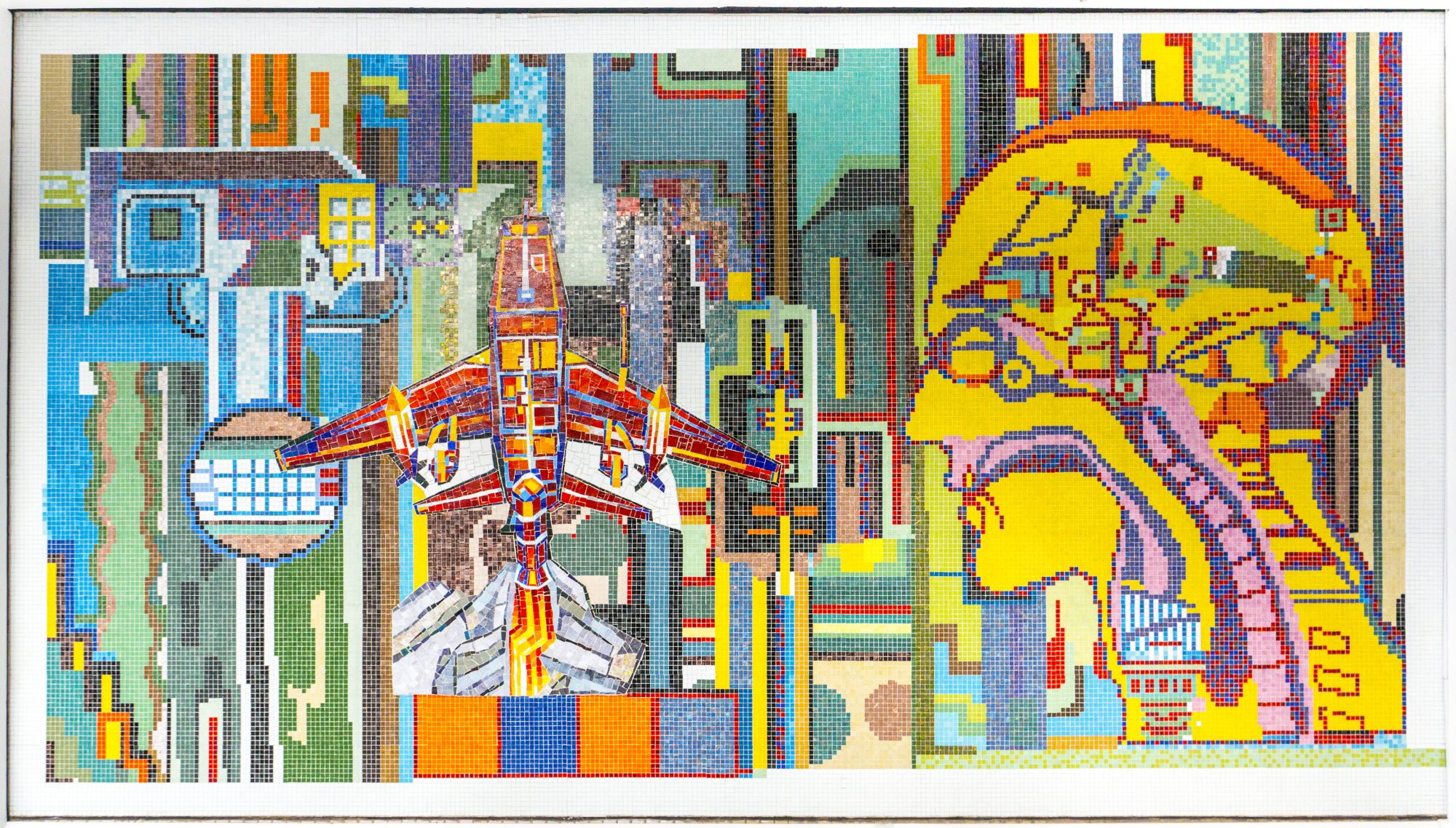
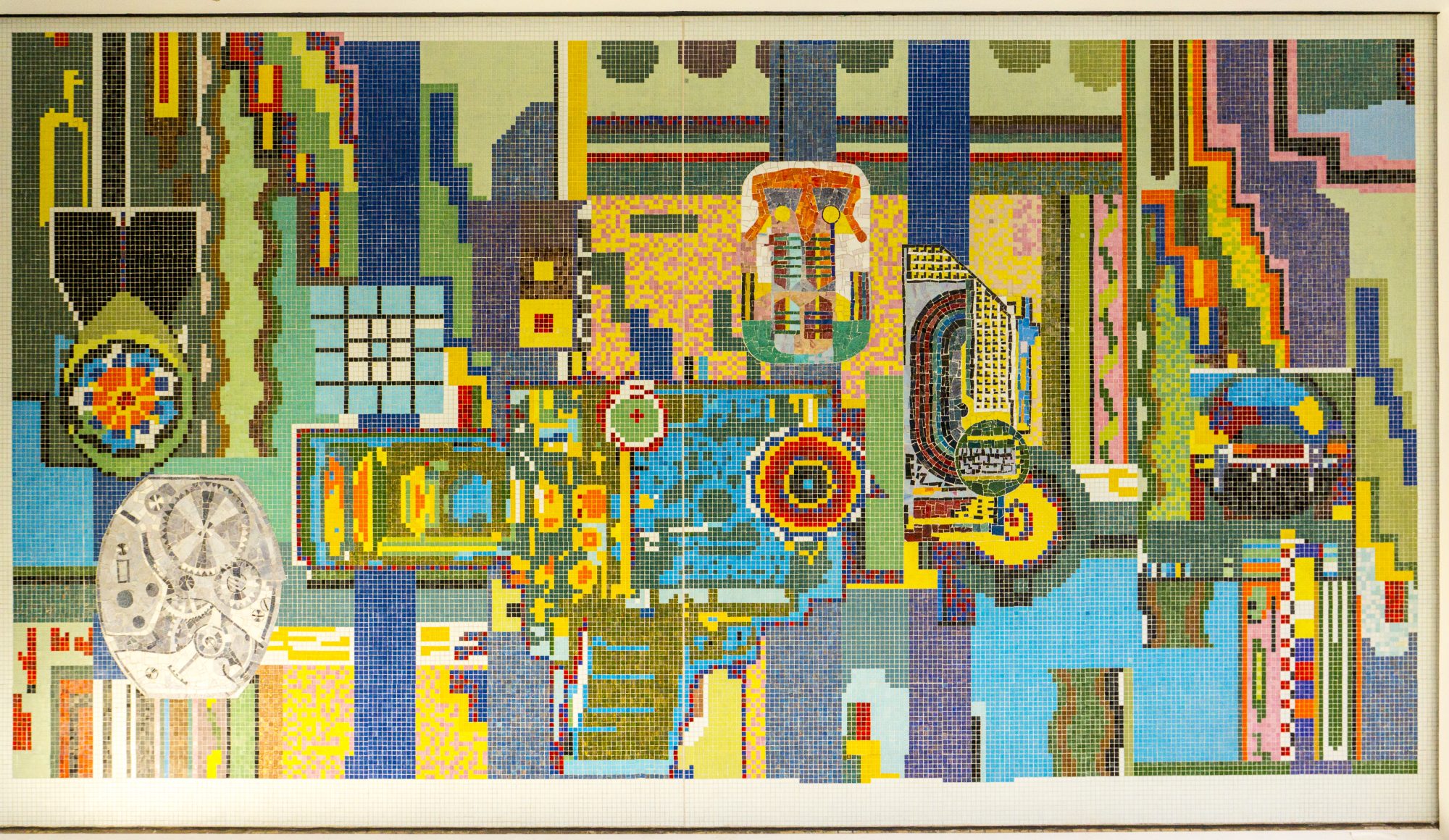
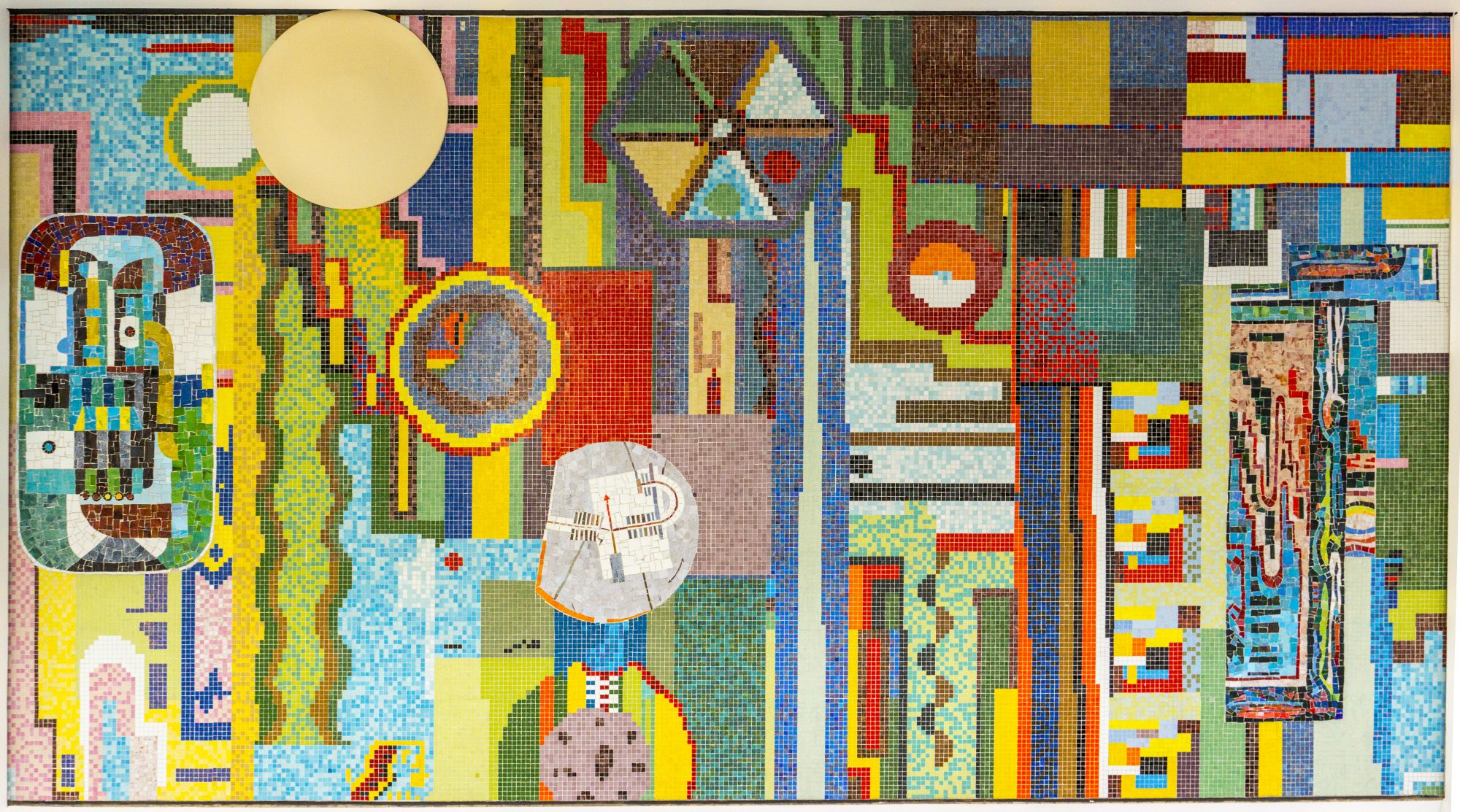
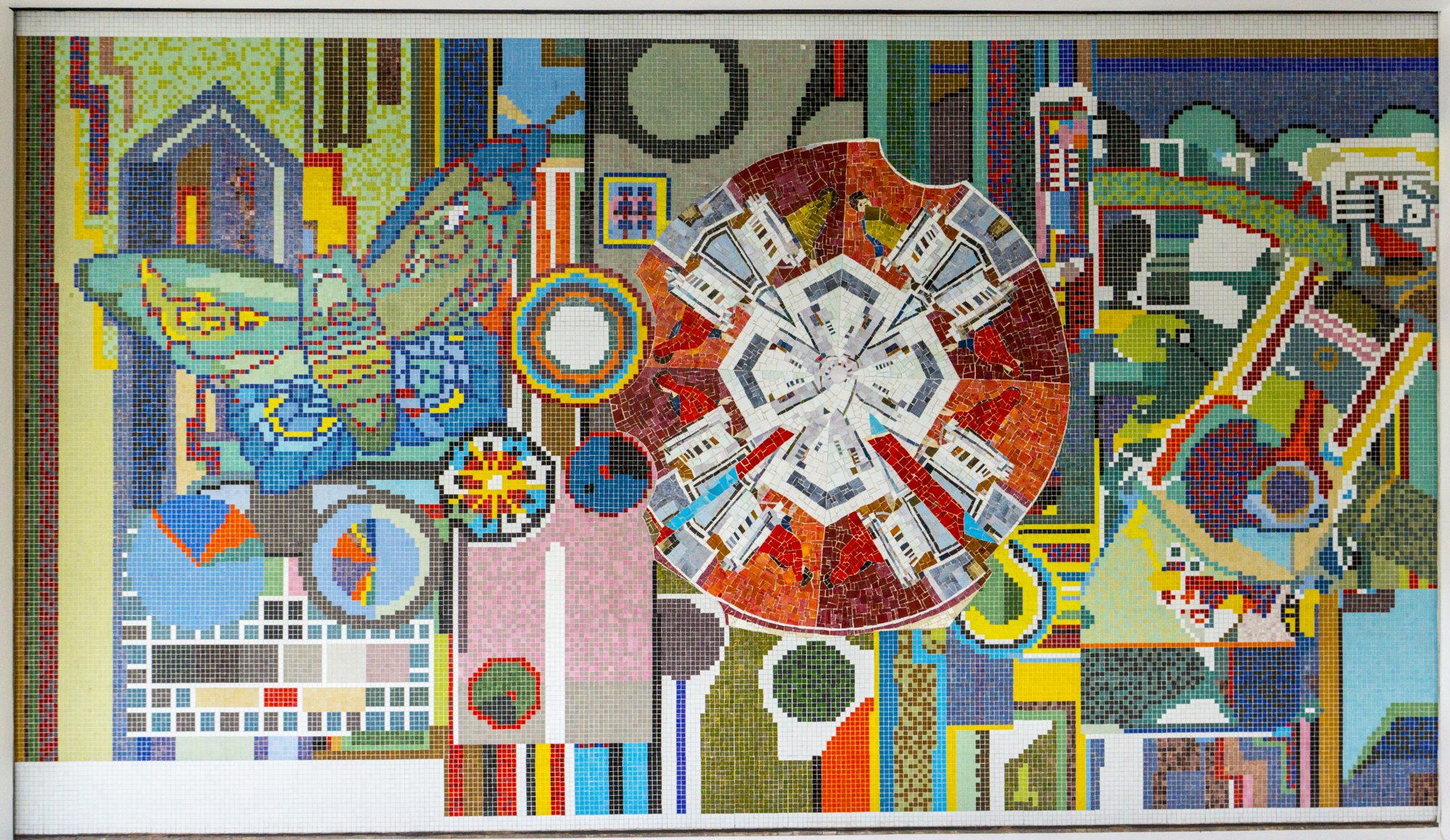
C20 Society has strongly supported listing Eduardo Paolozzi’s polychromatic Pop Art murals (1983) at Kingfisher Shopping Centre in Redditch, Worcestershire, following a consultation with Historic England. Described as the ‘Ravenna of the New Towns’ by historian Owen Hatherley, the 12 mosaic panels each measure 21ft by 10ft and depict abstract images of the industrial history of Redditch and in particular the needle industry.
Needle production began in the 17th century in Redditch, and by the 19th century 90% of the world’s needles were produced in the town and its environs; this included sewing needles, fishing hooks, surgical needles and hat pins. The trade declined in the 20th with the rise of mass-produced needles from the far east. The murals were intended to create what Paolozzi described as a ‘multi-evocative metaphor, floating in some cases against woven material, symbolising the uses and results of the needle in its widest sense – a vital tool for the uniting of many substances in both a global and metaphysical sense’.
The Redditch murals predate Paolozzi’s better-known mosaics at Tottenham Court Road Station in London (1984). Despite the loss of several key elements, the majority of the artwork was saved from destruction thanks to an intervention by C20 Society in 2015.
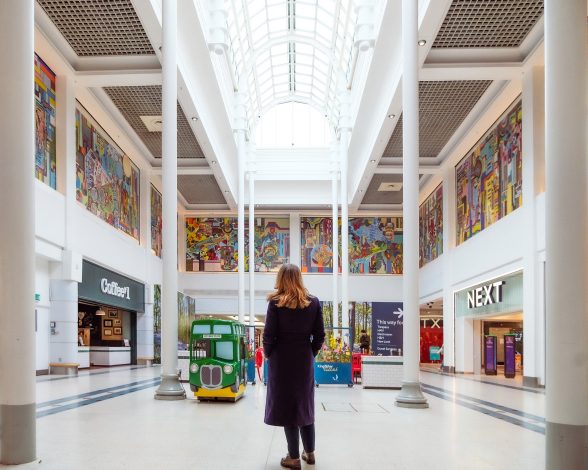
Image credit: Ruth Millington and Reach Plc
‘Multi-evocative metaphor’
The Kingfisher Shopping Centre in Redditch was constructed in three phases between 1970 and 1981. Designed by architect Graham Reddies (project architects Ian Downs and Trevor Etherington), the third phase of construction included a double-height pedestrianised atrium, now known as Milward Square. Paolozzi was commissioned to design a series of 12 mosaics to be fixed to the walls above facia height in the square. The brief was to prepare ‘a feature/artwork relating to the most significant industry base within Redditch, namely needles’, and funding was made available by the Redditch Development Corporation, the Needles Industry Group and the Arts Council of Great Britain.
The images, which include a parrot, a butterfly, a camera, an astronaut and aeroplanes, were drawn and hand coloured by Paolozzi, then scaled up and photocopied to equalise the colours, before being collaged together. Using these designs, individual pieces of glass were hand-painted and cut by craftsman in Spilimbergo, northern Italy; a town with a mosaic-making tradition dating back two centuries. It then took three craftsmen two weeks to install the work in position. The murals were unveiled in 1983 by Sir William Rees-Mogg, Chairman of the Arts Council, ahead of the official opening of Milward Square during Queen
Elizabeth II’s visit to Redditch on 5th July 1983.
Photographs courtesy of Stuart Lamb © / Arts in Redditch
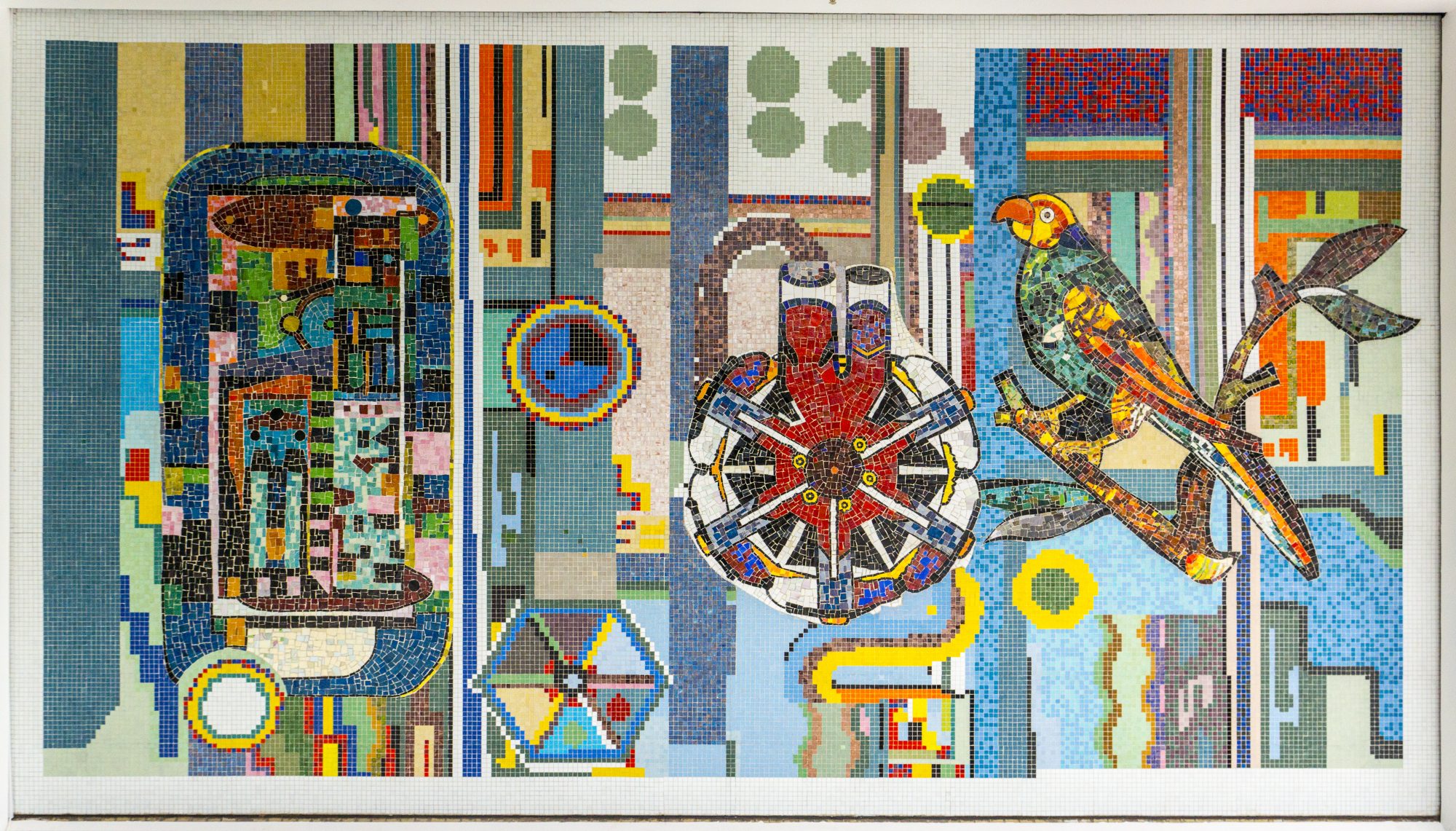
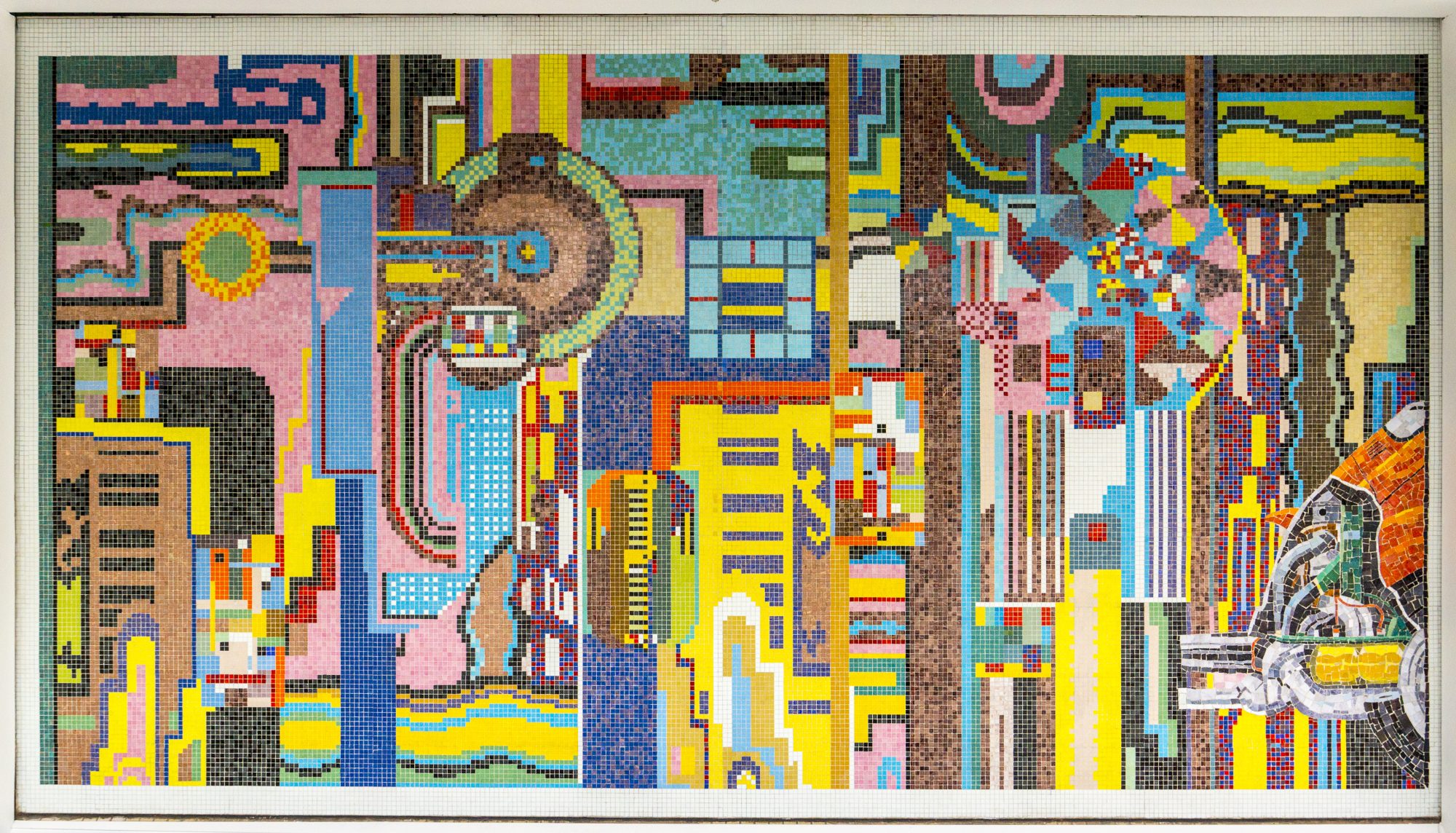
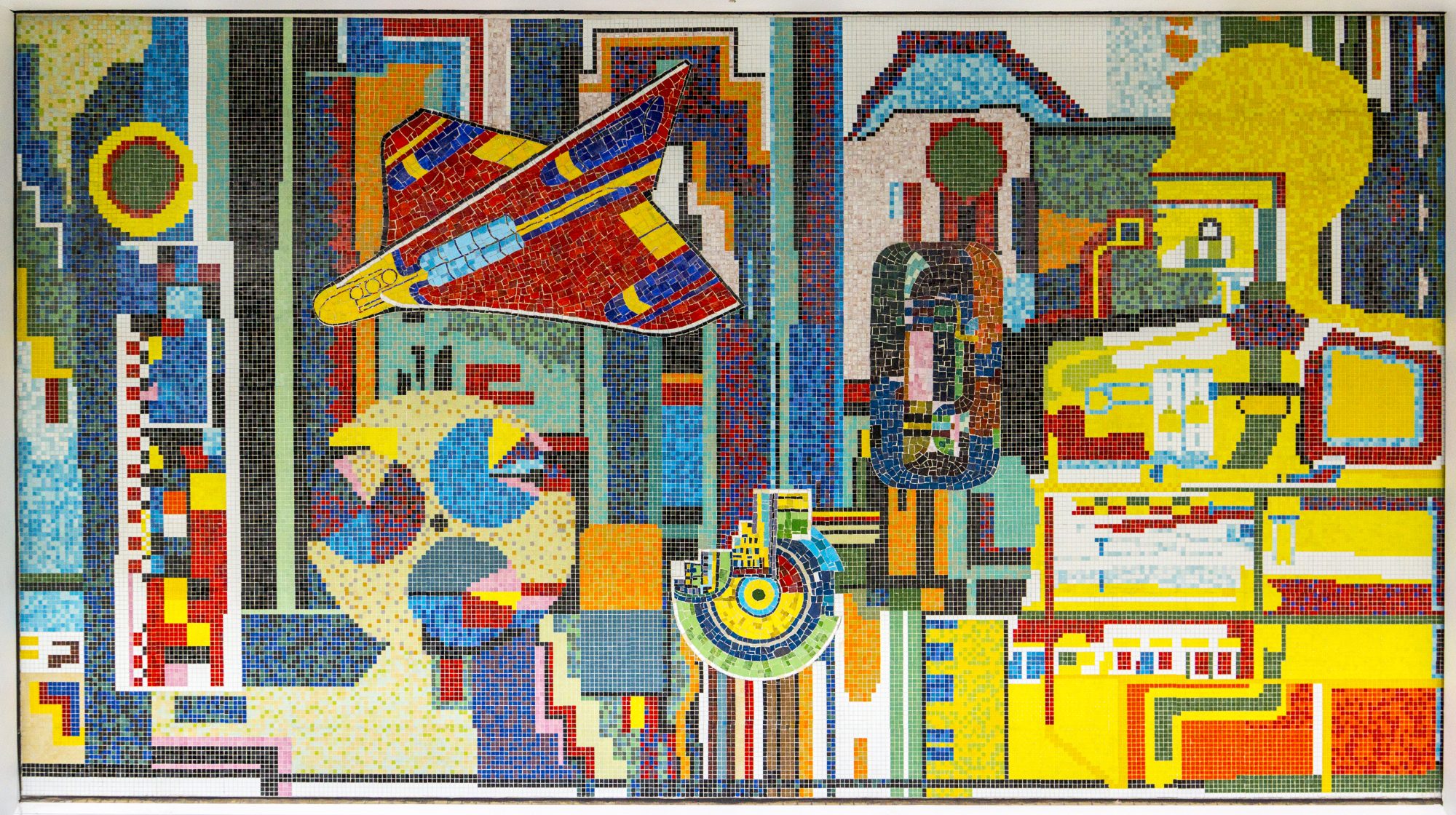
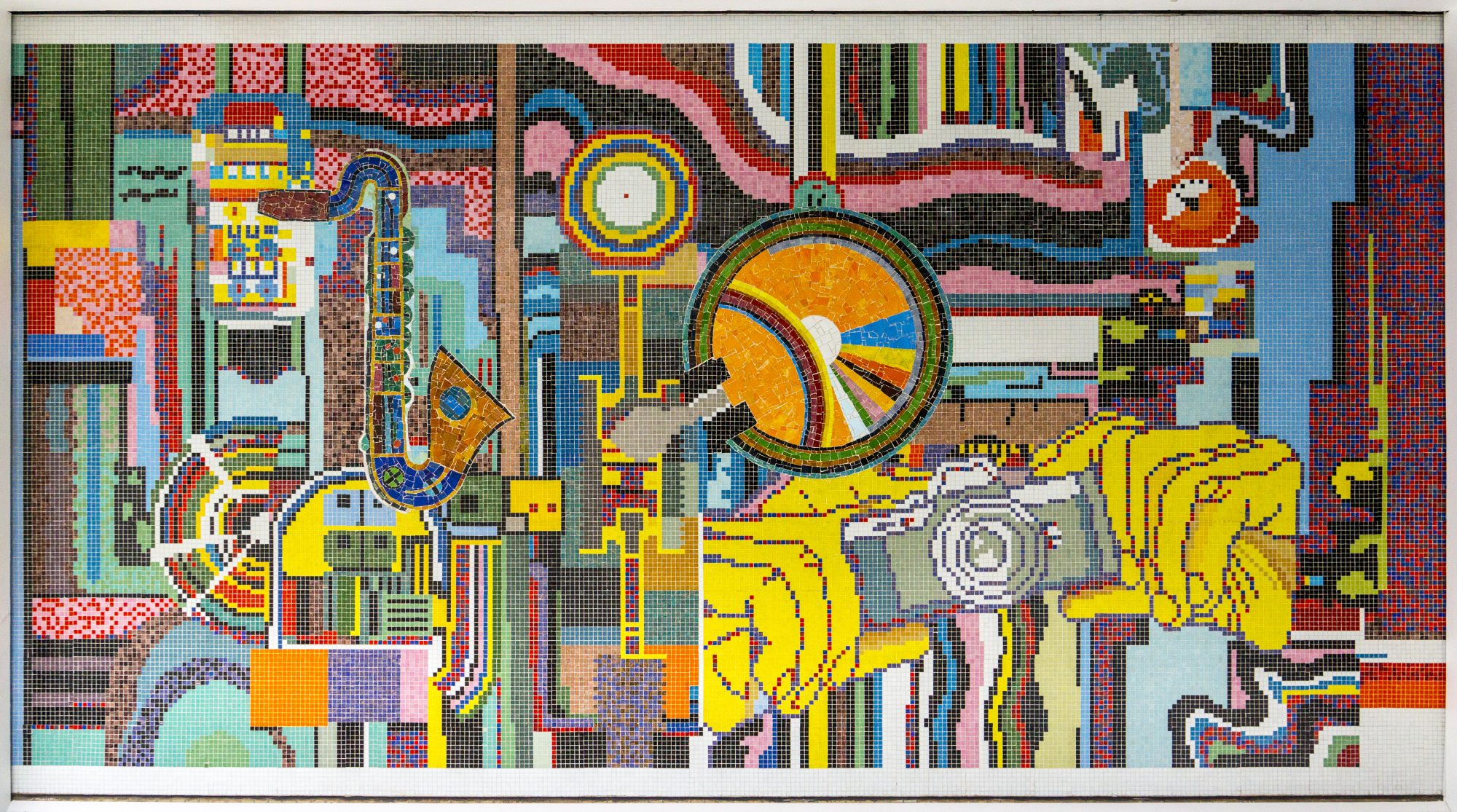
Sir Eduardo Paolozzi (1924-2005)
Pop Art pioneer Eduardo Paolozzi was a sculptor and printmaker whose large-scale public commissions transformed spaces including the British Library courtyard and the London Underground.
Born in Edinburgh to Italian parents, Paolozzi grew up reading American magazines and pasting pictures he liked into a scrapbook; a habit that would eventually inform some his most iconic works. In 1940, when Italy entered World War II in support of Germany, the teenage Paolozzi was interned as an enemy alien. His father and grandfather were put on a ship to Canada and drowned when it was targeted by a German U-boat. After being released from internment, Paolozzi was conscripted and served a year in the army before faking madness to secure a discharge. He studied art in Edinburgh and London before moving to Paris in 1947, where he met Georges Braque, Constantin Brancusi and Alberto Giacometti. The same year he produced the collage I Was A Rich Man’s Plaything, retrospectively deemed one of the first examples of Pop Art.
Paolozzi didn’t display the work until 1952, when he presented it with over 40 other collages at the inaugural meeting of what became known as the Independent Group. Founded by Paolozzi and artists including photographer Nigel Henderson and sculptor Richard Hamilton, the Group championed the use of found objects and popular culture in art. In 1956 they staged This is Tomorrow, a groundbreaking exhibition at the Whitechapel Gallery in which they transformed the space into a series of immersive installations.
Paolozzi worked prolifically throughout the 1960s, holding several teaching positions, experimenting with sculpture and continuing to develop his screenprinting. One of his most notable works from this time is As Is When, a series of prints inspired by the philosopher Ludwig Wittgenstein. He was appointed a CBE in 1968 and elected a Royal Academician in 1979.
In 1986 Paolozzi completed one of his best-known commissions: the vibrant mosaics at Tottenham Court Road underground station. Years after his death, fears that the mosaics were to be permanently removed sparked a public petition demanding the decision be reversed. In 1995 Paolozzi completed Newton after Blake, a colossal statue that sits in the forecourt of the British Library. Depicting Sir Isaac Newton hunched over drawing diagrams with a compass, the bronze brings to three-dimensional life a 1795 monotype by Sir William Blake.
Paolozzi was knighted in 1989 and by the end of his life was one of the country’s best-known artists. He died in April 2005 and left a major bequest to the Scottish National Gallery of Modern Art. His works are now presented in a designated Paolozzi Studio in Modern Two, recreating the chaos of Paolozzi’s own workspaces.
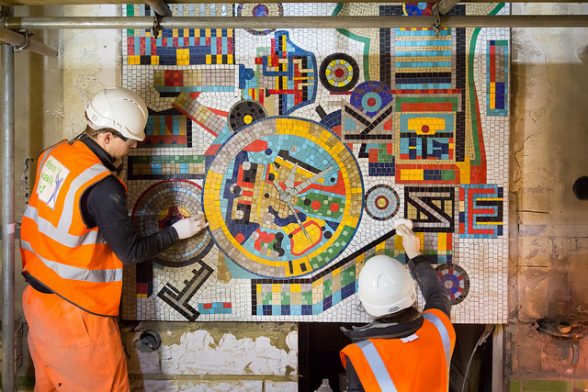
Image credit: TFL
Become a C20 member today and help save our modern design heritage.