This website uses cookies
This website uses cookies to enable it to function properly and to analyse how the website is used. Please click 'Close' to accept and continue using the website.


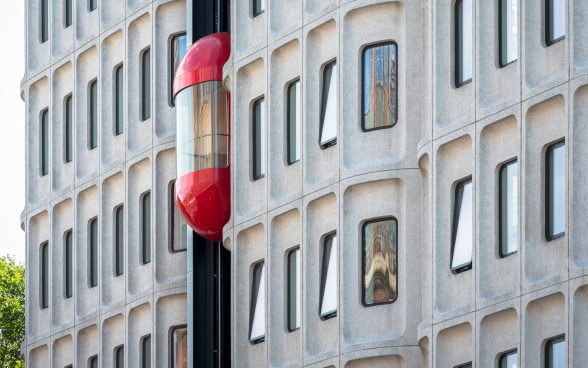
Image credit: Orms
This year’s London Open House festival takes place between 13 – 21 September 2025. Here, our new Head of Casework Laura Mark picks ten of the best twentieth century buildings to see, many of which C20 Society has had involvement with through our casework and campaigns.
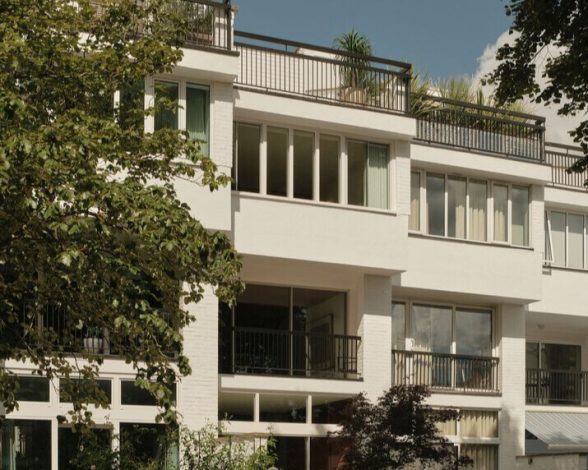
Image credit: Hagen Hall
Pine Heath
37B Gayton Road, Hampstead, NW3 1UB
C20 Society was recently given a tour of the refurbishment of this Hampstead town house by its architect Studio Hagen Hall. Originally designed by the South African architect Ted Levy, Benjamin & Partners during the late 1960s, Pine Heath, is a five-storey development of five townhouses inspired by Cape Town’s coastal developments. Retaining many of the house’s original mid-century features, Hagen Hall has completed a significant and energy sensitive refurbishment which involved replacing the original 1960s windows, adding insulation to the concrete walls, and installing solar panels and an air source heat pump.
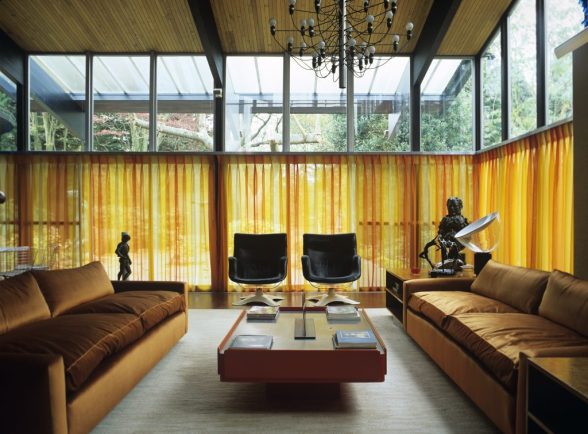
Image credit: Stanley Picker Trust
Picker House
Kingston-Upon-Thames, KT2 7HX
The Picker House was completed in 1968 by Kenneth Wood and was designed to provide Stanley Picker and his partner with a modern private home where they could live among their art collection. The house is impeccably conserved and features the original Conran Group interiors and artworks by several notable artists.
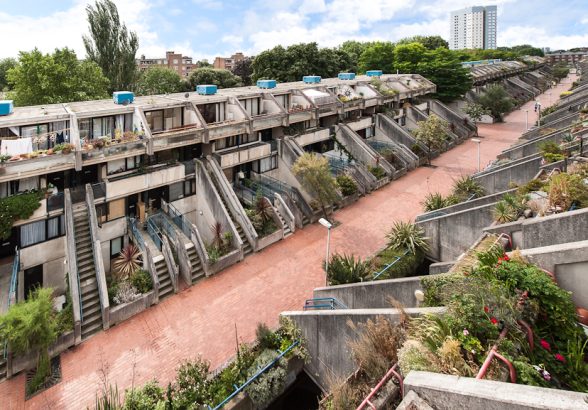
Image credit: The Modern House
Alexandra and Ainsworth Estate
Flat 85b, Alexandra Road Estate, Rowley Way, Camden, NW8 0SN
Always a favourite to visit during Open House, the 1978 Alexandra Road Estate was Neave Brown’s seminal work and is widely regarded as one of the finest examples of public housing in Europe. Listed at Grade II* in 1993, Alexandra Road was the first post-war housing estate to be listed and at the time was the youngest and largest scheme to be listed. Covering seven hectares, the estate includes 520 houses, a community centre, shops, a pub and a school.
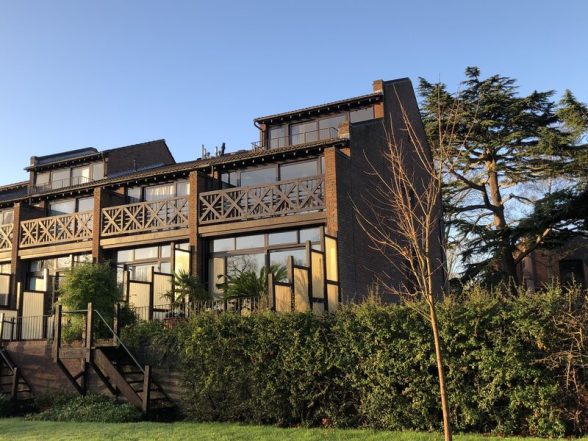
Image credit: Open House
80 Mallard Place
80 Mallard Place, Twickenham, TW1 4SR
Mallard Place is the last SPAN development carried out by the influential design partnership Eric Lyons and Ivor Cunningham. Completed in 1982, the estate which fronts onto the Thames, includes two apartment blocks of one and two-bedroom flats, 45 townhouses, moorings, and a swimming pool. The estate won a Housing Design Award in 1985, five years after Lyons died and is noted as ‘an irresistible higher density model.’
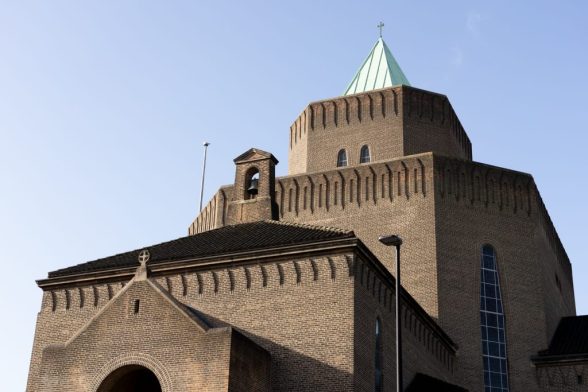
Image credit: Loreta Tale
St Mary and St Joseph Roman Catholic Church
Upper North Street, Poplar, E14
Named as one of the top 10 modern churches in the UK, St Mary and St Joseph’s replaced a Victorian church that was destroyed by bombing in World War II. Designed by Adrian Gilbert Scott, it was built as part of the 1951 Festival of Britain, when Lansbury had been chosen as the site of the ‘Live Architecture’ Exhibition. The exhibition employed some of the leading architects of the day to build projects illustrating the key new ideas in architecture, town planning and construction with the intention of leaving a permanent legacy of buildings.
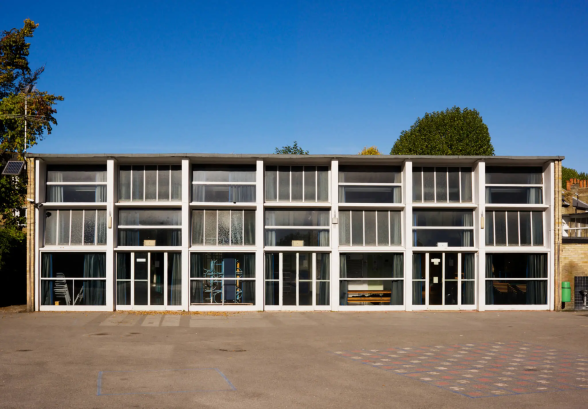
Image credit: Historic England
Greenside Primary School
51 Westville Road, W12 9PT
This primary school is one of just two school’s designed by Ernő Goldfinger. Opened in 1952, the school was inspired by the optimism of the 1951 Festival of Britain and the need to create a better Britain after the Second World War. The school, which is now Grade II*-listed, was built using a pre-cast concrete system that allowed it to be constructed in just 24 working days. The school’s foyer has an exceptional mural commissioned by Goldfinger and designed and painted by Gordon Cullen. After languishing behind a curtain for more than 20 years, the mural was recently restored after a campaign by the ‘Friends of the Greenside Mural.’
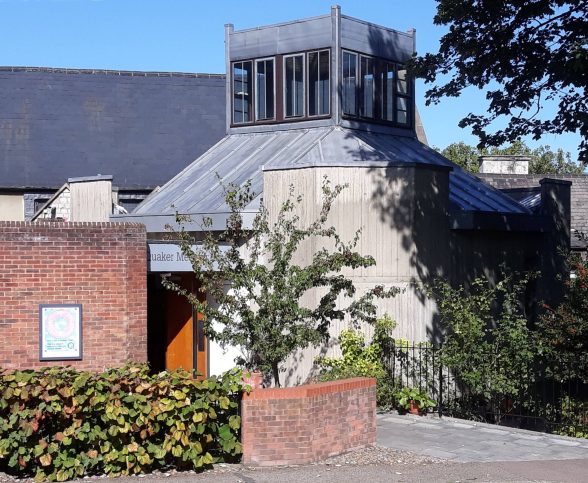
Image credit: Richard E. Pickvance
Blackheath Quaker Meeting House
Lawn Terrace, Blackheath, SE3 9LL
Believed to be the only concrete Brutalist Quaker Meeting House in Britain, this building was designed by former C20 President Trevor Dannatt and completed in 1972. The standout feature of this building is its roof. A collaboration between Dannatt with engineer Ted Happold, the roof structure is a combination of timber in compression and steel rods in tension creating a column free space beneath. The building was Grade II-listed in 2019, following Historic England’s thematic review of Quaker meeting houses. It also featured as Neil Bingham’s Building of the Month back in May 2019.
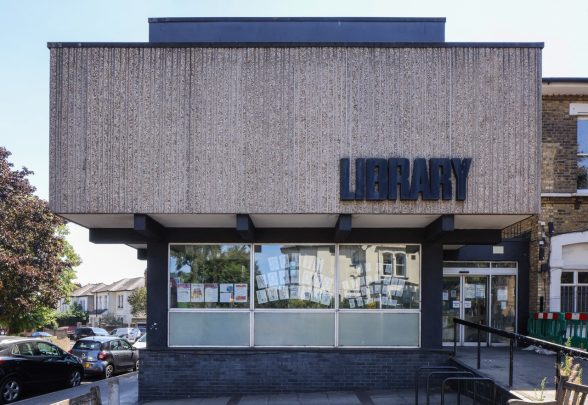
Image credit: John East
South Norwood Library
Lawrence Road, South Norwood, SE25 5AA
Built in 1966-68 by Croydon Architects’ Department under the lead of Hugh Lea, South Norwood Library is highly characteristic of the 1960s and Croydon’s development boom. Its exterior features the original 1960s ‘LIBRARY’ sign in a Gothic bold condensed font and oversized bronze lettering, mounted on the building’s concrete façade. The C20 Society nominated this building for a prestigious Architecture Today Award, recognising ‘Buildings that Stand the Test of Time’ back in 2023.
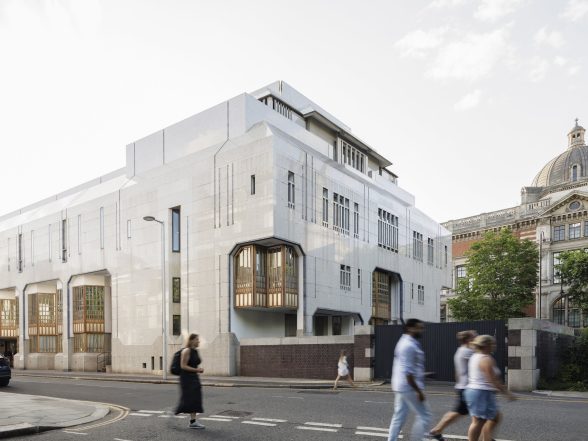
Image credit: Selina Kassam
The Ismaili Centre
1-7 Cromwell Gardens, South Kensington, London SW7 2SL
Designed to symbolise ‘the physical representation of Islamic values’, when it opened in 1985 Hugh Casson and Neville Conder’s Ismaili Centre represented an evolution of the practice’s British modernism. Taking up a prominent position on the corner of Exhibition Road, the building is wrapped with a thin skin of polished granite, which has been ‘flame-stripped’ to provide what Concrete Quarterly described as ‘a certain sparkle when seen from the pavements.’ Shahed Saleem chose this as his Building of the Month in January 2014.
The Standard Hotel
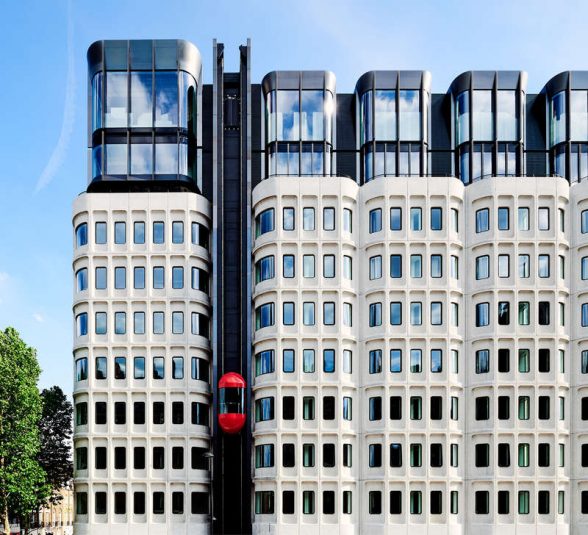
10 Argyle Street, Camden, WC1H 8EG
This reimaging of the 1974 former Sydney Cooke-designed Camden Town Hall annexe into a hotel is a great example of how a building can be transformed while retaining its original character and features. Orms proposed a scheme which reused the existing Brutalist building instead of demolishing it – one of the only competition entries to do so. They retained the original concrete frame and precast facade while adding a three-storey glazed extension to the top accessed by a new red lift inspired by London’s red buses. They do a great Negroni too – and if you manage all ten buildings on the list, you definitely deserve one!
Become a C20 member today and help save our modern design heritage.
Comments