This website uses cookies
This website uses cookies to enable it to function properly and to analyse how the website is used. Please click 'Close' to accept and continue using the website.


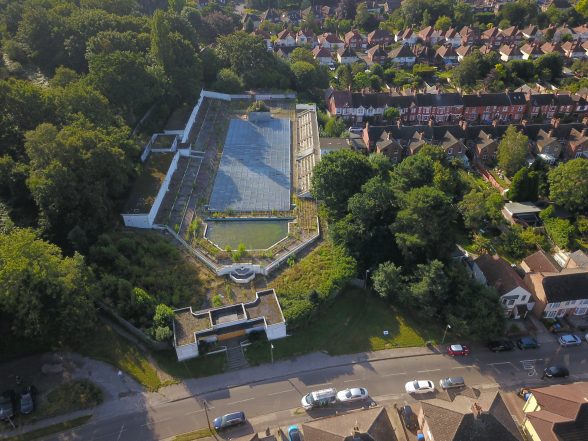
Image: Anthony Palmer
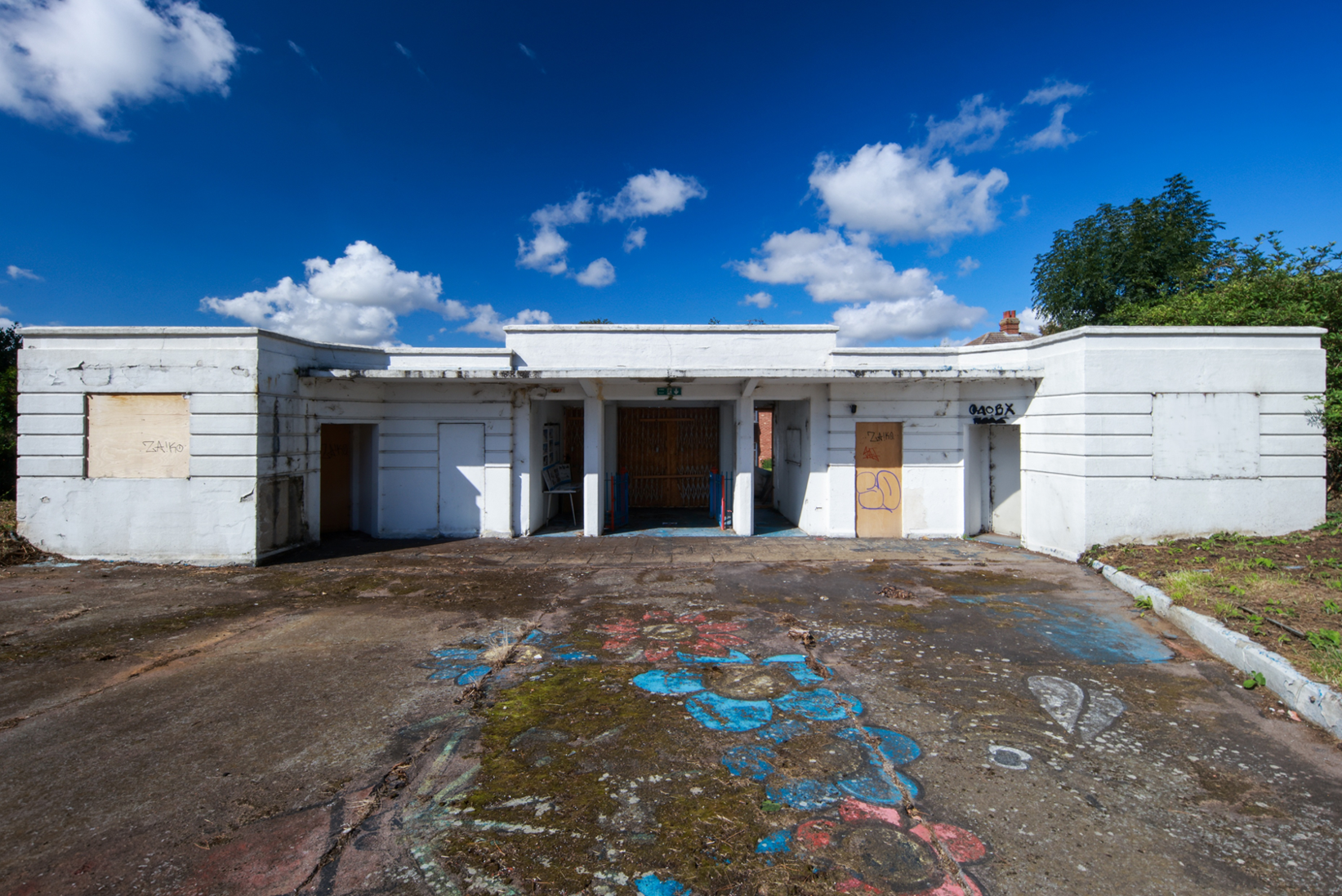
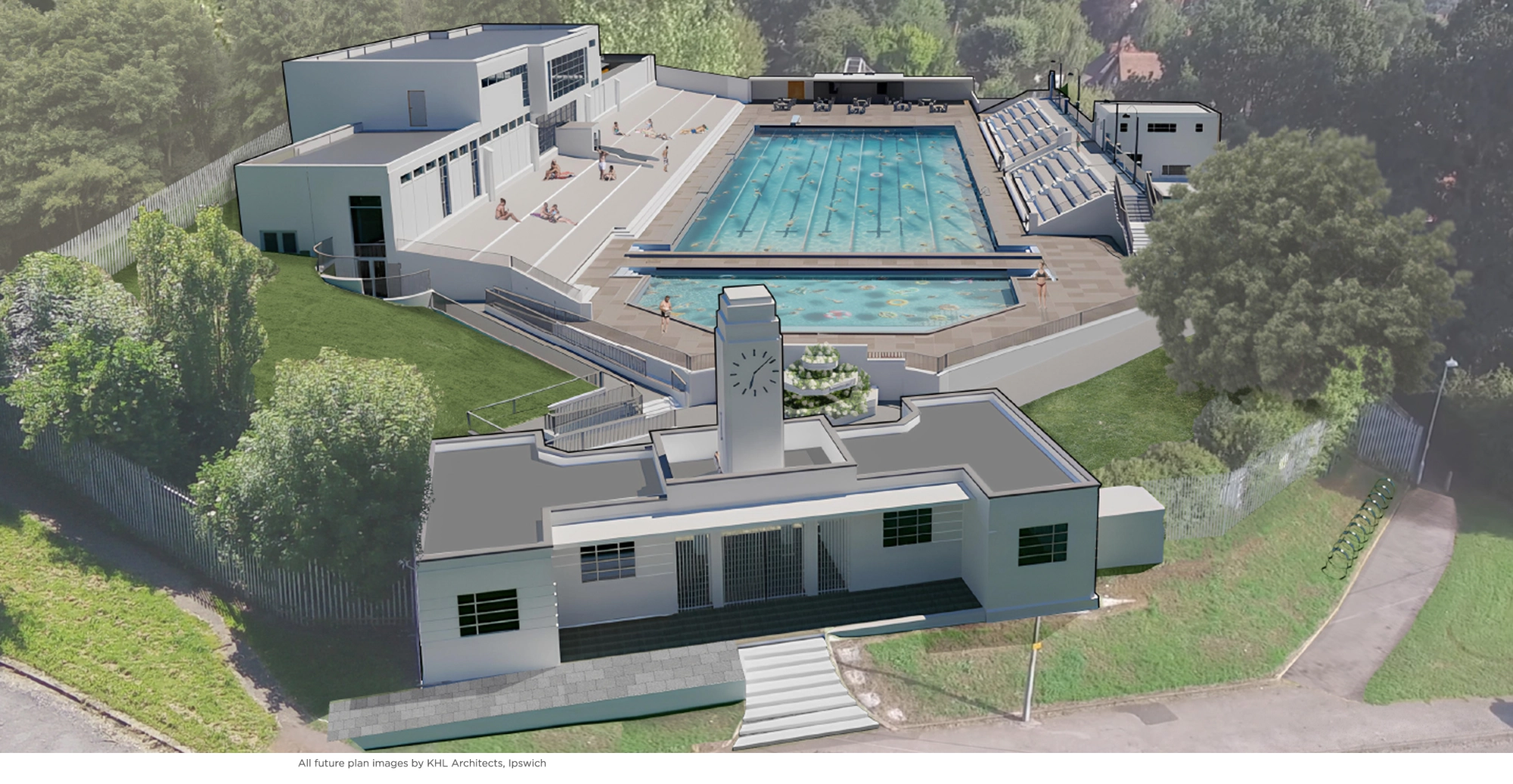
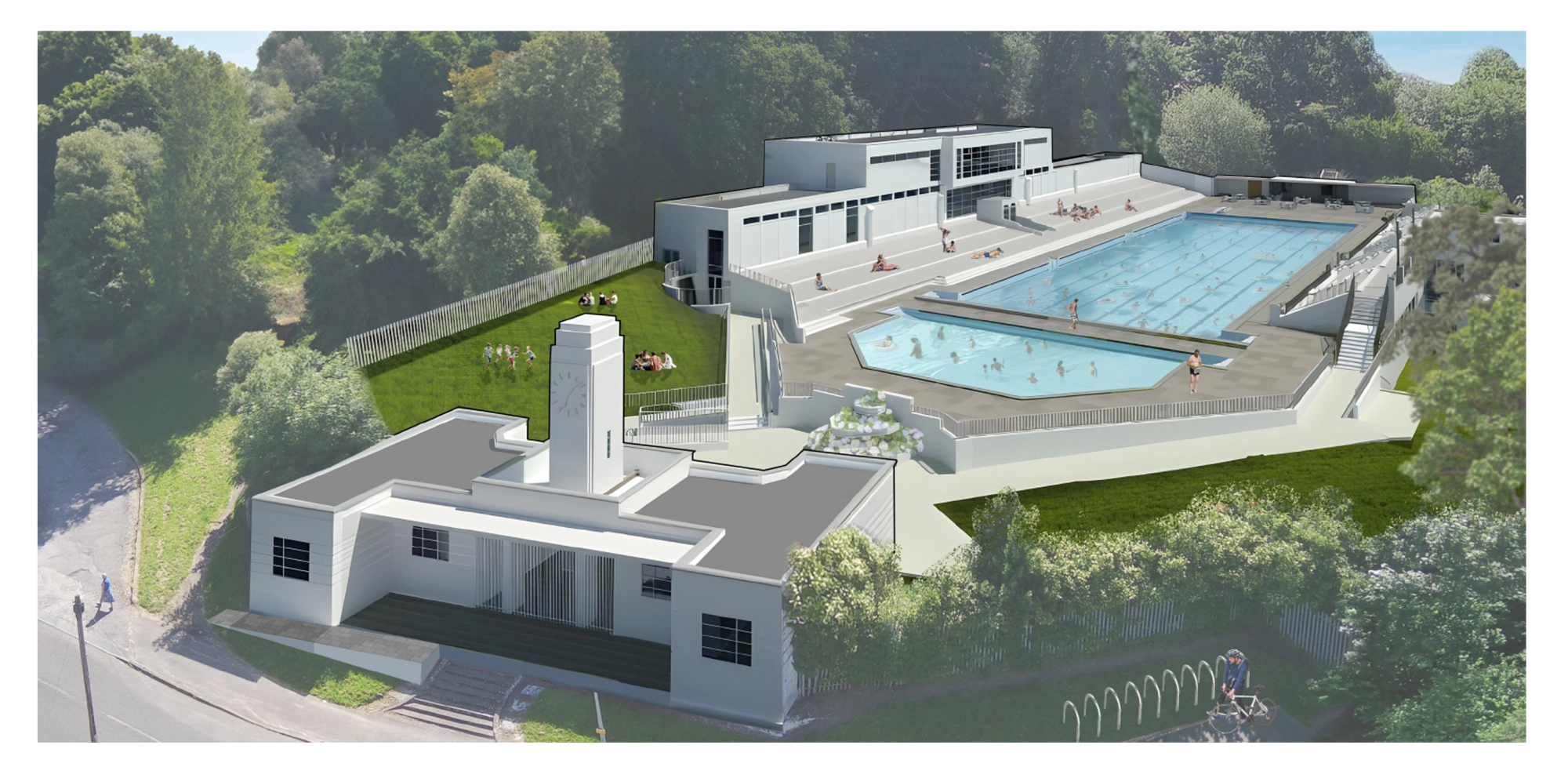
After more than two decades of determined local campaigning and fundraising battles, the dream of restoring the 1930s Broomhill Lido in Ipswich is facing perhaps its biggest setback yet. The National Lottery Heritage Fund (NLHF) has recently withdrawn funding from the £10 million project – which aims to reopen the venue as an open air swimming pool, fitness, wellbeing, and community centre – citing concerns over the financial position of operator Fusion Lifestyle. C20 Society has written to Ipswich Borough Council and the NLHF, strongly urging both parties to commit to continuing the project and appointing an operator in due course, rather than jeopardise the future of the site with further delays.
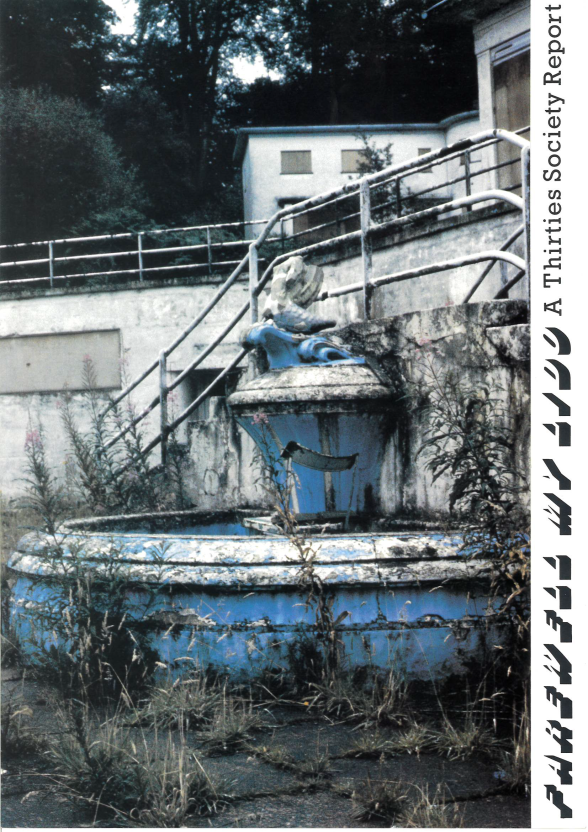
Designed by borough architect Edward McLauchlan in a Moderne style and opened in 1938, for over sixty years Broomhill was part of the social and sporting fabric of Ipswich, but in 2002 the borough council opted to close the pool; it has remained empty and shuttered ever since. C20 Society was instrumental in getting the vulnerable site Grade II listed in 2001, after first highlighting the building in the Thirties Society’s (forerunner to C20) landmark 1991 ‘Farewell my Lido’ campaign.
A friends group was formed almost immediately, becoming the Broomhill Pool Trust in 2003. The Trust has since worked tirelessly to restore and reopen Broomhill Pool for future generations, lobbying and working closely with Ipswich Borough Council (IBC), grant funders, potential operators and all interested parties.
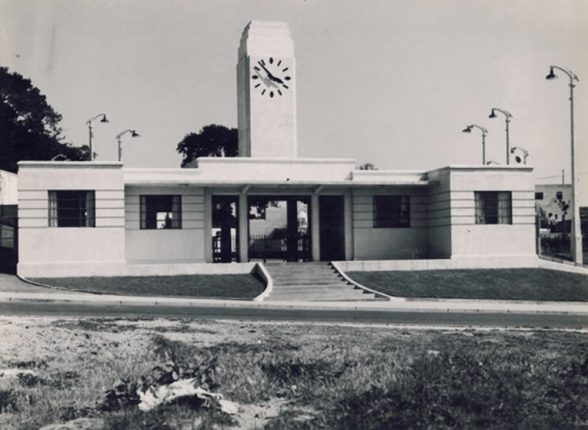
Image: Save Broomhill Pool
Restoration delay
In 2018 the NLHF pledged £3.8m to the restoration project and a further £3m in 2023, but said it had now made the “difficult decision to withdraw”, with Ipswich Borough Council stating Fusion Lifestyle “had been unable to provide assurances about their financial position…[bringing] into question their ability to deliver the project, which received planning consent last year”
The setback comes after several years of delays had already pushed back the projected start of the restoration. The project was initially postponed when Covid-19 hit, then faced a further delay when planning permission had to be granted a second time in 2024. Six months later, with the £10m restoration still not underway, the heritage fund said it wanted to perform financial due diligence on the project.
Mark Ling, chairman of the Broomhill Pool Trust, said “the Trust is deeply concerned but in some ways relieved… it had become apparent that it was a catch 22 where a scheme with 98% capital funding guaranteed by IBC and NLHF could not proceed unless or until Fusion could provide financial certainty.
It is a set back and risk with NLHF withdrawing their grant to Fusion, but if the scheme can quickly be rebooted with IBC making the application, then financial certainty and cash flow is there, and the project is ready made with planning permission, design, and approved in principle.”
Reasons to be cheerful?
The Trust has outlined 6 points that demonstrate the project remains in a good position:
• The restoration scheme has full planning consent.
• The project has substantial public and political support locally.
• There is a long-standing project team in place, with many local companies involved who are keen to progress.
• IBC have reaffirmed their £3.4m commitment and have given firm reassurances they are committed to restoring Broomhill Pool.
• The National Lottery Heritage Fund has been keen to support the project twice.
• Arguably this is a stronger financial platform moving forward, and the Trust will be working flat out in support of and partnership with IBC to encourage them to press ahead
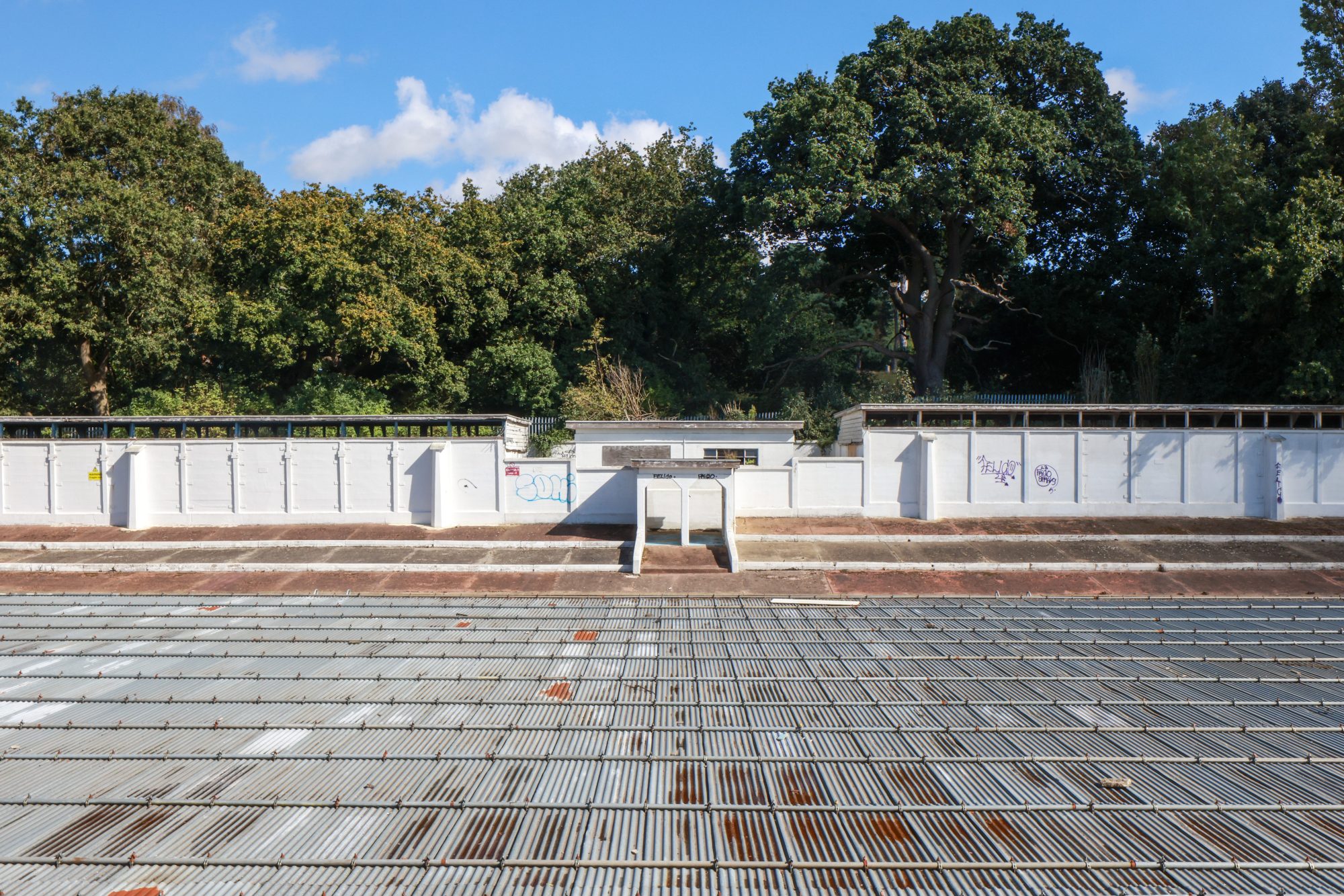
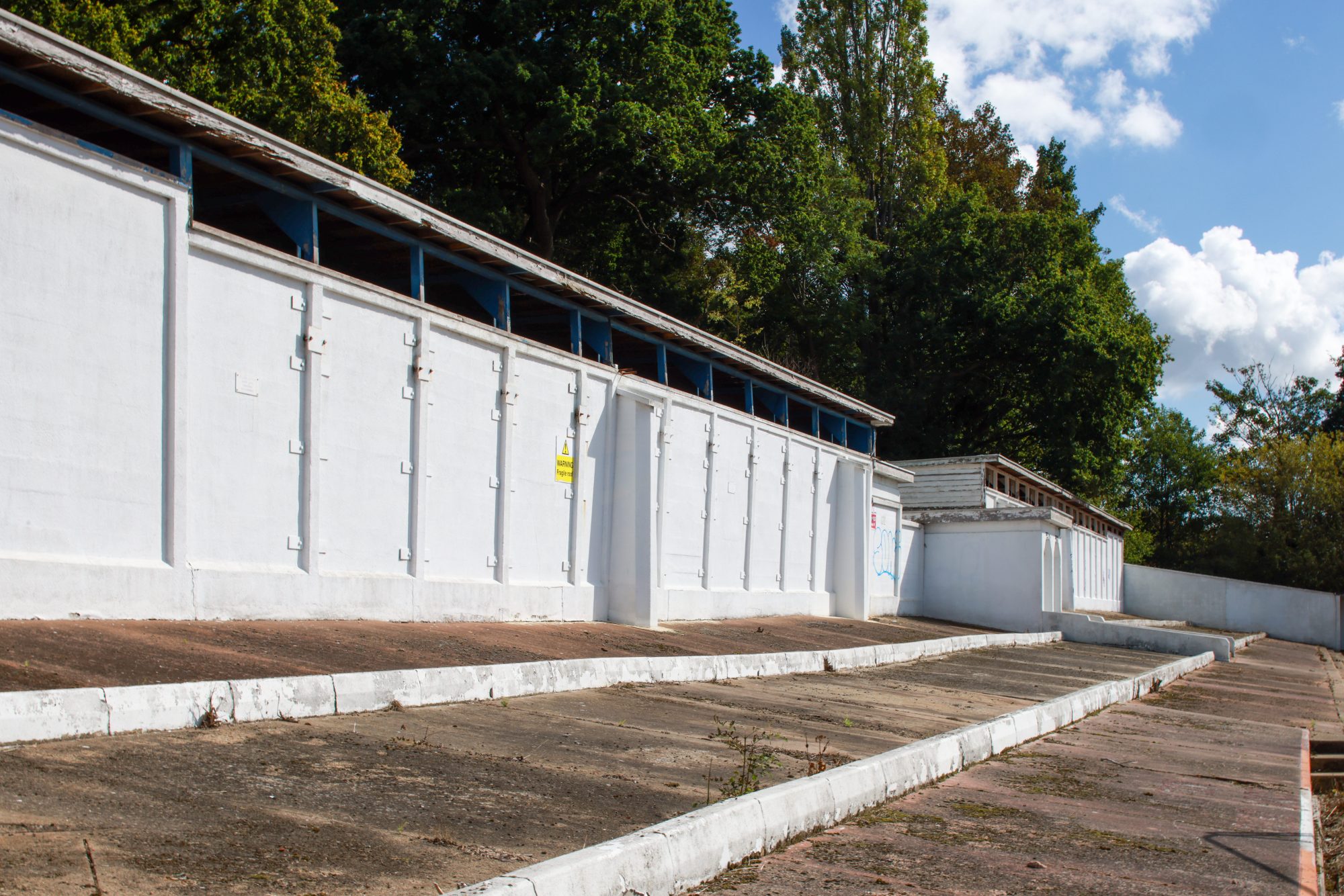
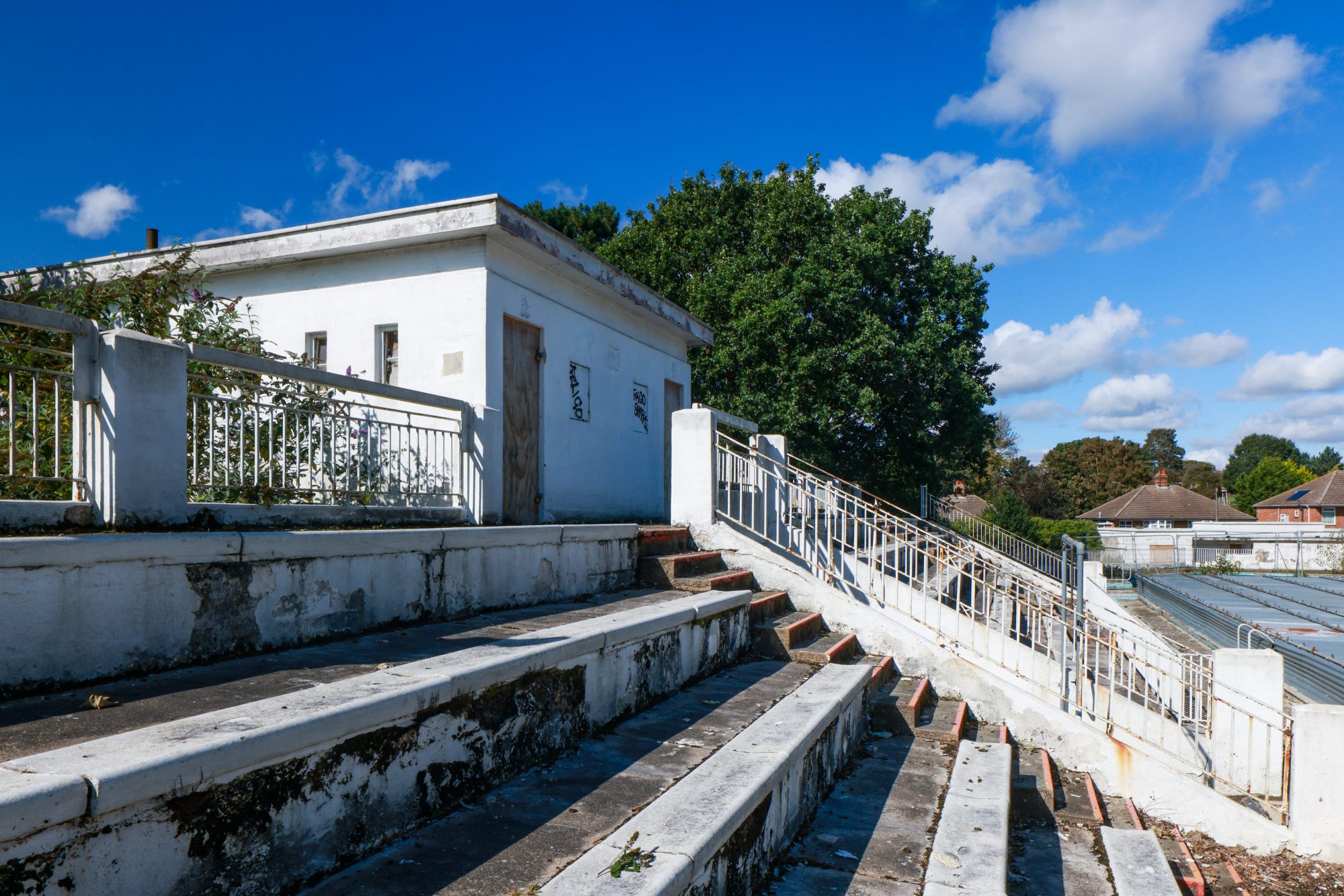
This pool is of a type commonly known as a lido, but in the original literature it is referred to simply as a bathing pool. Situated on the northwest side of Ipswich, Broomhill was built partly to match its counterpart on the eastern side of town: Piper’s Vale Swimming Pool, which had opened the previous year, on June 12th 1937 and has since been demolished.
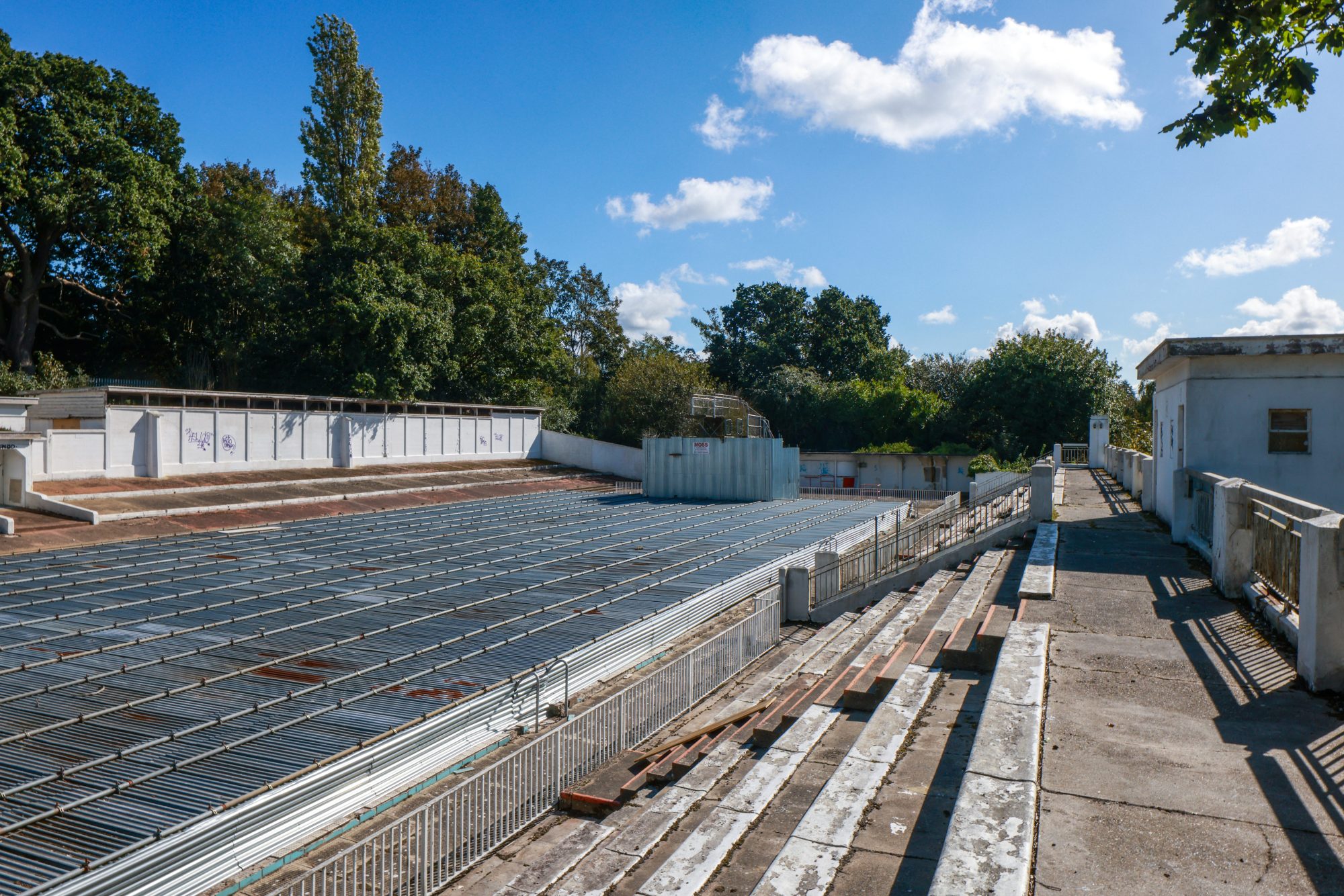
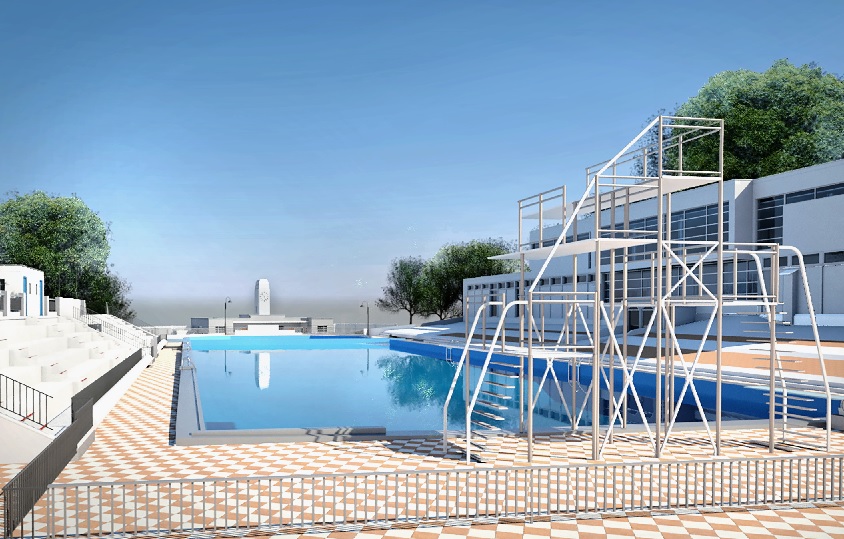
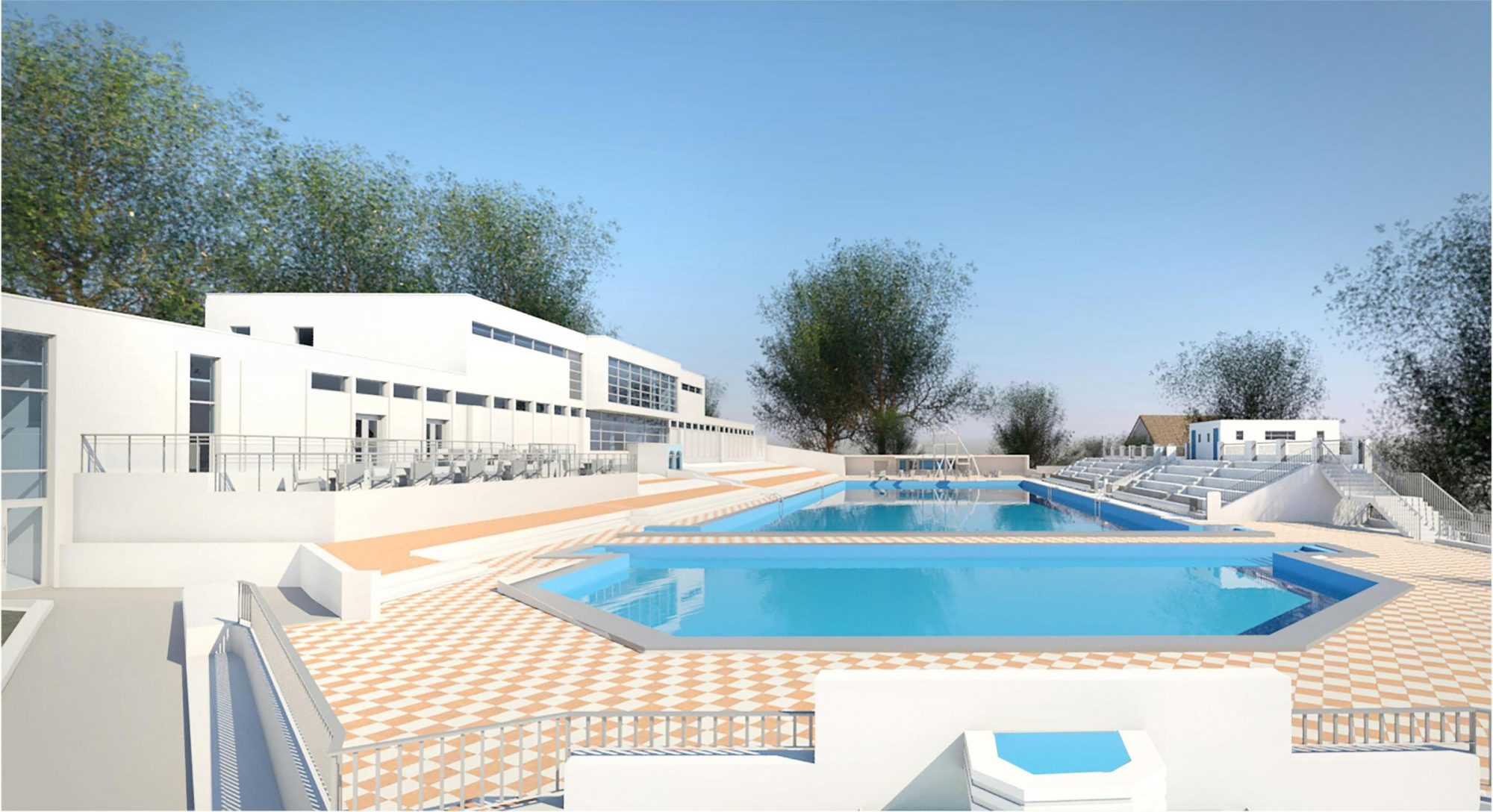
The main pool was just over 50m in long and frequently referred to as ‘Olympic’ in size. The depth varied from 3′ to 7’6″, with a wonderful 15′ diving pit: (the pool floor was reinforced underneath with concrete to withstand the upward water pressure). For water polo a minimum depth of 6′ was provided along a 90′ stretch.
The smaller inhabitants of Ipswich had a 60′ wide and 37.5′ long children’s pool with a uniform depth of 2’9″ and the total capacity for both pools was 464,000 gallons. The souvenir programme gave painstaking engineering details: for example, how the walls were cantilevered to resist both earth and water pressure; how a special surround of 2″ ‘foothold’ red and grey paving slabs in draught board pattern were laid to give a special non-slip surface; and the exact thickness of the concrete at all points.
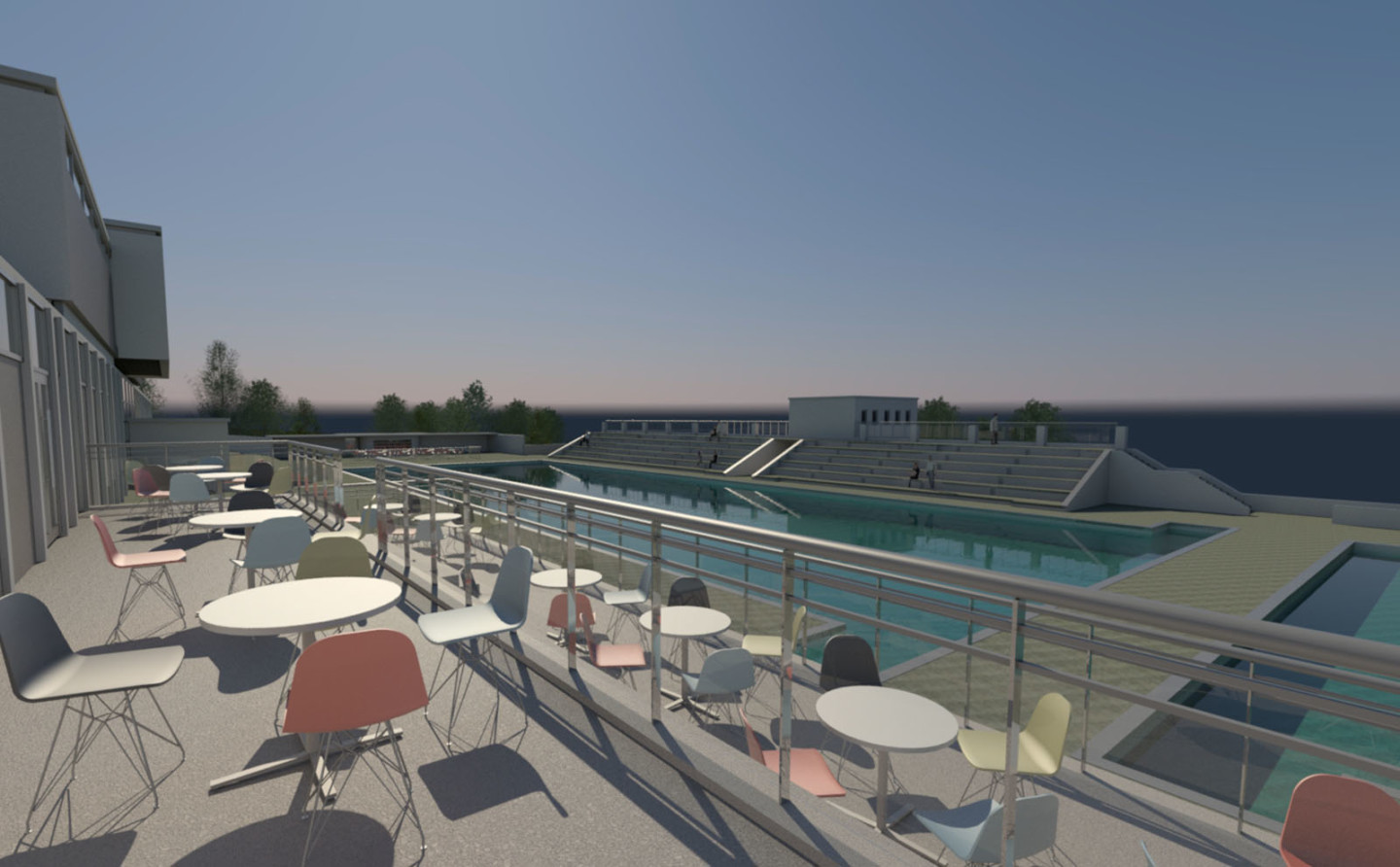
Everything about the pool was on a generous and spacious scale. The spectators’ grandstand on the right of the pool had space for 700 people on five tiers of seating, 70 ladies’ changing cubicles were housed beneath this, whilst men had 108 cubicles on the left hand side of the pool (above ground), and 619 ‘baskets’ could be housed in the basket room. Sunbathing terraces ran along the whole length on this left hand side and a small buffet at the far end of the pool completed the happiness of swimmers and spectators alike. For divers there was a steel-framed diving stage with 5,4,3,and 2-meter boards and a separate 1-meter springboard which survives to this day. The pool was originally both floodlit and heated, and the filtration plant considered to be one of the best in the country, capable of dealing with 155,000 gallons an hour.
Farewell my Lido
The Society’s 1991 ‘Farewell my Lido’ campaign drew attention to the plight of lidos nationally, celebrating their underappreciated architecture and encouraging local groups to take them over from local authorities. In the past 30 years, the nation has rediscovered its love of outdoor swimming and many of the finest examples are now listed. Including Peterborough Lido (Grade II, 1992); Jubilee Pool, Penzance (Grade II, 1993)Uxbridge Lido, Hillingdon (Grade II, 1998); Tinside Lido, Plymouth (Grade II, 1998); Parliament Hill Field Lido, Camden (Grade II, 1999); Broomhill Pool, Ipswich (Grade II, 2001); Brockwell Lido, Lambeth (Grade II, 2003); Ilkley Lido, West Yorkshire (Grade II, 2009); Grange-over-Sands Lido, Cumbria (Grade II, 2011); Sandford Parks Lido, Cheltenham (Grade II, 2019).
In 2022, we launched a new campaign aiming to preserve Britain’s best post-war Leisure Centres – a spiritual successor to the lido campaign. Thus far this has resulted in five designations for this groundbreaking building type: Oasis Leisure Centre, Swindon (Grade II); Richard Dunn Sports Centre, Bradford (Grade II, 2022); Doncaster Dome (Grade II, 2023); Bell’s Centre, Perth (Category B, 2024); Wrexham Baths (Grade II, 2025).
Become a C20 member today and help save our modern design heritage.