

This website uses cookies
This website uses cookies to enable it to function properly and to analyse how the website is used. Please click 'Close' to accept and continue using the website.


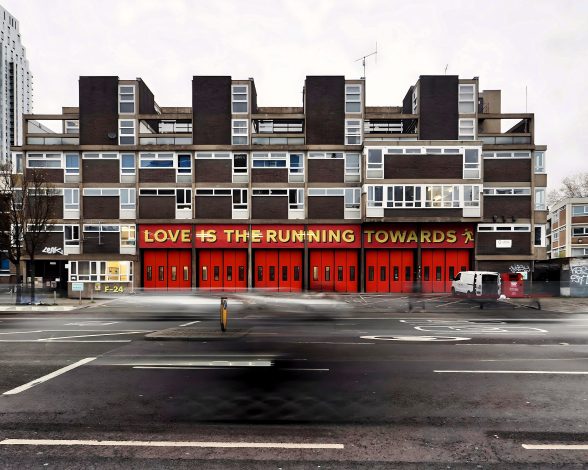
Image © Dave Lowe
Shoreditch Fire Station in Old Street has just been controversially rejected for listing by DCMS, paving the way for potential redevelopment or demolition of the 1960s Brutalist station. Despite the strong recommendation of Historic England and C20 Society to designate the building at Grade II, the government Department for Culture, Media & Sport has instead issued a COI (Certificate of Immunity from Listing).
Designed 1959-61 by the LCC Architects Department (project arch: Thurston Williams) and opened in 1965, the bold Brutalist-style design of Shoreditch station was deemed superior to other post-war stations in the “unusually creative and expressive use of its concrete frame and brick facing, achieving elevations animated by bold horizontal and vertical structural forms”. As a divisional headquarters, which included residential provisions, Shoreditch was also given greater architectural attention than other stations, “demonstrating a significantly higher level of sophistication in terms of its quality of articulation and use of materials”.
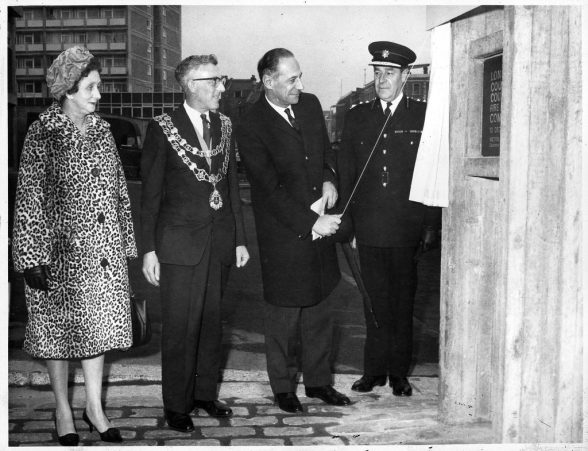
Image credit: Garry Knight (Flickr)
The building was first assessed in 2018 as part of a national thematic review on Fire and Police Stations by Historic England, but the case was not concluded and no decision made. The London Fire Brigade then made a formal COI application in 2022 as it considered the future of the Shoreditch Fire Station.
A letter addressed to Historic England from the ‘Head of Heritage Protection’ at DCMS, states that in reaching this decision, the Minister has noted that “While brutalist fire stations may have been unusual, Shoreditch is not the only brutalist fire station in London, and a significant number of brutalist buildings survive across the country, as do other buildings which are the output of the London County Council Architect’s Department.”
The confirmation from DCMS that they have “reached a different conclusion” to HE and C20, means there are still no post-war fire stations nationally listed in England. In Scotland, the Charles Rennie Mackintosh inspired Tollcross Fire Station in Edinburgh (1986, Lothian Regional Council Department of Architectural Services) was listed Category B in 2023.
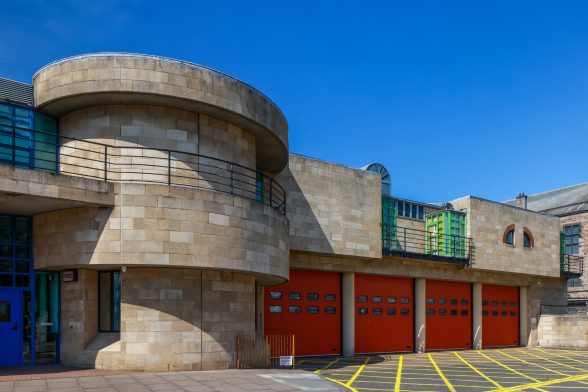
Image credit: John East
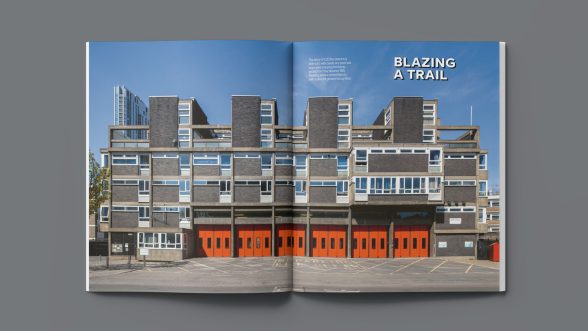
Blazing a Trail: Post-1945 Fire Stations
Through the 1950s and 1960s a wave of modern fire stations appeared, as post-war Britain took a forward-thinking approach to the architectural challenge of rebuilding. Crawley (1956) and Swindon (1959), with their block brickwork and metal windows, exemplify the domestic festival stylings of stations of this time. There were radical shifts – in Britain’s housing stock and energy supplies; in methods of construction; in car ownership and its implications on towns; in cultural patterns and fabric technologies.
So many interconnected post-war factors changed forever the service and response required from brigades, and therefore the type, location and distribution of fire stations. They could now be located on new, less
constricted, out-of-town sites with better connectivity to modern road networks. Appliances got bigger, so the appliance bays and doorways responded. Prefabricated building systems, steel frames and modular cladding meant fire station designs could be rolled out across a region.
Gone were the masonry and decorative embellishments of the pre-war fire stations, replaced by the concrete framed efficiency of modernism. The character of the fire station became, through the later 20th century, increasingly functional, efficient and industrial, borrowing the materials and aesthetics of industrialisation to create many very dull, but some highly lively and creative, solutions to housing a fire service. Shoreditch of 1965 and Oxford of 1971 are two very different but excellent examples.
Late C20 fire stations often have great charm, and high build qualities, showing that the art of architecture remained vibrant. Great Holm in Milton Keynes (1989, now closed) and Upper Street fire station in Islington, north London (1992) all have great architectural qualities and postmodern style, and deserve to be better known.
The 20th century charted 100 years of rapid change for fire brigades, both reactive and proactive. Today’s station, and the equipment it contains, would be incomprehensible to an Edwardian fireman, but at its core the service remains the same: heroes waiting for the call.
This piece contains extracts from ‘Blazing a Trail’ – a potted history of twentieth century Fire Stations by Billy Reading, taken from the current issue of C20 Magazine 2023-1 and available to buy from the C20 Shop.
Become a C20 member today and help save our modern design heritage.